Aging
Not inevitable decline. Aging is driven by specific, identifiable biological processes—the "hallmarks of aging." These include mitochondrial dysfunction, cellular senescence, epigenetic changes, and more. Understanding them opens doors to intervention. Aging can be slowed.
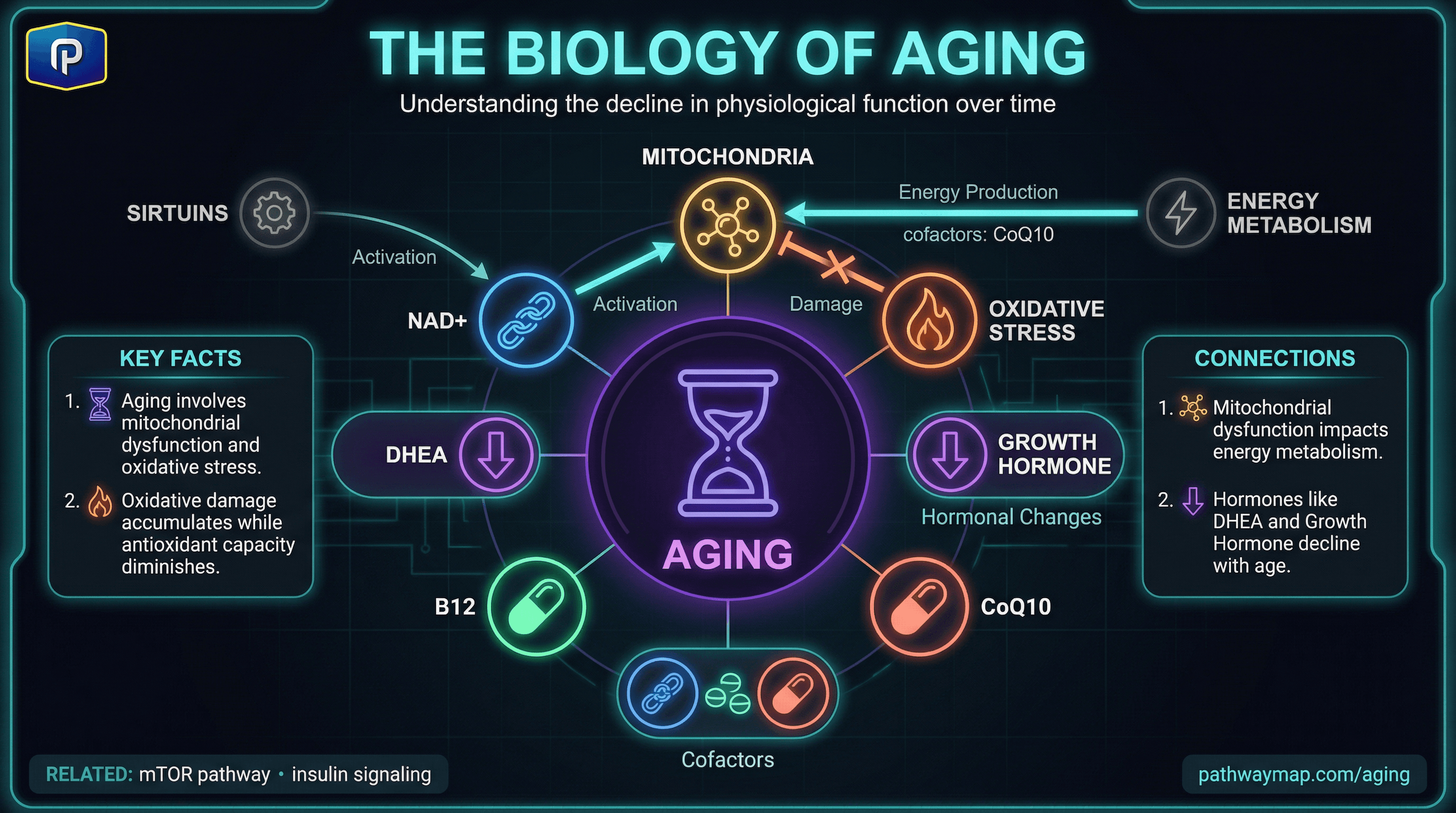
Hallmarks of Aging
Genomic Instability
DNA damage accumulates. Repair mechanisms decline. Mutations increase.
Telomere Attrition
Chromosome caps shorten. Cellular replication limits. Biological clock.
Epigenetic Alterations
Gene expression changes. Methylation patterns shift. Potentially reversible.
Loss of Proteostasis
Protein folding fails. Aggregates accumulate. Alzheimer's connection.
Mitochondrial Dysfunction
Energy production declines. ROS increases. Central to aging.
Cellular Senescence
Zombie cells accumulate. SASP inflammation. Senolytics emerging.
Stem Cell Exhaustion
Regenerative capacity declines. Tissue repair slows. Fewer new cells.
Altered Intercellular Communication
Inflammaging. Immune dysfunction. Signaling breaks down.
Deregulated Nutrient Sensing
Insulin, mTOR, AMPK, sirtuins. Metabolic dysfunction. Fasting helps.
Anti-Aging Interventions
Caloric Restriction/Fasting
Most proven intervention. Activates autophagy, sirtuins. Time-restricted eating.
Exercise
Mitochondrial biogenesis. Muscle preservation. Brain health. Non-negotiable.
Sleep Optimization
Glymphatic cleaning. Growth hormone. DNA repair. 7-9 hours minimum.
NAD+ Precursors
NMN, NR boost NAD+. Sirtuin activation. Energy restoration.
Senolytics
Clear senescent cells. Fisetin, quercetin. Emerging field.
Stress Management
Telomere preservation. Cortisol reduction. Epigenetic benefits.