Candida
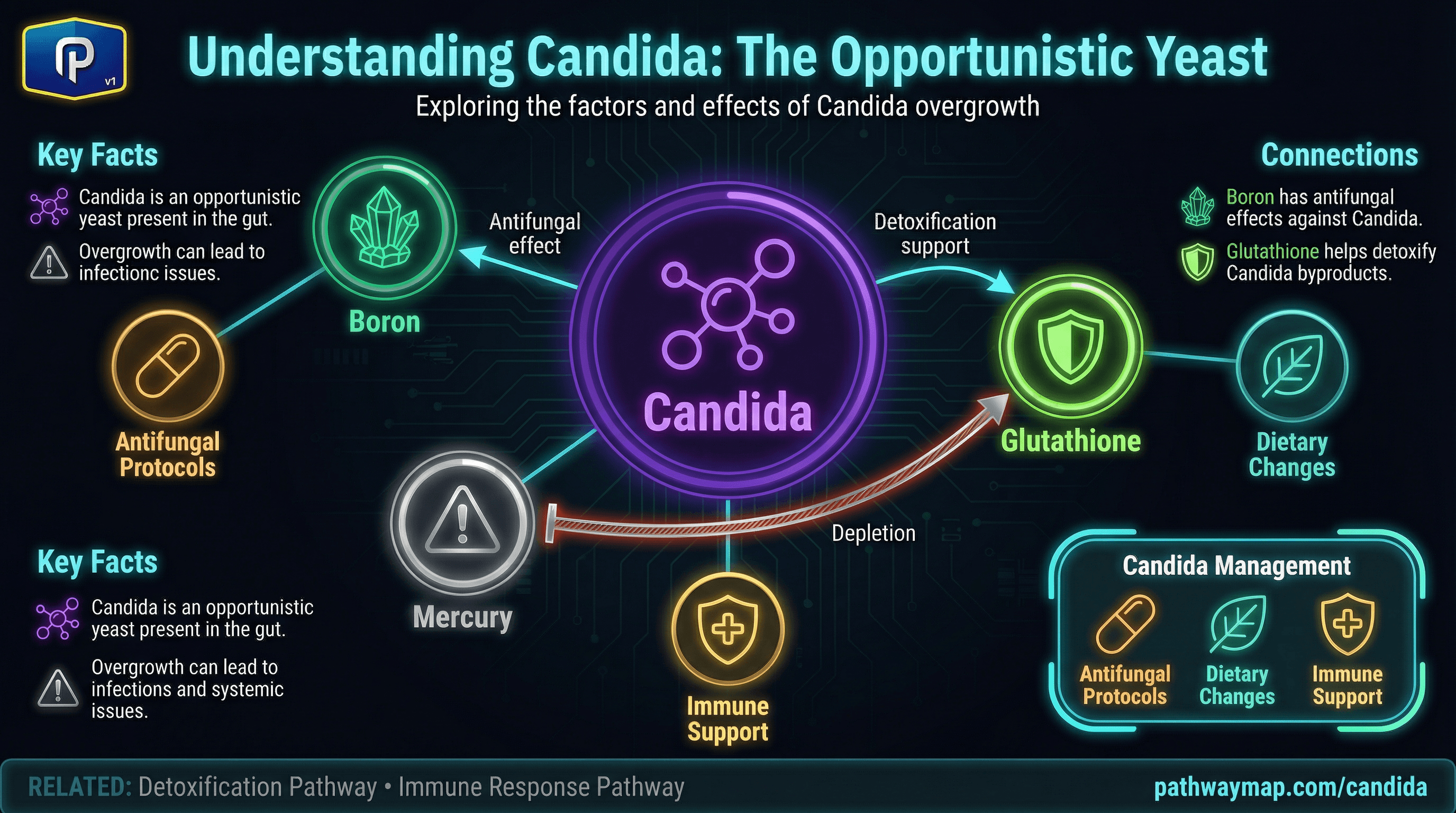
The opportunistic yeast. Candida albicans normally lives peacefully in your gut, kept in check by bacteria and immunity. When balance is disrupted—antibiotics, high sugar, immune suppression—candida can overgrow, causing symptoms ranging from thrush to systemic inflammation. Balance, not eradication, is the goal.
Signs of Candida Overgrowth
Oral Thrush
White coating on tongue. Visible overgrowth. Common in immune-compromised.
Vaginal Yeast
Recurrent infections. Itching, discharge. Often triggered by antibiotics.
Digestive Issues
Bloating, gas, constipation or diarrhea. Overlaps with SIBO symptoms.
Brain Fog
Acetaldehyde production affects cognition. Fatigue, poor concentration.
Sugar Cravings
Candida "demands" its fuel. Intense carb/sugar cravings. Vicious cycle.
Skin Issues
Fungal skin infections, nail fungus, rashes. Indicates systemic issue.
What Causes Overgrowth
Promotes Candida
- Antibiotics: Kill competing bacteria
- Sugar/refined carbs: Direct food source
- Immune suppression: Steroids, illness
- Birth control: Hormonal changes favor growth
- Stress: Impairs immunity
- Alcohol: Sugar + immune suppression
Keeps Candida in Check
- Healthy bacteria: Colonization resistance
- Strong immunity: Contains overgrowth
- Low sugar diet: Starves candida
- Stomach acid: First line defense
- Bile flow: Antifungal properties
Addressing Candida
Starve It
Low sugar, low refined carb diet. Avoid alcohol. Some eliminate fruit temporarily.
Kill It
Antifungals: fluconazole, nystatin, or natural (caprylic acid, oregano oil, berberine).
Break Biofilm
NAC, enzymes (serrapeptase, nattokinase) help penetrate protective biofilm.
Restore Balance
Probiotics (S. boulardii especially), rebuild microbiome with fiber. Long-term strategy.
Support Immunity
Address underlying immune suppression. Vitamin D, zinc, sleep, stress management.
Die-Off Awareness
Herxheimer reaction possible. Temporary worsening as candida dies. Go slowly.