Fatty Liver
NAFLD/NASH - accumulation of fat in liver cells. Caused by insulin resistance, fructose excess, and choline deficiency.
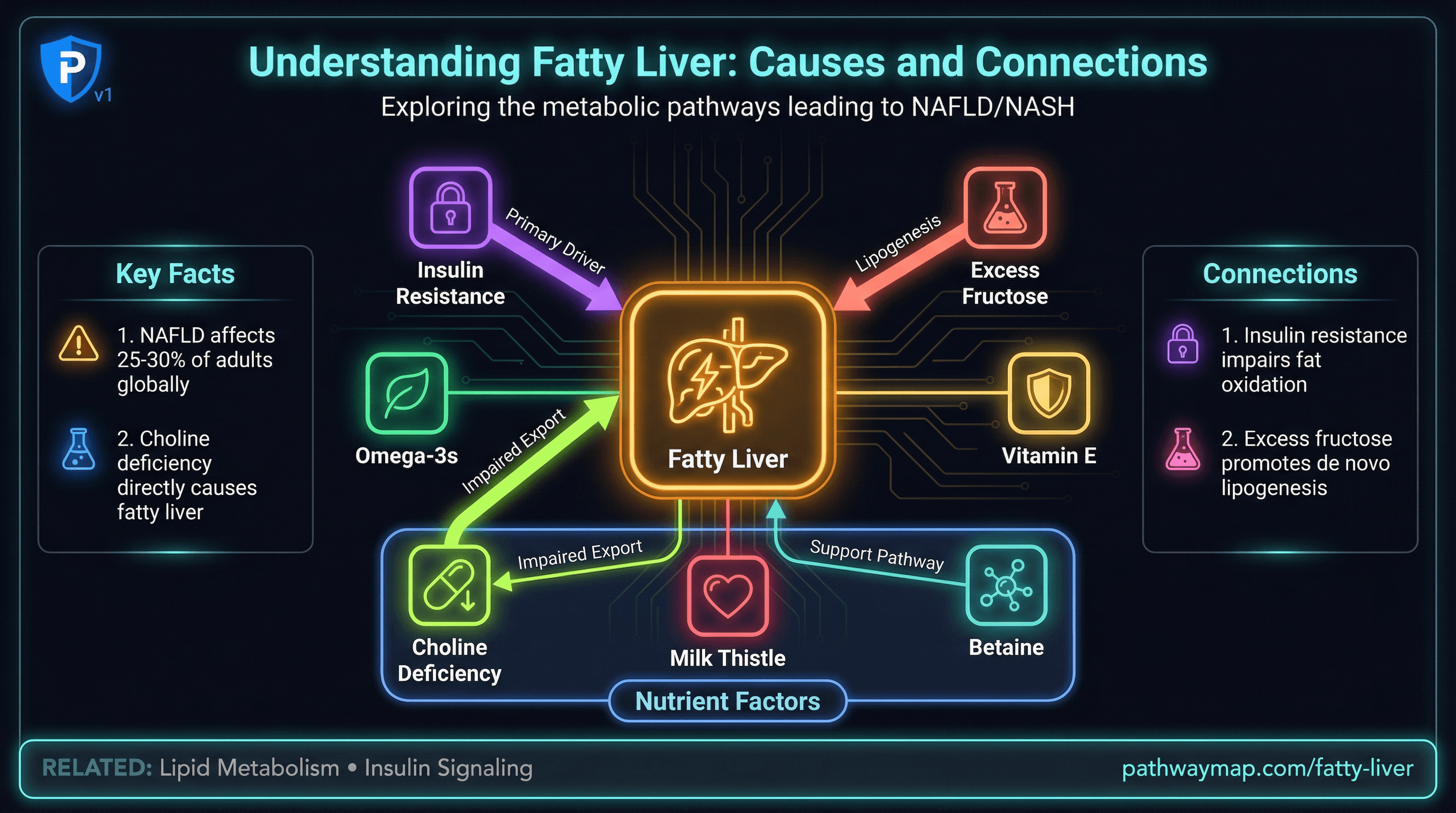
Non-alcoholic fatty liver disease (NAFLD) encompasses a spectrum from simple steatosis (fat accumulation) to non-alcoholic steatohepatitis (NASH, with inflammation) to cirrhosis.
It affects 25-30% of adults globally and is the most common chronic liver disease.
Causes: Insulin resistance (primary driver - impairs fat oxidation, promotes lipogenesis), Excess fructose (promotes de novo lipogenesis in liver), Choline deficiency (impairs VLDL export of fat from liver), Omega-6/omega-3 imbalance, Gut dysbiosis (endotoxemia), and Genetic factors (PNPLA3 variants).
Progression: Simple steatosis (>5% fat) - often benign and reversible.
NASH - inflammation and hepatocyte damage, can progress. Fibrosis - scarring from chronic inflammation. Cirrhosis - severe scarring, liver failure risk. Hepatocellular carcinoma - cancer risk increases.
Nutrient factors: Choline - essential for phosphatidylcholine and VLDL assembly; deficiency directly causes fatty liver.
Betaine - supports choline pathways. Omega-3s - reduce liver fat and inflammation. Vitamin E - reduces NASH inflammation in studies. Milk thistle (silymarin) - hepatoprotective effects.
Treatment: Weight loss (even 5-10% helps), Exercise, Reduce fructose and refined carbs, Address insulin resistance, Choline/betaine supplementation, Omega-3s (EPA particularly), and possibly vitamin E (for NASH).
No approved drugs specifically for NAFLD yet.
Metabolic Connections
Fatty Liver connects to 7 other pathways.
Nutrients
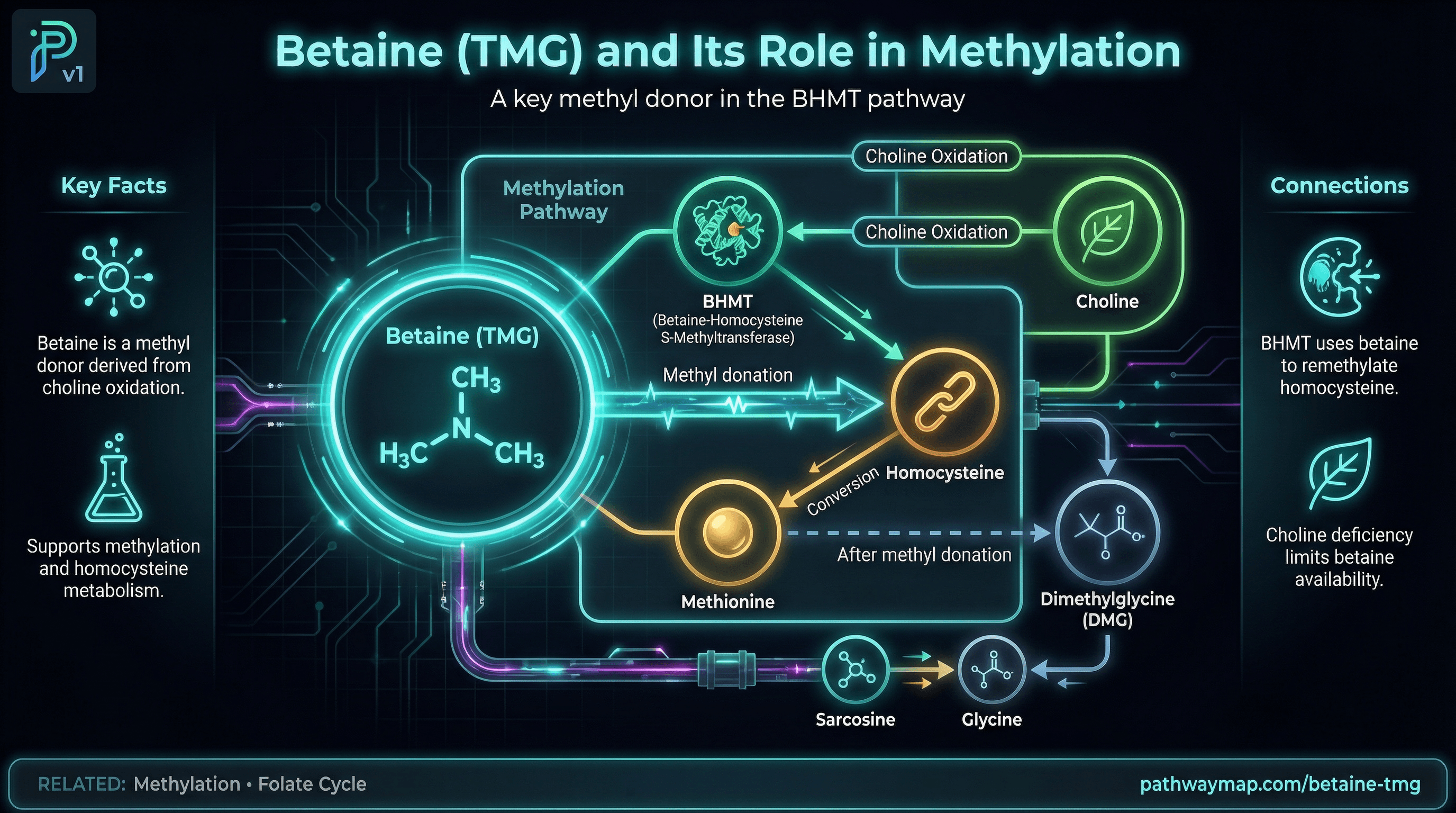
Betaine (TMG)
Betaine supports choline pathways and may help reduce liver fat
Trimethylglycine - methyl donor for BHMT pathway, supporting methylation and homocysteine metabolism.

Choline
Choline deficiency impairs fat export from liver, directly causing fatty liver
Essential nutrient for brain development, liver function, and methylation via the BHMT pathway.
Metabolites
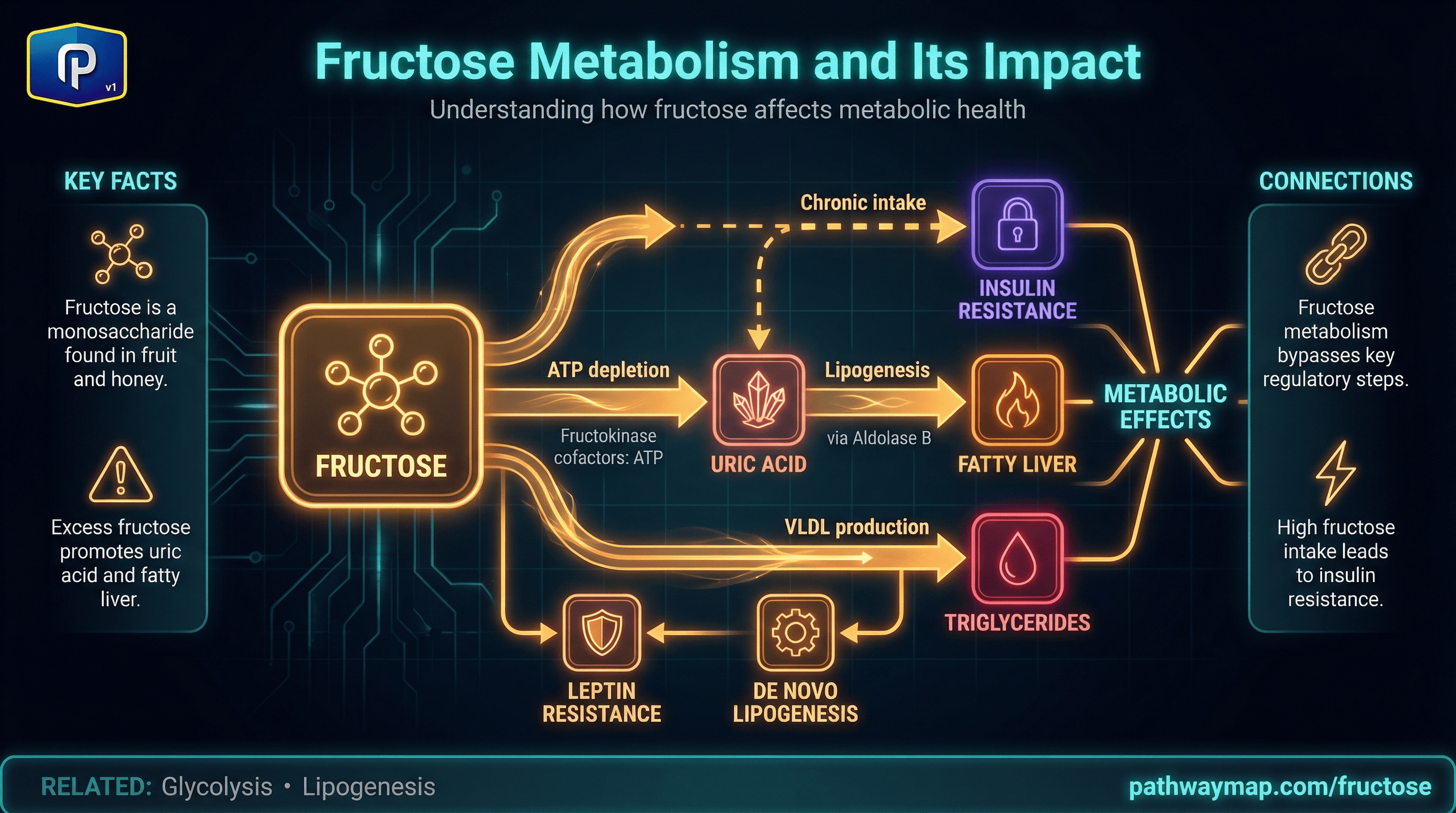
Fructose
Excess fructose promotes de novo lipogenesis, contributing to fatty liver
Simple sugar metabolized primarily in the liver. Excess promotes uric acid, fatty liver, and metabolic dysfunction.
Fructose
Excess fructose promotes de novo lipogenesis in the liver, contributing to fatty liver
Simple sugar metabolized primarily in the liver. Excess promotes uric acid, fatty liver, and metabolic dysfunction.

Triglycerides
Elevated triglycerides are associated with fatty liver disease
Main form of stored and dietary fat. Elevated levels indicate metabolic dysfunction and cardiovascular risk.

