mTOR
Mechanistic Target of Rapamycin
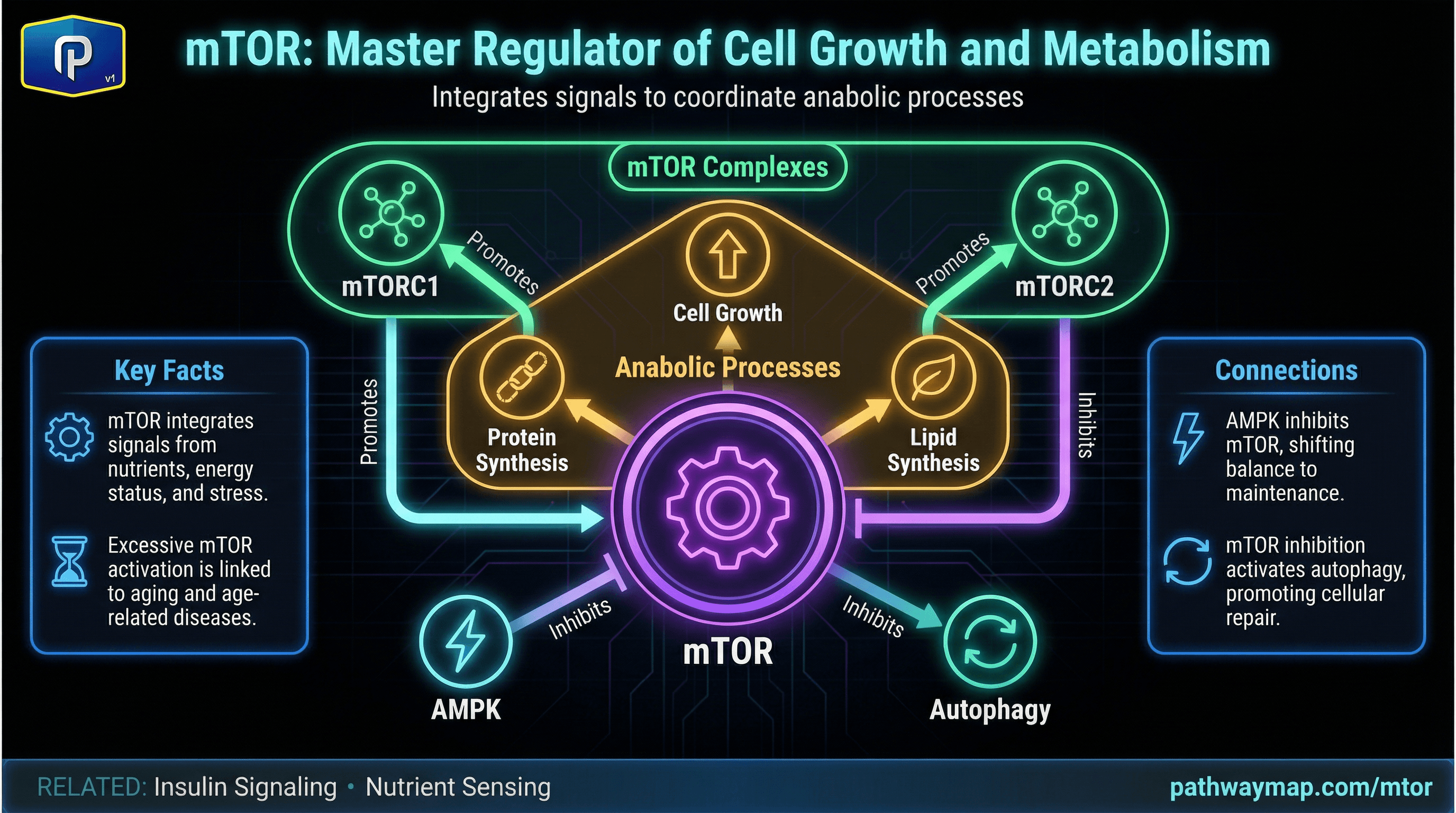
The master switch between "grow" and "repair" modes. When mTOR is on, your cells build muscle and tissue. When it's off, they clean house (autophagy). The problem? Modern life keeps it on too long.
Growth Mode vs Repair Mode
mTOR Active (Growth Mode)
- •Protein synthesis turned on
- •Muscle building, tissue growth
- •Cell proliferation increased
- •Autophagy suppressed
- •Lipid synthesis promoted
Triggered by: eating (especially protein), insulin, growth factors
mTOR Inhibited (Repair Mode)
- •Autophagy activated - cellular cleanup
- •Damaged proteins recycled
- •Mitophagy removes bad mitochondria
- •Stress resistance increases
- •Longevity pathways activated
Triggered by: fasting, AMPK activation, exercise (during), rapamycin
The Modern mTOR Problem
Our ancestors cycled between fed and fasted states. They ate, mTOR went up, they built tissue. They fasted, mTOR went down, they cleaned house. This pulsatile pattern is natural and healthy.
Modern life is different: constant eating, snacking, protein shakes, and 24/7 nutrient availability keep mTOR chronically elevated. The cleaning crew (autophagy) never gets called in. Cellular junk accumulates.
Consequences of Chronic mTOR
- • Accelerated aging
- • Increased cancer risk
- • Protein aggregate diseases
- • Insulin resistance
- • Obesity and metabolic syndrome
- • Impaired immune function
Two mTOR Complexes
mTORC1
The main metabolic sensor. Senses nutrients (especially leucine), growth factors, and energy status. Controls protein synthesis and autophagy.
mTORC2
Less understood. Involved in cell survival, metabolism, and cytoskeleton organization. Resistant to rapamycin (initially).
mTOR Activators
Leucine (Most Potent)
Branched-chain amino acid that directly activates mTORC1. Whey protein is high in leucine.
Insulin / IGF-1
Growth signals from eating activate PI3K → AKT → mTOR pathway.
High Energy (ATP)
When cells have plenty of energy, mTOR gets the green light for growth.
Constant Eating
Snacking and frequent meals keep mTOR perpetually elevated.
mTOR Inhibitors
Fasting
No nutrients = mTOR off. 16-24 hours for significant inhibition.
AMPK Activation
Low energy sensor that directly inhibits mTOR. Exercise and fasting activate AMPK.
Rapamycin
The drug that gave mTOR its name. Used for transplants; being studied for longevity.
Polyphenols
Resveratrol, EGCG (green tea), curcumin - natural mTOR modulators.
Healthy mTOR Balance
You don't want mTOR always on (accelerated aging) or always off (muscle wasting, poor immunity). The goal is cycling between states:
Intermittent Fasting
16:8 or similar creates natural mTOR cycling. Fast = repair, eat = build.
Time-Restricted Eating
Eating within an 8-10 hour window gives mTOR time to turn off.
Protein Timing
Pulse protein after exercise for mTOR-driven muscle synthesis, then fast.
Exercise
Exercise inhibits mTOR during activity, then activates it during recovery.
Metabolic Connections

Autophagy
mTOR inhibits autophagy; fasting releases the brake

AMPK
AMPK opposes mTOR; they balance growth vs repair

Fasting
Fasting inhibits mTOR, activating cellular cleanup

Insulin
Insulin strongly activates mTOR

Leucine
Amino acid that powerfully activates mTORC1

Longevity
Controlled mTOR inhibition extends lifespan