NOS
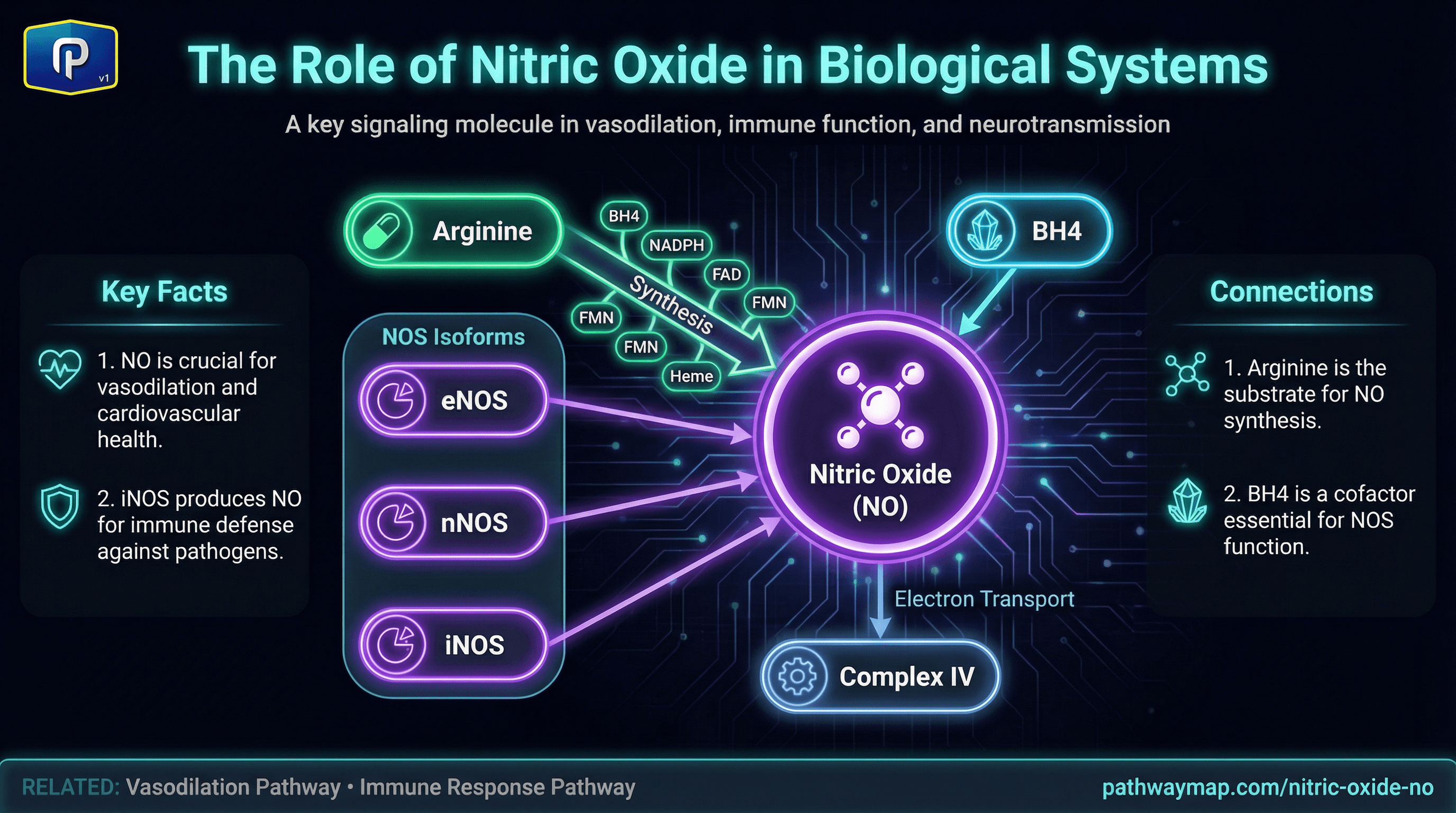
Nitric Oxide Synthase - enzyme family producing nitric oxide from arginine. Requires BH4 as essential cofactor.
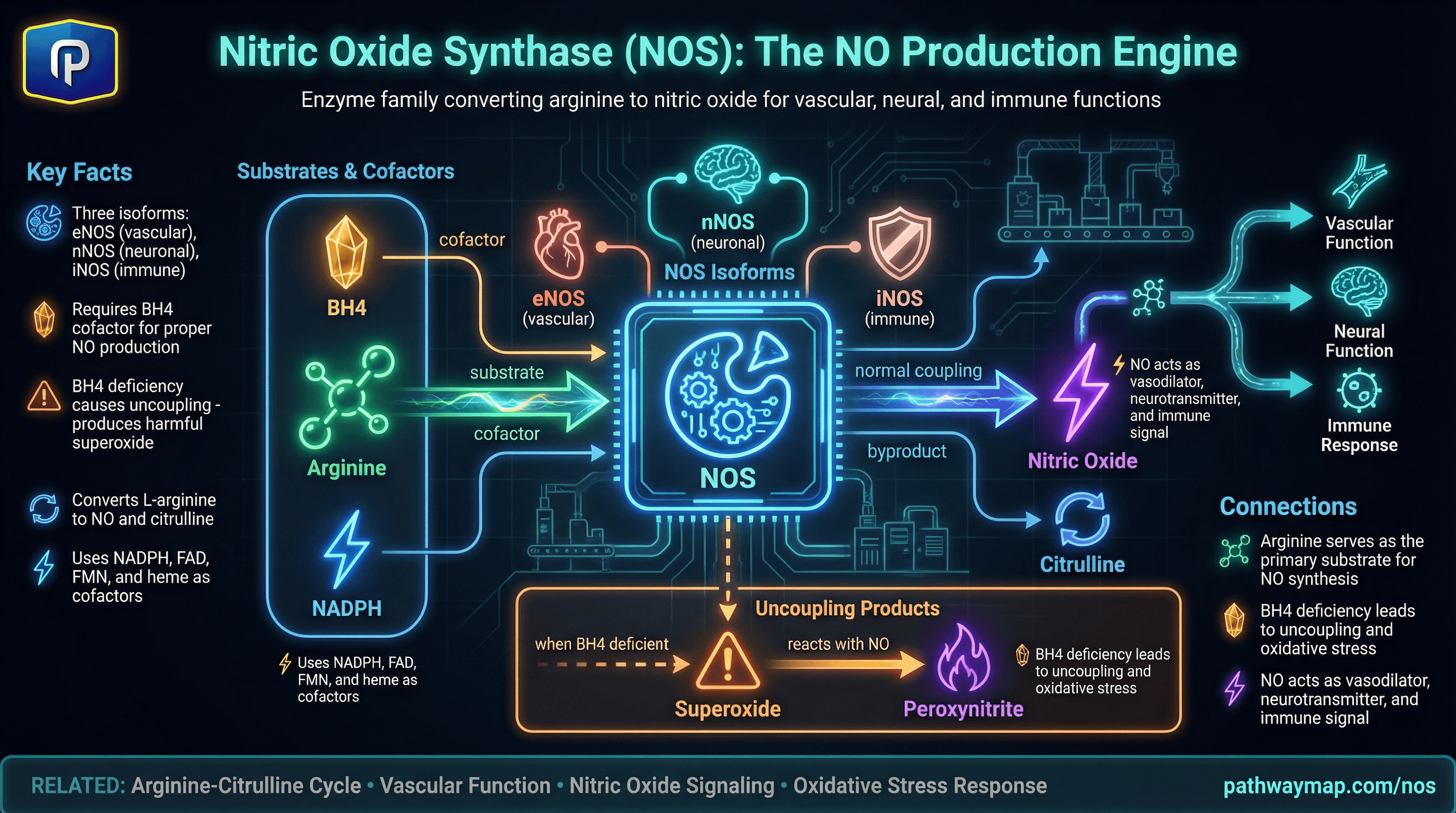
Nitric oxide synthase (NOS) is a family of enzymes that produce nitric oxide (NO) from L-arginine, using BH4 as an essential cofactor.
There are three isoforms with different functions and regulation. NOS isoforms: nNOS (neuronal/NOS1) - constitutive, calcium-dependent, found in neurons. Produces NO for neurotransmission and neural function. eNOS (endothelial/NOS3) - constitutive, calcium-dependent, found in blood vessel endothelium.
Produces NO for vasodilation and vascular health. iNOS (inducible/NOS2) - induced by inflammation, calcium-independent, found in macrophages and other cells. Produces large amounts of NO for immune defense. The reaction: L-arginine + O2 + NADPH → NO + L-citrulline + NADP+.
Requires: BH4 (tetrahydrobiopterin), FAD, FMN, and heme iron. NOS uncoupling: When BH4 is depleted (by oxidation or inadequate synthesis), NOS becomes 'uncoupled' - instead of producing NO, it produces superoxide radical. This causes oxidative stress and reduces NO availability.
Uncoupled NOS contributes to endothelial dysfunction, hypertension, and atherosclerosis. BH4 and NOS: BH4 is the rate-limiting factor for NOS function. Oxidative stress converts BH4 to BH2 (inactive).
Supporting BH4 through folate, B12, vitamin C, and avoiding oxidative stress is essential for proper NOS function.
NOS support: Arginine or citrulline (substrate), BH4 cofactors (folate, B12), Antioxidants (protect BH4), and Exercise (activates eNOS).
Metabolic Connections
NOS connects to 5 other pathways.
Amino Acids

Arginine
NOS (nitric oxide synthase) uses arginine as its substrate to produce nitric oxide
Semi-essential amino acid critical for nitric oxide synthesis, urea cycle function, and creatine production.
Arginine
NOS (nitric oxide synthase) uses arginine as its substrate to produce nitric oxide
Semi-essential amino acid critical for nitric oxide synthesis, urea cycle function, and creatine production.