Phosphorus
Second most abundant mineral in the body. Essential for bones, ATP, DNA, and cell membranes.
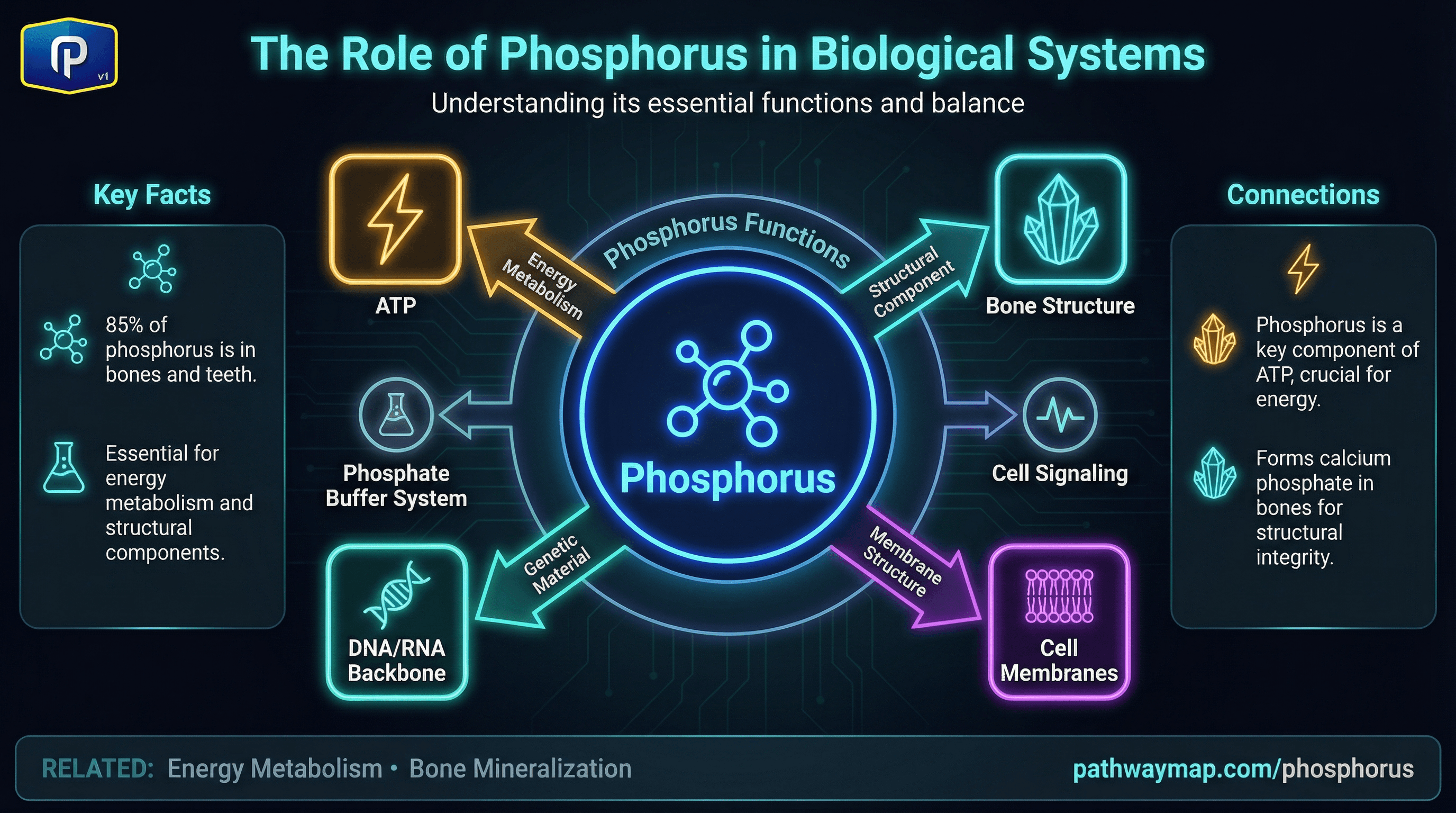
Phosphorus is the second most abundant mineral in the body (after calcium), with 85% in bones and teeth and the remainder in soft tissues and fluids.
It is essential for energy metabolism, structural components, and signaling.
Key functions: Bone and tooth structure (as calcium phosphate/hydroxyapatite), Energy metabolism (ATP contains three phosphate groups), DNA and RNA backbone (phosphodiester bonds), Cell membrane structure (phospholipids), pH buffering (phosphate buffer system), and Cell signaling (phosphorylation reactions). Phosphorus homeostasis: Regulated by PTH, vitamin D, and FGF23 (from bone).
Kidneys are the primary site of regulation. High phosphorus stimulates FGF23, which increases renal phosphorus excretion. Dietary sources: Widely distributed in foods - meat, fish, dairy, legumes, nuts, and whole grains. Also added to processed foods as phosphate additives (more readily absorbed than food phosphorus).
Deficiency is rare with normal diet but can occur with: antacid overuse (bind phosphorus), alcoholism, diabetic ketoacidosis, and refeeding syndrome. Excess phosphorus concerns: High phosphorus (especially from additives) relative to calcium may impair bone health.
Very high phosphorus worsens kidney disease progression. Phosphorus-to-calcium ratio matters - aim for roughly 1:1. Phosphorus and calcium: These minerals must be balanced. High phosphorus can lower calcium (PTH response) and may contribute to vascular calcification in kidney disease.
Food additives have dramatically increased phosphorus intake in modern diets.
Metabolic Connections
Phosphorus connects to 3 other pathways.
Cofactors

ATP
Phosphorus is a structural component of ATP (adenosine triphosphate contains three phosphate groups)
Adenosine triphosphate - universal energy currency of cells. Requires magnesium for biological activity.
ATP
Phosphorus is a structural component of ATP (adenosine triphosphate contains three phosphate groups)
Adenosine triphosphate - universal energy currency of cells. Requires magnesium for biological activity.
