Resveratrol
The "French paradox" molecule. Resveratrol gained fame for potentially explaining why the French have lower heart disease despite high fat intake. It activates longevity genes, mimics calorie restriction, and remains one of the most studied anti-aging compounds.
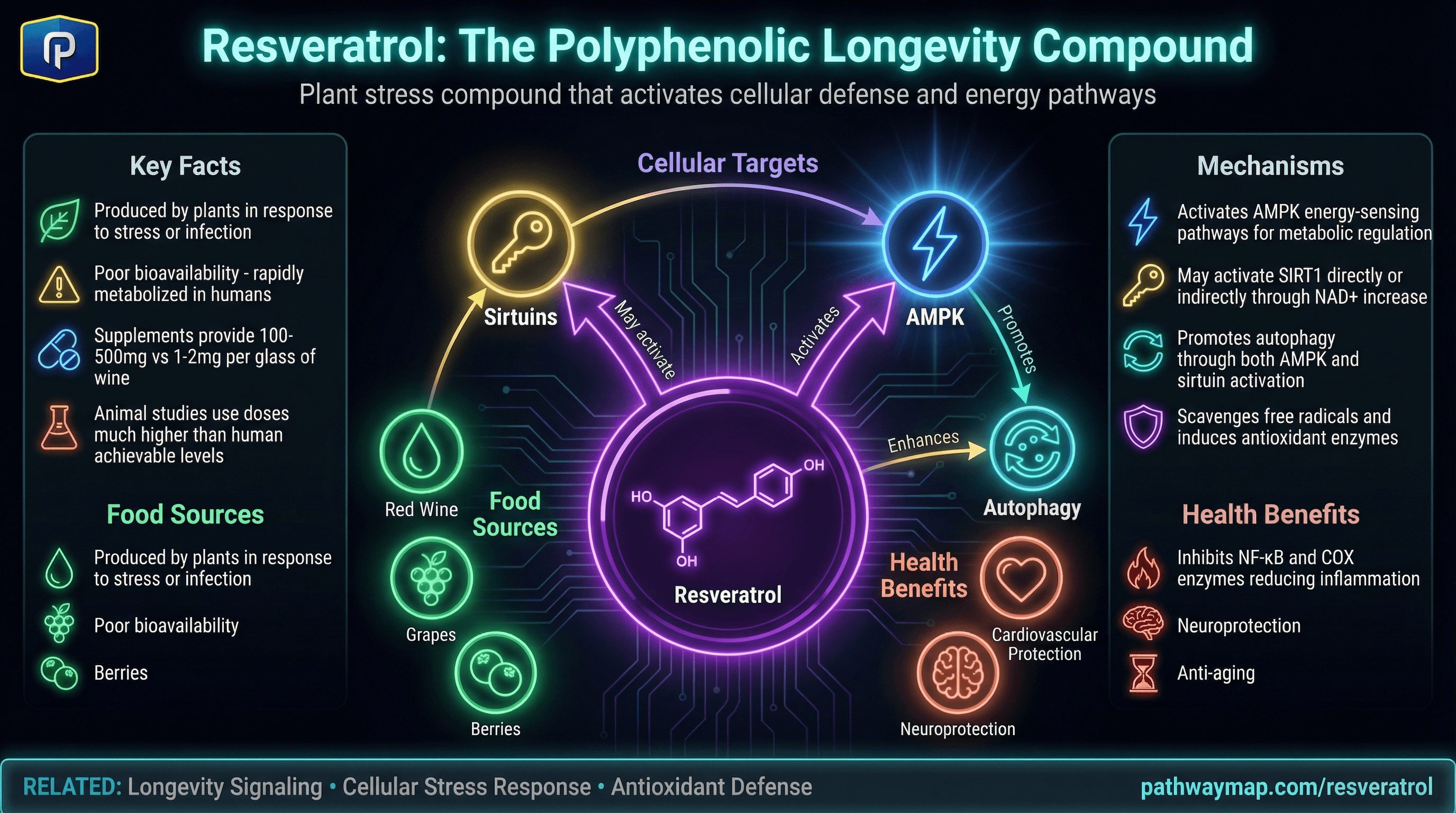
How Resveratrol Works
Sirtuin Activation
Activates SIRT1, a longevity gene that promotes metabolic health, stress resistance, and DNA repair.
AMPK Activation
Turns on the cellular energy sensor, promoting fat burning and metabolic flexibility.
CR Mimetic
Mimics some benefits of calorie restriction without reducing food intake. Activates similar pathways.
Anti-Inflammatory
Inhibits NF-κB and COX enzymes. Reduces inflammatory markers in many studies.
Antioxidant
Direct free radical scavenging and upregulation of endogenous antioxidant defenses.
Cardiovascular
Improves endothelial function, reduces oxidation of LDL, and may lower blood pressure.
The Resveratrol Debate
The Promise
- Dramatic lifespan extension in yeast, worms, flies
- Strong preclinical data in many disease models
- SIRT1 activation confirmed in cell studies
- Some human studies show metabolic benefits
- Good safety profile at typical doses
The Limitations
- Poor bioavailability (~1% reaches bloodstream)
- Rapid metabolism by liver and gut
- Human studies less impressive than animal
- No lifespan extension in normal mice
- Optimal dose still unclear
The Bioavailability Problem
Resveratrol's biggest challenge is getting enough into the bloodstream:
Rapid Metabolism
Gut and liver quickly convert it to sulfates and glucuronides. Most never reaches target tissues.
Improve Absorption
Take with fat, use micronized forms, or combine with piperine (black pepper extract).
Metabolite Activity?
Some metabolites may still be active. The story may be more complex than just parent compound.
Potential Benefits
Cardiovascular Health
May improve endothelial function, reduce arterial stiffness, and lower blood pressure in some studies.
Metabolic Health
May improve insulin sensitivity and glucose metabolism, especially in diabetics or metabolic syndrome.
Brain Health
Crosses blood-brain barrier. May support cognitive function and protect against neurodegeneration.
Anti-Inflammatory
Reduces inflammatory markers in various conditions. May benefit chronic inflammation.
Sources & Dosing
Food Sources
Red grapes (skin), red wine, peanuts, blueberries, cranberries. Food provides low amounts.
Supplementation
100-500mg typical. Some studies use 1-2g. Trans-resveratrol is the active form.
Considerations
Take with fat. Consider micronized forms. May interact with blood thinners at high doses.
Synergistic Combinations
+ NAD+ Precursors
SIRT1 requires NAD+ to function. Combining with NR or NMN may enhance sirtuin activation.
+ Quercetin
May have synergistic effects on inflammation and cellular senescence. Popular longevity stack.
+ Pterostilbene
Related compound with better bioavailability. Some combine both for broader coverage.
+ Piperine
Black pepper extract that inhibits glucuronidation, potentially increasing resveratrol bioavailability.