Spermidine
The longevity polyamine. Spermidine is a natural compound that triggers autophagy—cellular cleanup. It extends lifespan in multiple organisms and has cardiovascular and cognitive benefits in humans. Found in aged cheese, wheat germ, and mushrooms. A caloric restriction mimetic.
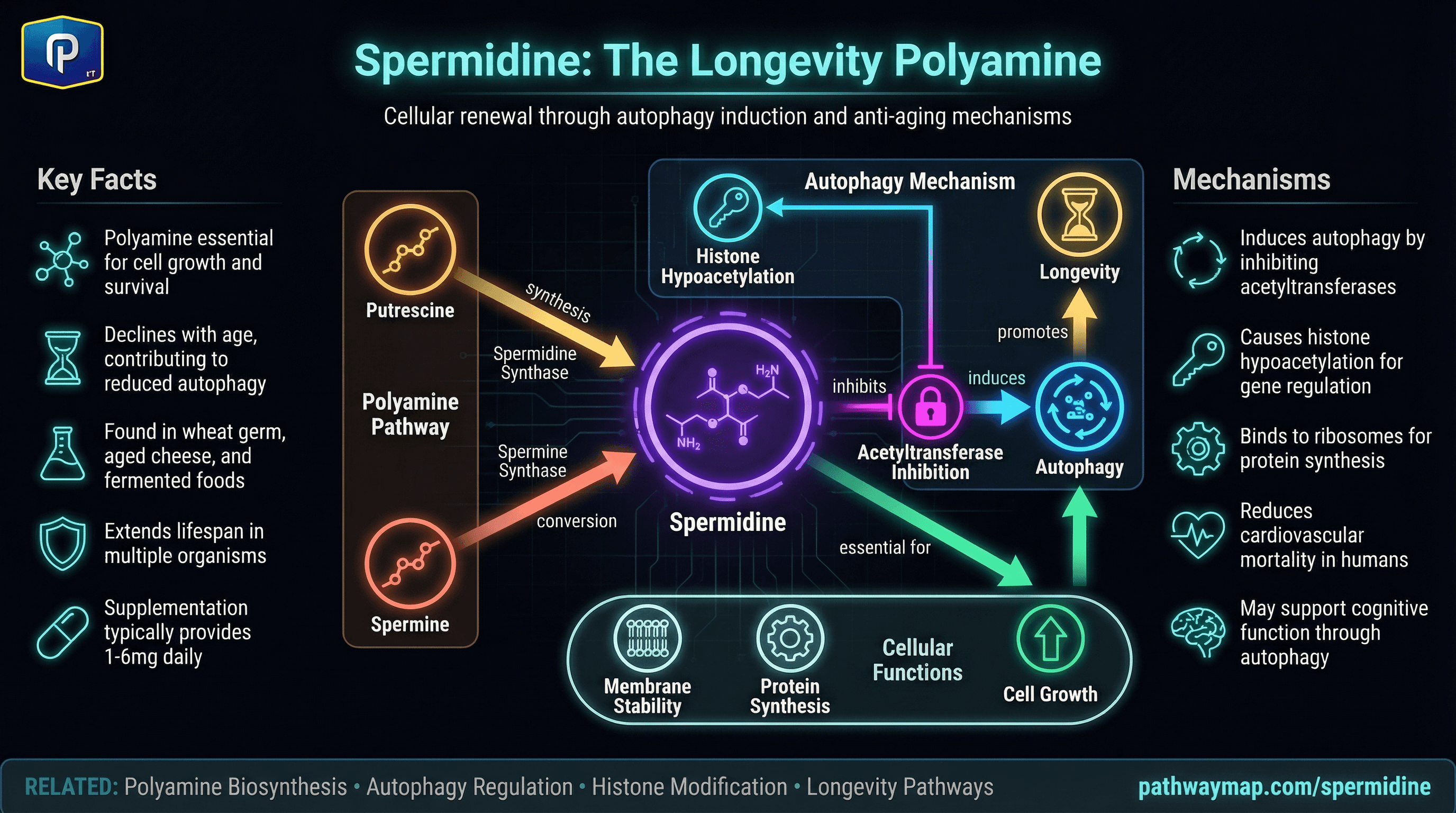
How Spermidine Works
Autophagy Induction
Triggers cellular cleanup. Degrades damaged proteins. Recycles components. Mimics fasting.
Mitophagy
Removes damaged mitochondria. Improves energy production. Cellular rejuvenation.
Epigenetic Effects
Influences gene expression. Histone acetylation. Anti-aging pathways.
Research Benefits
Cardiovascular
Reduces blood pressure. Improves arterial stiffness. Heart protective.
Cognitive
Memory improvement in trials. Neuroprotective. Clears brain waste.
Hair Growth
Prolongs hair growth phase. Reduces hair loss. Applied topically too.
Anti-Inflammatory
Reduces systemic inflammation. Aging is inflammatory. Spermidine counters.
Cancer Prevention
Autophagy clears precancerous cells. Epidemiological associations. Research ongoing.
Lifespan
Extends lifespan in yeast, worms, flies, mice. Human trials underway.
Food Sources & Supplementation
Aged Cheese
Highest source. Blue cheese, cheddar, parmesan. Longer aging = more spermidine.
Wheat Germ
Plant source. 2-3 tablespoons provides meaningful amount. Often used in studies.
Mushrooms
Good source. Also provide other longevity compounds. Especially shiitake.
Natto
Fermented soybeans. High in spermidine. Also provides K2, nattokinase.
Supplements
Usually from wheat germ extract. 1-5mg common doses. Emerging market.
Gut Production
Gut bacteria make some. Healthy microbiome produces more. Diet influences.