5-Alpha Reductase
Enzyme converting testosterone to the more potent androgen DHT. Inhibited by zinc and certain phytochemicals.
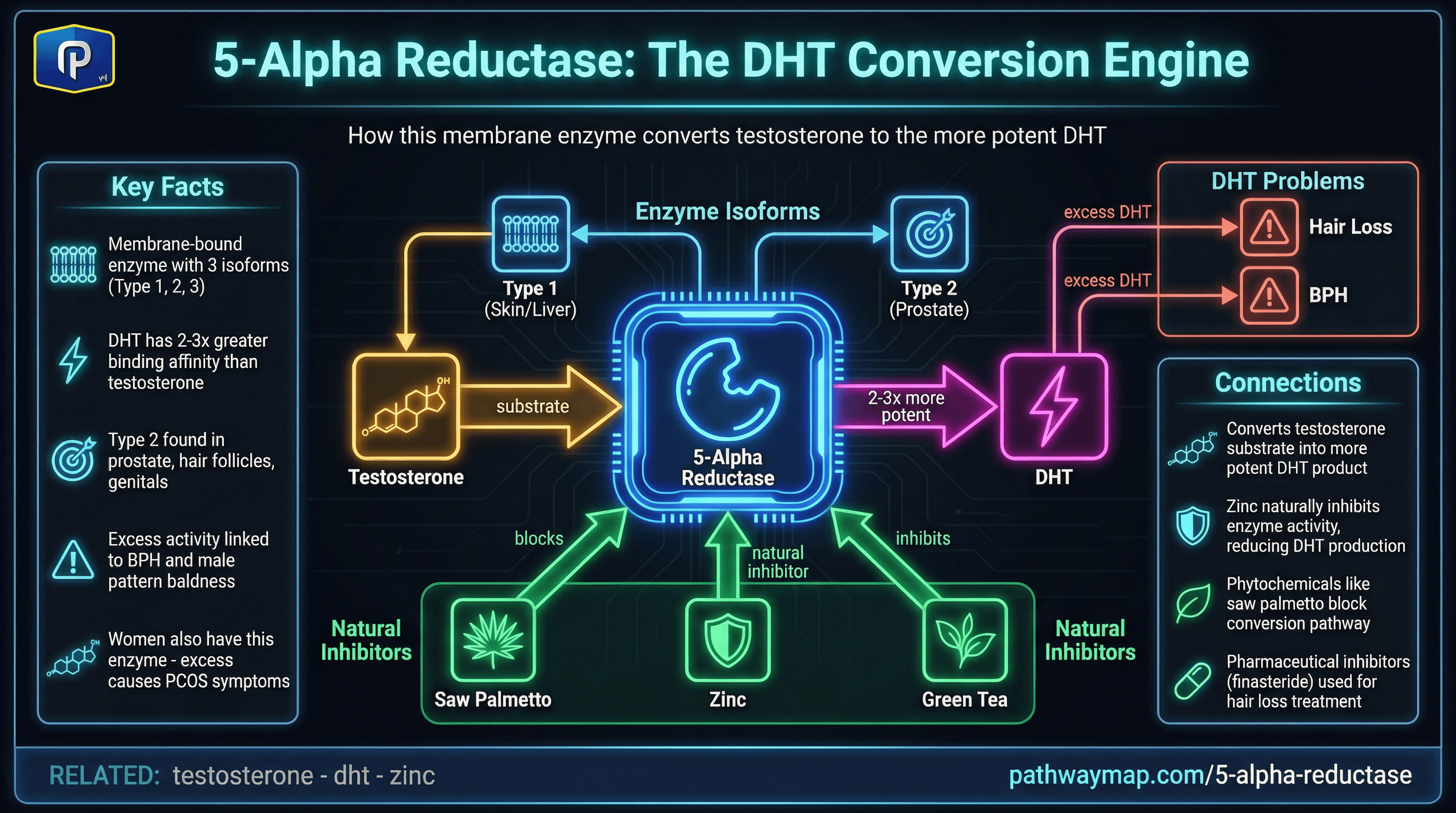
5-Alpha reductase is a membrane-bound enzyme that converts testosterone into dihydrotestosterone (DHT), a more potent androgen with 2-3 times greater binding affinity for androgen receptors. There are three isoforms: Type 1 (skin, liver), Type 2 (prostate, hair follicles, genitals), and Type 3 (various tissues).
DHT is essential for male sexual development, prostate function, and body hair growth.
However, excess DHT activity is implicated in benign prostatic hyperplasia (BPH), male pattern baldness (androgenic alopecia), and acne. Zinc is a natural inhibitor of 5-alpha reductase. Other natural inhibitors include saw palmetto, pygeum, pumpkin seed oil, and green tea catechins.
Pharmaceutical inhibitors (finasteride, dutasteride) are used for BPH and hair loss but can cause sexual side effects. Women also have 5-alpha reductase activity, and excess can contribute to hirsutism and polycystic ovary syndrome (PCOS) symptoms.
Metabolic Connections
5-Alpha Reductase connects to 4 other pathways.
Hormones

Testosterone
5-alpha reductase converts testosterone into the more potent androgen dihydrotestosterone (DHT)
Primary male sex hormone also important in women. Affects muscle, bone, mood, libido, and cognitive function in both sexes.
Testosterone
5-alpha reductase converts testosterone to the more potent DHT
Primary male sex hormone also important in women. Affects muscle, bone, mood, libido, and cognitive function in both sexes.
Trace Minerals

Zinc
Zinc is a natural inhibitor of 5-alpha reductase activity, reducing the conversion of testosterone to DHT
Essential trace mineral required for 300+ enzymes and nearly every aspect of immune function, protein synthesis, and wound healing.
Zinc
Zinc inhibits 5-alpha reductase, reducing DHT production
Essential trace mineral required for 300+ enzymes and nearly every aspect of immune function, protein synthesis, and wound healing.