The immune mineral.
Zinc is required for over 300 enzymes and virtually every aspect of immune function. Most people don't get enough.

enzymes require zinc to function.
It's involved in virtually every cellular process.
What zinc does.
Immune Function
Required for T-cell development, neutrophil function, natural killer cell activity, and cytokine production. Critical at every level.
DNA Synthesis
Essential for DNA and RNA synthesis. Needed for cell division and growth. Critical during pregnancy and childhood.
Protein Synthesis
Required for building and repairing tissues. Wound healing, muscle growth, and recovery all depend on zinc.
Taste and Smell
Zinc-dependent enzymes are essential for taste bud function. Loss of taste/smell is a classic deficiency sign.
Blood Sugar
Required for insulin storage and secretion. Zinc is stored with insulin in pancreatic beta cells.
Testosterone & Fertility
Required for testosterone synthesis and sperm production. Prostate has highest zinc concentration in the body.
Zinc and neurotransmitters.
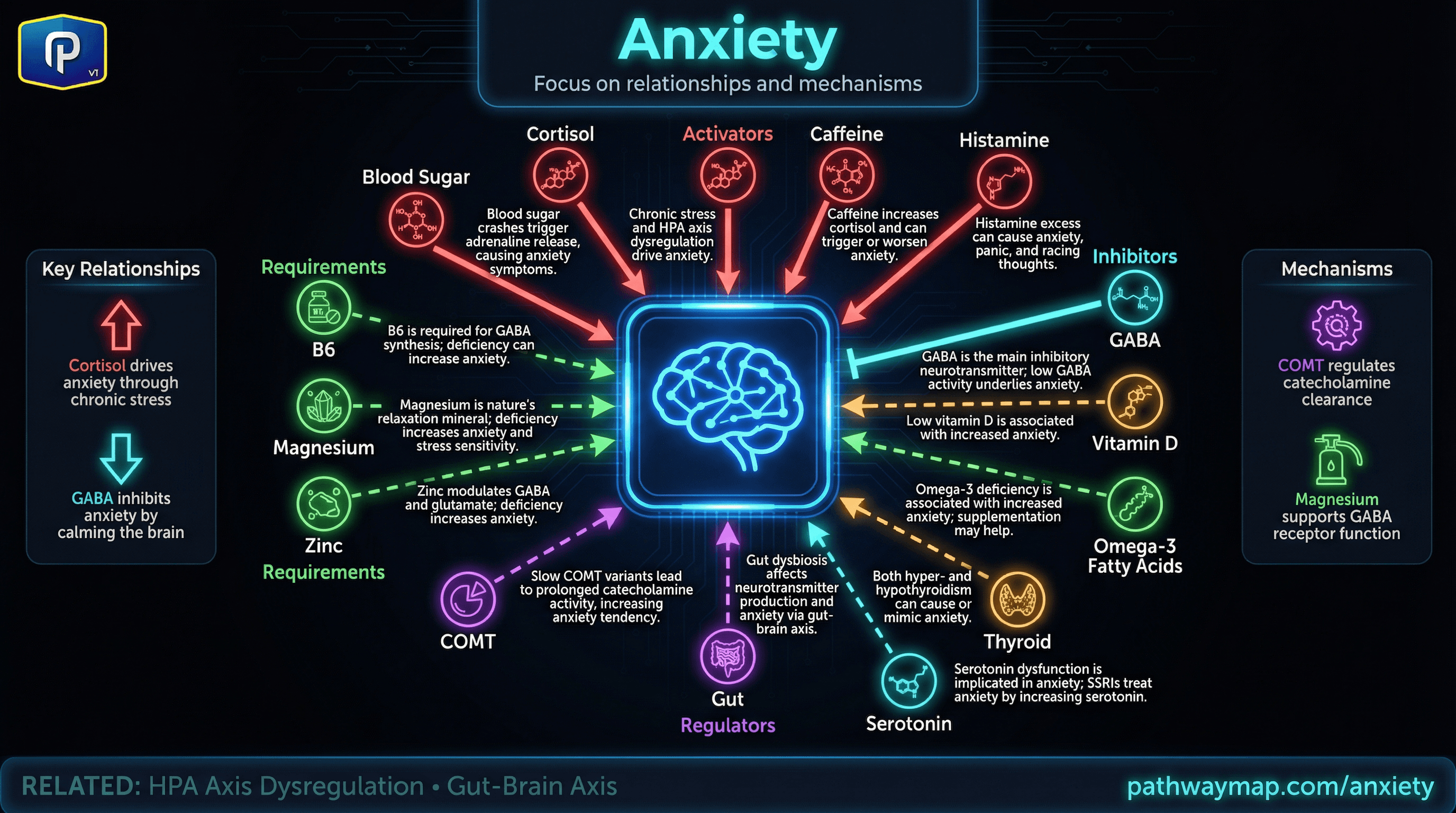
Zinc plays a critical role in the balance between calming and excitatory brain signaling.
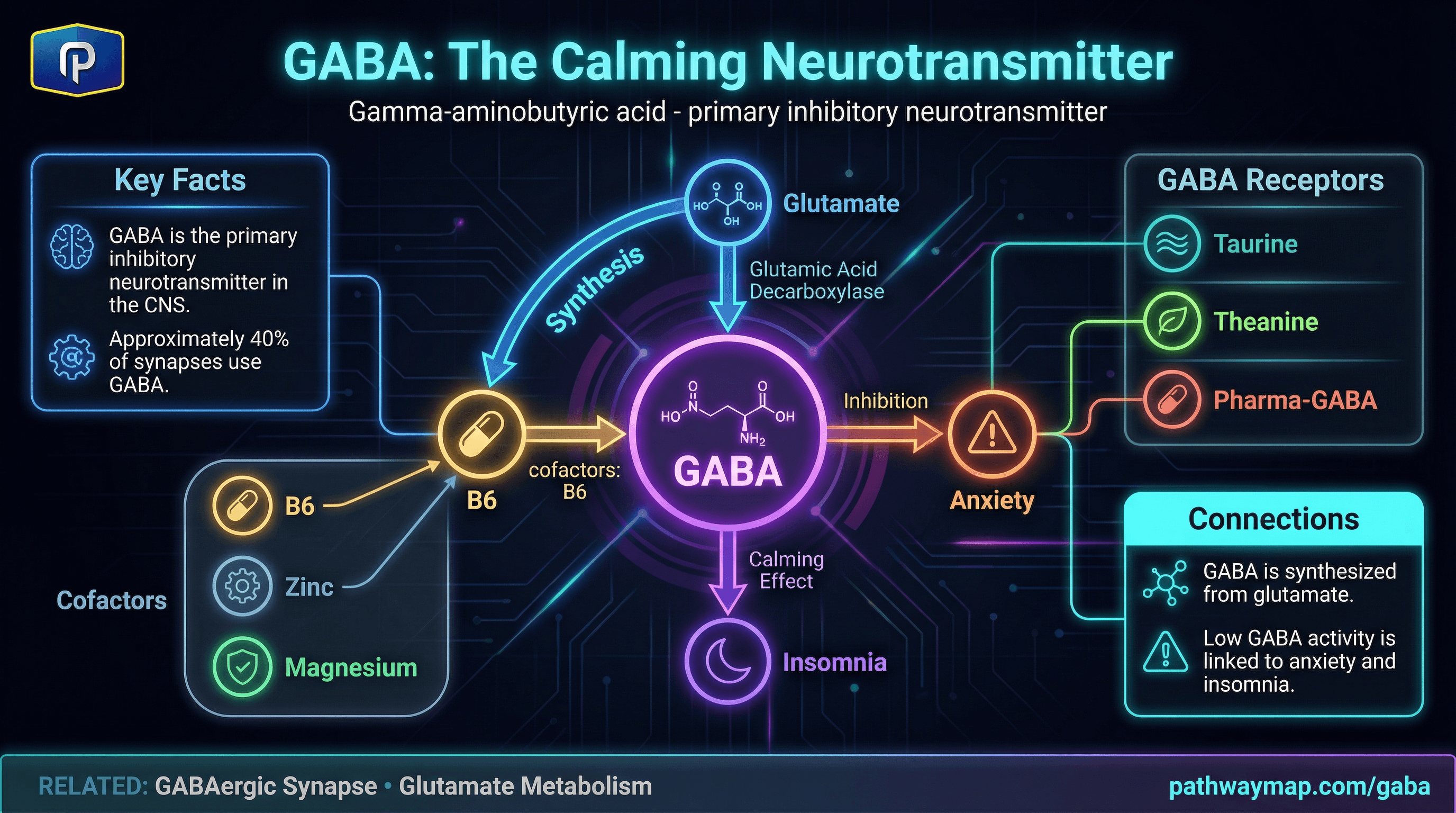
Supports GABA
Zinc supports GAD enzyme function, which produces GABA from glutamate.
Modulates Glutamate
Zinc inhibits NMDA receptors, reducing excitatory glutamate signaling.
Deficiency tips the balance toward anxiety and overstimulation. Less GABA + more glutamate = heightened stress response.
The zinc-copper relationship.
Zinc
Copper
They compete for absorption. High zinc intake can induce copper deficiency. High copper can deplete zinc.
Ideal ratio: Roughly 10-15:1 (zinc:copper) in diet/supplements, though this is debated.
High-dose zinc (>40mg/day) long-term can cause copper deficiency, leading to anemia, neutropenia, and neurological issues.
If supplementing zinc long-term: Consider adding small amounts of copper (1-2mg) or take breaks from zinc supplementation.
Signs of zinc deficiency.
At-risk groups: vegetarians/vegans, elderly, those with digestive issues, chronic diseases.
Forms and dosing.
Zinc Picolinate & Glycinate
Well-absorbed forms. Good for general supplementation. Gentle on stomach.
Zinc Citrate
Good absorption. Common and affordable option.
Zinc Carnosine
Specifically studied for gut health. May help with leaky gut and gastritis.
Zinc Sulfate
Common but may cause nausea. Less ideal for sensitive stomachs.
Dosing Guidelines
- General support: 15-30mg elemental zinc per day
- Acute illness: Higher doses short-term (up to 50mg)
- Take with food to reduce stomach upset
- Take away from other minerals (they compete for absorption)
- Don't exceed 40mg/day long-term without copper supplementation