Your brain's brake pedal.
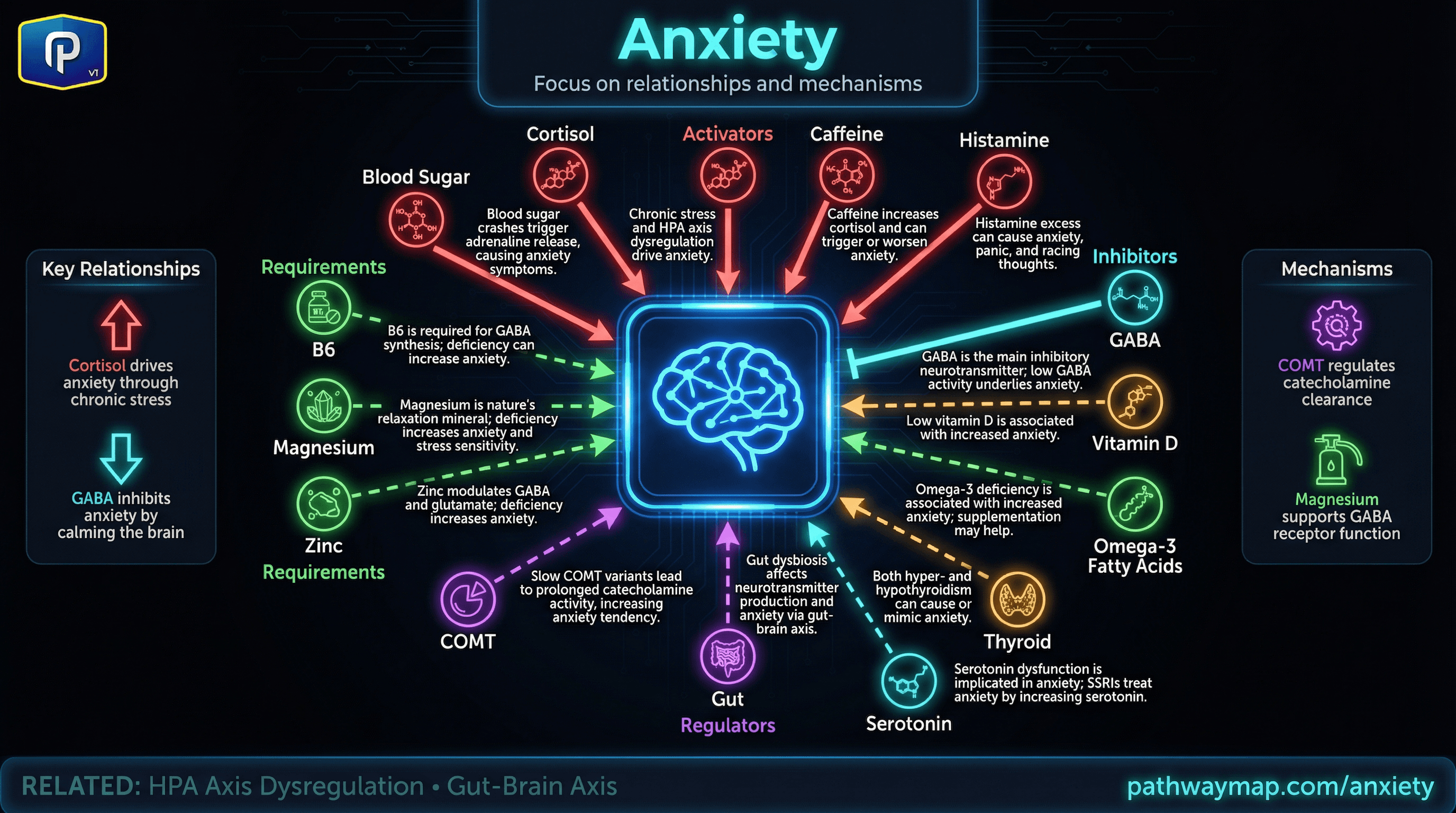
GABA is the primary inhibitory neurotransmitter. When it's low, anxiety, insomnia, and tension take over.
of all synapses in the brain use GABA.
It's not a minor player. It's essential for basic brain function.
The balance that matters most.
Your brain runs on a balance between excitation and inhibition. GABA and glutamate are the key players.
- •Reduces neuronal excitability
- •Promotes calm and relaxation
- •Enables sleep
- •Prevents seizures
- •Increases neuronal firing
- •Enables learning and memory
- •Promotes alertness
- •Excess causes excitotoxicity
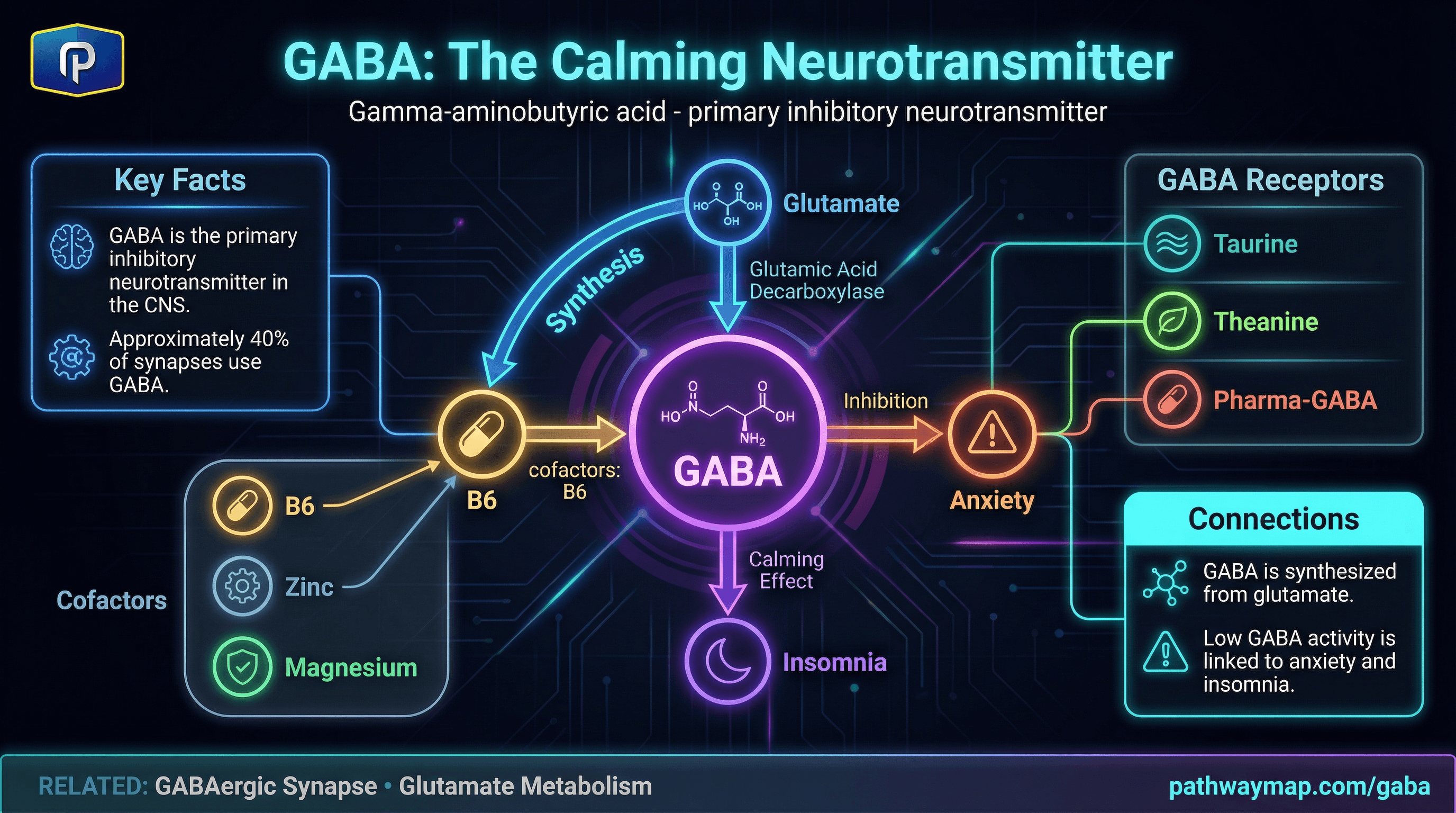
The key insight: GABA is made FROM glutamate. The same enzyme (GAD) that creates GABA also removes glutamate. When this conversion is impaired, you get less calming GABA and more excitatory glutamate. Double problem.
How your brain makes GABA.
Glutamine
Amino acid precursor. Converted to glutamate by glutaminase.
Glutamate
Excitatory neurotransmitter. Immediate precursor to GABA.
GABA
Inhibitory neurotransmitter. Binds GABA-A and GABA-B receptors.
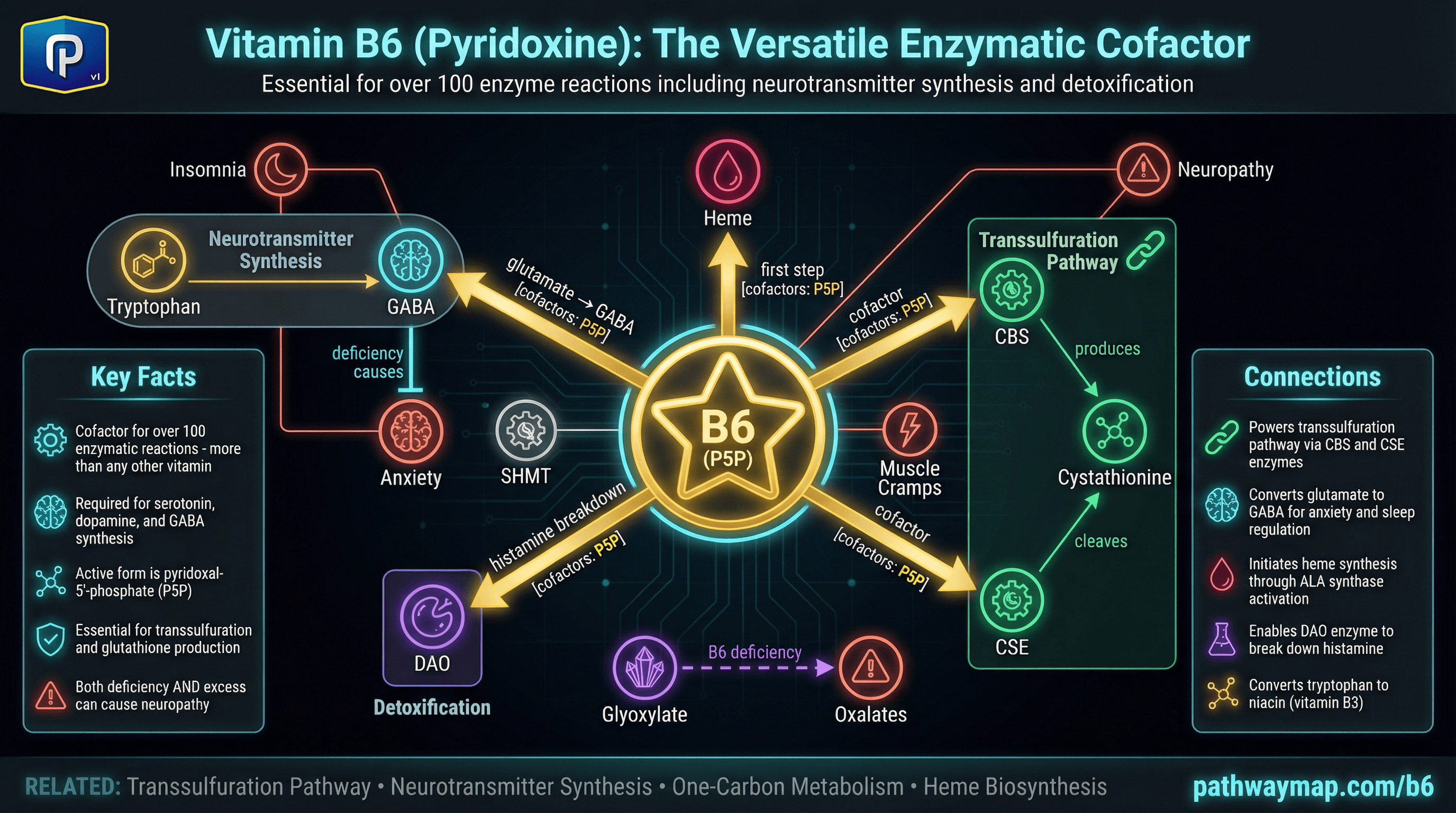
The one vitamin GABA can't be made without.
Vitamin B6 (P5P form)
The essential cofactor for GAD, the enzyme that converts glutamate to GABA. Without adequate B6, your brain cannot produce enough GABA.
B6 deficiency is common. Signs include anxiety, irritability, and difficulty sleeping—all GABA symptoms.
How to support GABA function.
Vitamin B6 (P5P)
Essential cofactor for GAD enzyme. P5P is the active form, bypassing liver conversion.
Zinc
Supports GAD enzyme function and modulates GABA receptor activity.
Magnesium
Enhances GABA-A receptor function. Acts as a positive allosteric modulator.
Taurine
Activates GABA-A receptors directly. Provides calming, anxiolytic effects similar to GABA.
L-Theanine
Found in tea. Promotes GABA production and enhances alpha brain waves. Calming without sedation.
Two types of GABA receptors.
GABA-A Receptors
Ionotropic (fast-acting). Open chloride channels for immediate inhibition.
Targeted by:
- • Benzodiazepines (Xanax, Valium)
- • Barbiturates
- • Alcohol
- • General anesthetics
GABA-B Receptors
Metabotropic (slower, longer-lasting). G-protein coupled for sustained effects.
Targeted by:
- • Baclofen (muscle relaxant)
- • GHB
- • Phenibut
Note on GABA supplementation: Oral GABA largely doesn't cross the blood-brain barrier. Supporting GABA synthesis (with B6, zinc, etc.) or using GABA-ergic compounds (theanine, taurine, magnesium) is generally more effective than taking GABA directly.