The workhorse vitamin.
B6 is a cofactor in over 100 enzyme reactions—more than any other vitamin. It's essential for making neurotransmitters.
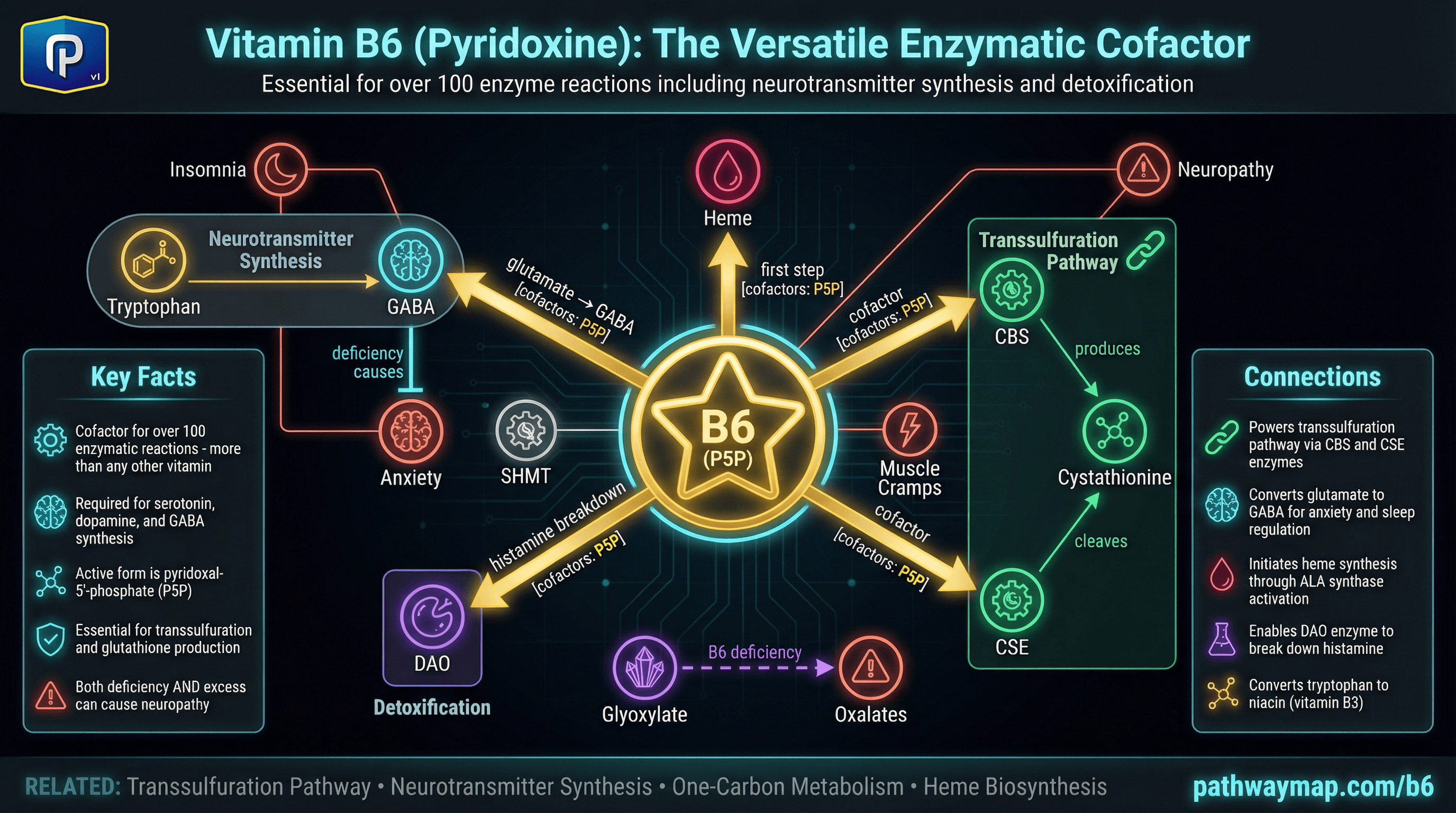
enzymatic reactions require B6 as a cofactor.
That's more than any other vitamin. It's involved in nearly everything.
The neurotransmitter factory.
B6 is required to make your three main mood-regulating neurotransmitters.
The calming neurotransmitter
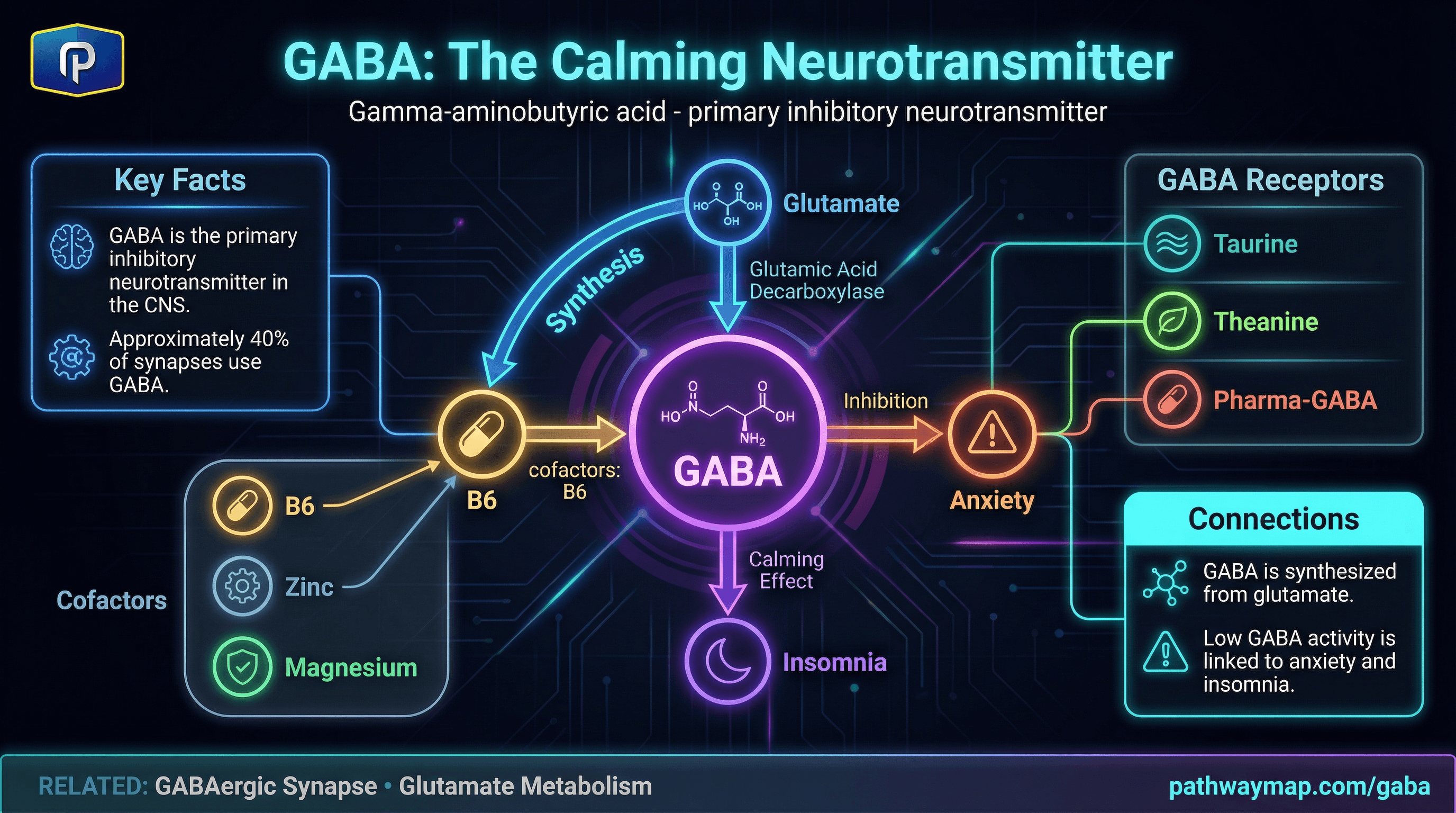
B6 is the cofactor for GAD, the enzyme that makes GABA. Without it, you can't make enough calming GABA.
The mood neurotransmitter
B6 is required for the final step of serotonin synthesis. Deficiency impairs mood and sleep.
The motivation neurotransmitter
B6 is needed to convert L-DOPA to dopamine. Low dopamine means low motivation and pleasure.
What else B6 does.
Histamine Breakdown
Cofactor for DAO enzyme, which breaks down histamine. Deficiency can worsen histamine intolerance.
Glutathione Production
Required for CBS enzyme in transsulfuration—the pathway that produces cysteine for glutathione.
Oxalate Metabolism
Required for glyoxylate detoxification. Deficiency leads to oxalate accumulation and kidney stones.
Heme Production
Cofactor for ALA synthase, the first step in making heme for hemoglobin. Affects oxygen carrying capacity.
Glucose Release
Needed for glycogen phosphorylase, which releases stored glucose. Affects blood sugar stability.
Hormone Modulation
Modulates steroid hormone activity. Often used for PMS symptoms and hormonal balance.
Pyridoxine vs P5P.
Pyridoxine (B6)
The common supplement form. Must be converted to P5P by the liver using riboflavin (B2).
P5P (Pyridoxal-5-Phosphate)
The active coenzyme form. Ready to use without conversion.
Important: High-dose pyridoxine (over 100mg/day long-term) can paradoxically cause B6 toxicity symptoms including peripheral neuropathy. P5P is generally safer for higher doses. If you have symptoms of B6 excess while taking pyridoxine, switch to P5P.
Signs of B6 deficiency.
Note: Vivid dreams can indicate either deficiency (starting B6) or excess (taking too much).