More than allergies.
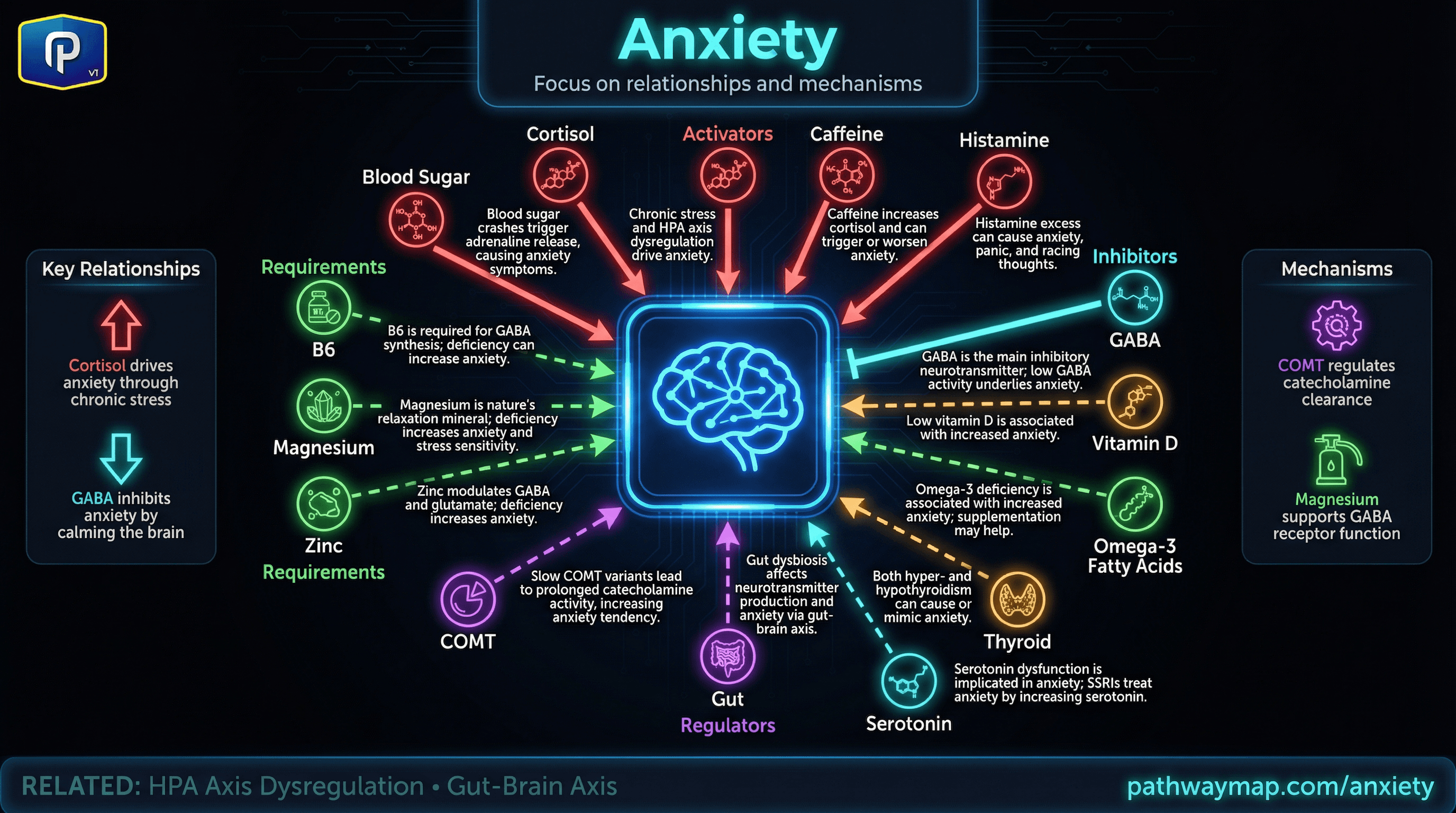
Histamine regulates wakefulness, digestion, and immunity. Problems arise when you can't clear it fast enough.
Four receptors, four functions.
Histamine isn't one thing—it acts differently depending on which receptor it activates.
Allergic Response
Itching, hives, runny nose, vasodilation, bronchoconstriction. Also promotes wakefulness. Antihistamines (Benadryl) block this receptor.
Gastric Acid
Stimulates stomach acid secretion. Also affects heart rate. H2 blockers (Pepcid, Zantac) reduce acid production.
Brain Function
Modulates release of other neurotransmitters. Affects cognition, sleep-wake cycle, and appetite. Mostly in the brain.
Immune Cells
Attracts immune cells to inflammation sites. Involved in chronic inflammatory conditions and autoimmunity.
Where histamine comes from.
Mast Cells
Store large amounts, release during allergic reactions. The classic "allergy" source.
Gut Cells (ECL cells)
Release histamine to stimulate stomach acid production. Why H2 blockers reduce heartburn.
Brain Neurons
Histaminergic neurons regulate wakefulness. Why antihistamines make you drowsy.
Gut Bacteria
Some species produce histamine. Dysbiosis can lead to excess histamine production.
Diet
Aged and fermented foods (wine, cheese, sauerkraut), cured meats, leftover foods, certain fish. Major contributor for sensitive individuals.
How histamine is cleared.
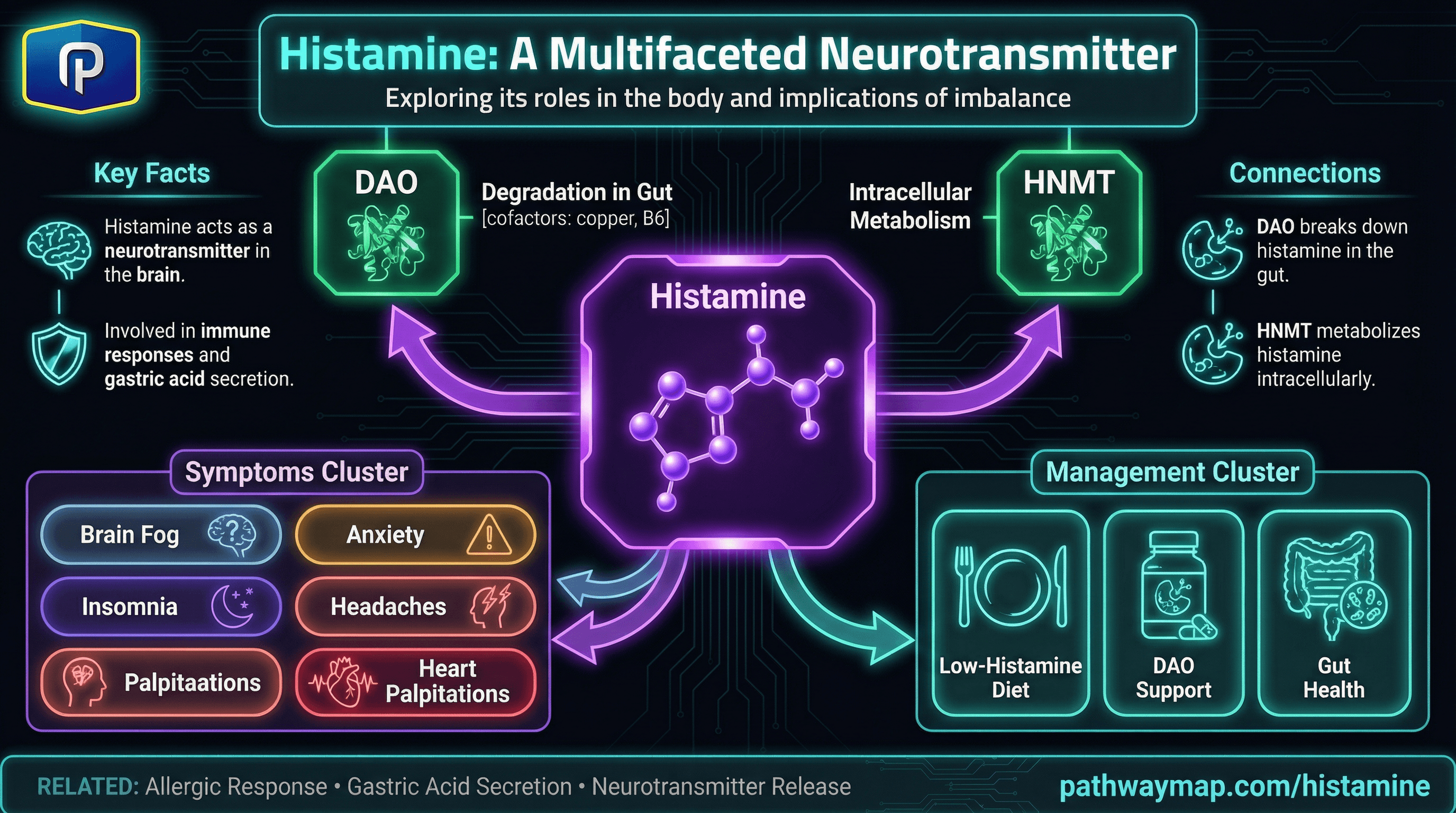
DAO
Diamine oxidase. Breaks down histamine in the gut. Handles dietary histamine.
Requires: Copper, B6, Vitamin C
Location: Intestinal lining, kidneys, placenta
Inhibited by: Alcohol, some medications
HNMT
Histamine N-methyltransferase. Breaks down histamine inside cells. Uses SAMe.
Requires: SAMe (methylation)
Location: Brain, liver, kidneys
Note: MTHFR variants may reduce HNMT function
Histamine intolerance = when histamine accumulates faster than you can break it down. Not an allergy—it's a capacity issue.
Symptoms of excess histamine.
Pattern to watch: Symptoms that come and go, worsen after eating (especially aged/fermented foods), worse during allergy season, around your period, or during stress.
What helps.
Low-Histamine Diet
Avoid aged cheeses, fermented foods, alcohol, cured meats, leftover food. Eat fresh. This reduces the load.
Vitamin B6
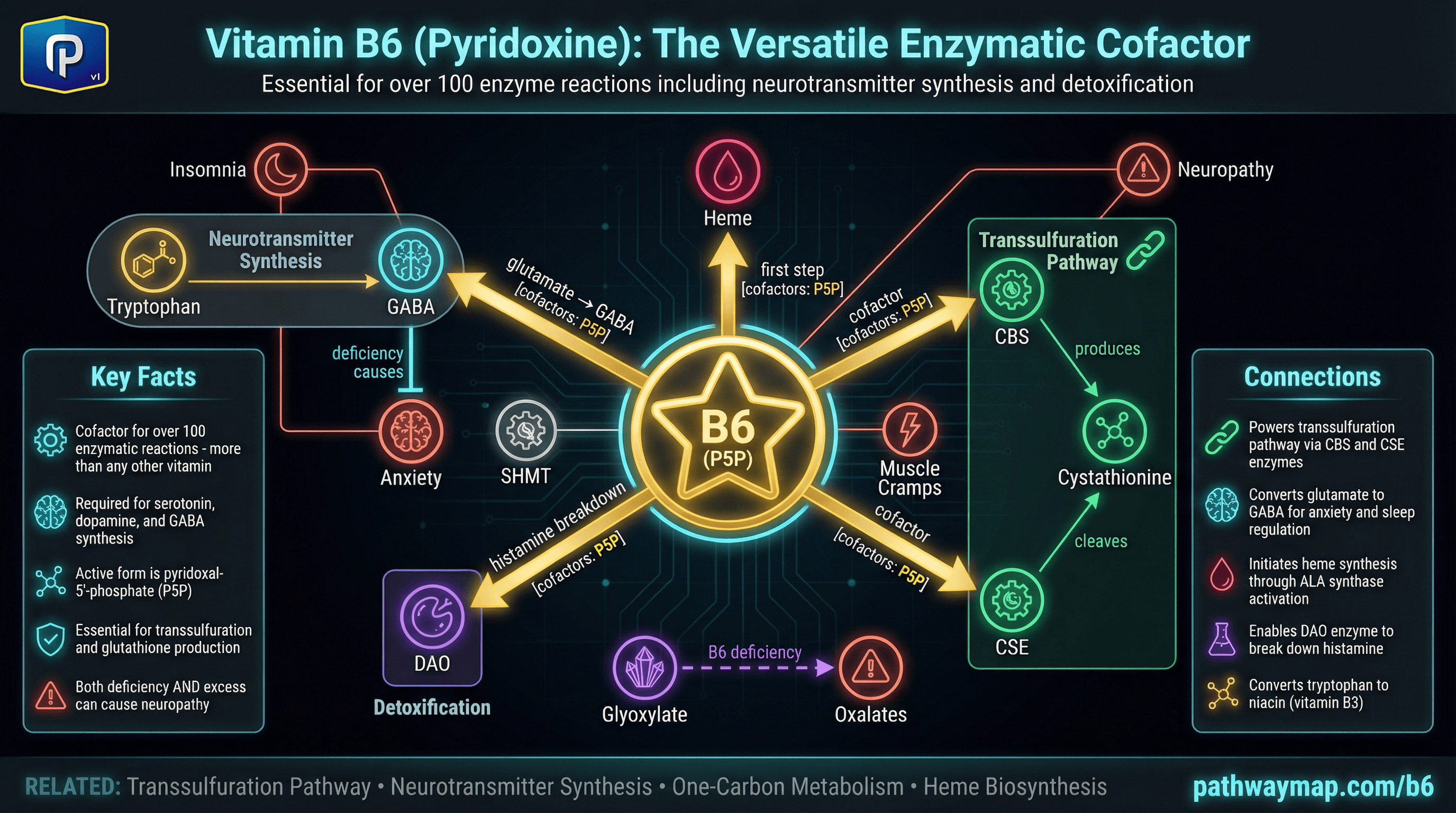
Cofactor for DAO enzyme. P5P form is active and effective.
Copper
Another DAO cofactor. Most people get enough from diet, but some need support.
Vitamin C
Supports DAO function and helps degrade histamine directly. 500-2000mg/day.
Supplemental DAO
Take before meals to help break down dietary histamine. Won't affect internally-produced histamine.
Address Gut Dysbiosis
Some bacteria produce histamine. SIBO and dysbiosis can drive histamine intolerance. Treat the root cause.