The master antioxidant.
Glutathione protects every cell, neutralizes toxins, and recycles other antioxidants. It's the foundation of detoxification.
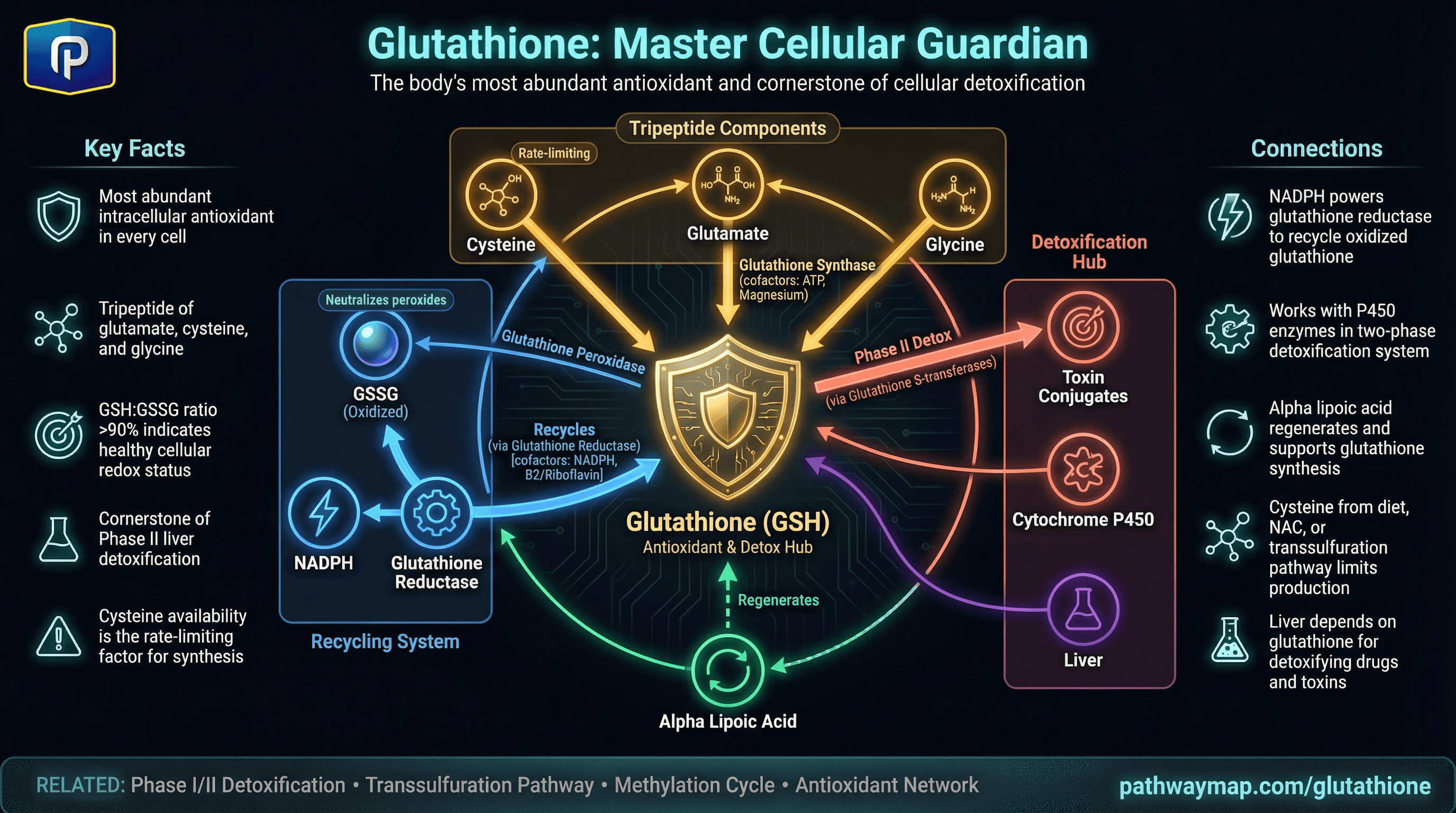
What glutathione is.
A tripeptide made from three amino acids. Every cell synthesizes it, and every cell needs it.
Cysteine is rate-limiting. It's the bottleneck. This is why NAC (N-acetyl cysteine) is so effective at raising glutathione.
of cellular glutathione should be in reduced (active) form.
The GSH:GSSG ratio indicates your cellular redox status and oxidative stress levels.
What glutathione does.
Antioxidant Defense
Neutralizes reactive oxygen species and protects cells from oxidative damage. The primary cellular antioxidant.
Recycles Other Antioxidants
Regenerates vitamins C and E after they've been used. The antioxidant that recharges other antioxidants.
Phase II Detoxification
Conjugates to toxins, making them water-soluble for elimination. Critical for clearing heavy metals, drugs, and chemicals.
Protein Regulation
Modifies proteins through glutathionylation. Regulates enzyme activity and cell signaling.
DNA Protection
Protects DNA from oxidative damage. Involved in DNA synthesis and repair processes.
Drug Metabolism
Detoxifies acetaminophen (Tylenol) metabolites. Depleted by alcohol, which is why hangovers are worse with Tylenol.
What depletes glutathione.
Acetaminophen (Tylenol)
The toxic metabolite NAPQI must be detoxified by glutathione. Overdose depletes glutathione completely—causing liver failure.
Alcohol
Metabolism produces oxidative stress and depletes glutathione. Chronic use significantly reduces levels.
Chronic Oxidative Stress
Inflammation, infections, and chronic disease increase demand beyond production capacity.
Toxic Exposures
Heavy metals (mercury, lead), pesticides, and environmental chemicals all require glutathione for elimination.
Aging
Glutathione levels decline with age. This may contribute to age-related disease and reduced detox capacity.
Poor Diet
Low protein intake limits cysteine availability. Lack of sulfur-rich vegetables reduces precursors.
How to support glutathione.
N-Acetyl Cysteine (NAC)
The most effective way to raise glutathione. Provides cysteine, the rate-limiting precursor. 600-1800mg/day typical dose.
Glycine
The third amino acid in glutathione. Often underconsumed. Bone broth and collagen are good sources. 3-5g supplemental.
Liposomal Glutathione
Direct supplementation. Liposomal form has better absorption than regular oral glutathione. For acute needs.
Vitamin B6
Cofactor for CBS enzyme in the transsulfuration pathway, which produces cysteine from homocysteine.
Riboflavin (B2)
Required by glutathione reductase to recycle oxidized glutathione (GSSG) back to active GSH.
Selenium
Required by glutathione peroxidase, the enzyme that uses glutathione to neutralize peroxides.
Sulfur-Rich Vegetables
Cruciferous vegetables (broccoli, cabbage, cauliflower), garlic, and onions provide sulfur for cysteine synthesis.

Videos, studies & resources
Browse all 8 in the Library →Antioxidant Activity with Increased
Antioxidant Activity with Increased Endogenous Levels of Vitamin C, E and A Following Dietary Supplementation with a Combination of Glutathione and Resveratrol Precursors
Open ↗Feasible Relation between
Feasible Relation between Glutathione Peroxidase and Febrile Seizure.
Open ↗Glutathione depletion induces
Glutathione depletion induces ferroptosis, autophagy, and premature cell senescence in retinal pigment epithelial cells.
Open ↗Mercury, cadmium, arsenic and lead
Mercury, cadmium, arsenic and lead are among priority metals for toxicological studies due to the frequent human exposure and to the significant burden of disease following acute and chronic intoxication. Both these mechanisms can explain the much higher toxicity of mercury, when compared to that of other thiol-binding metals that cannot sustain an autocatalytic reversible redox cycle.
Open ↗Mice overexpressing glutathione peroxidase,
Mice overexpressing glutathione peroxidase, Gpx1, developed insulin resistance associated with hyperinsulinemia, hyperglycemia, obesity and a 70% reduction in insulin-stimulated phosphorylation of insulin receptors, compared to wild type control mice.
Open ↗Real-Time Monitoring of Glutathione
Real-Time Monitoring of Glutathione in Living Cells Reveals that High Glutathione Levels Are Required to Maintain Stem Cell Function
Open ↗