The mood molecule.
Serotonin regulates mood, sleep, appetite, and gut function. And most of it isn't made in your brain.

of your serotonin is made in your gut.
This is why gut health and mood are inseparable.
Here's the catch.
Gut serotonin can't cross the blood-brain barrier. Your brain has to make its own.
Gut Serotonin (90%)
- • Regulates intestinal motility
- • Stimulates peristalsis
- • Mediates nausea
- • Controls gut sensation
- • Stored in platelets for clotting
Brain Serotonin (10%)
- • Mood regulation
- • Sleep architecture
- • Appetite and satiety
- • Impulse control
- • Cognition and memory
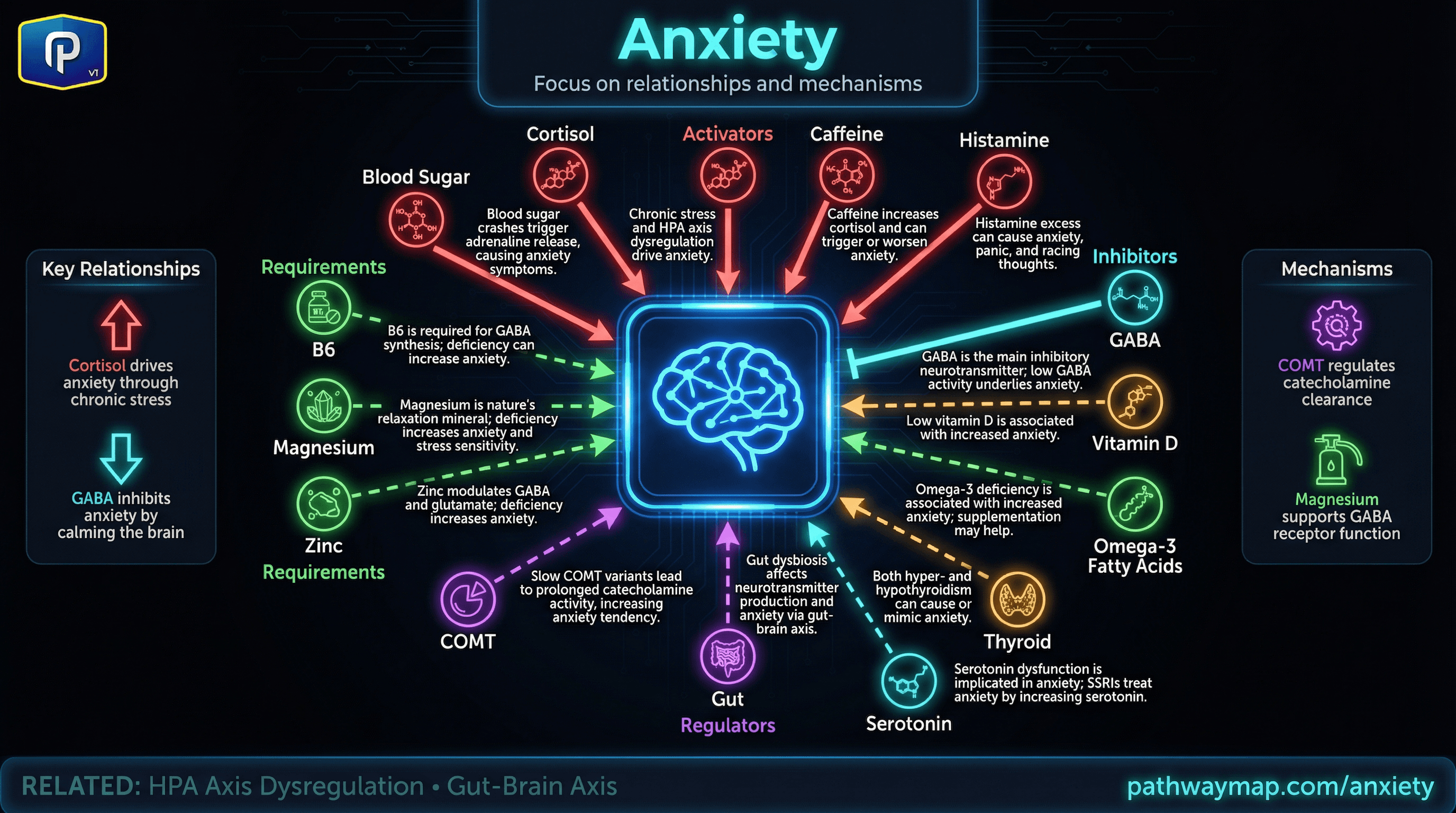
This is why gut health affects mood, but indirectly. A healthy gut microbiome produces tryptophan (serotonin's precursor) and influences serotonin signaling. But the serotonin that regulates your mood is made in your brain.
How serotonin is made.
Tryptophan
Essential amino acid from protein. Must compete with other amino acids to enter the brain.
5-HTP
Intermediate compound. Can be supplemented directly (bypasses rate-limiting step).
Serotonin
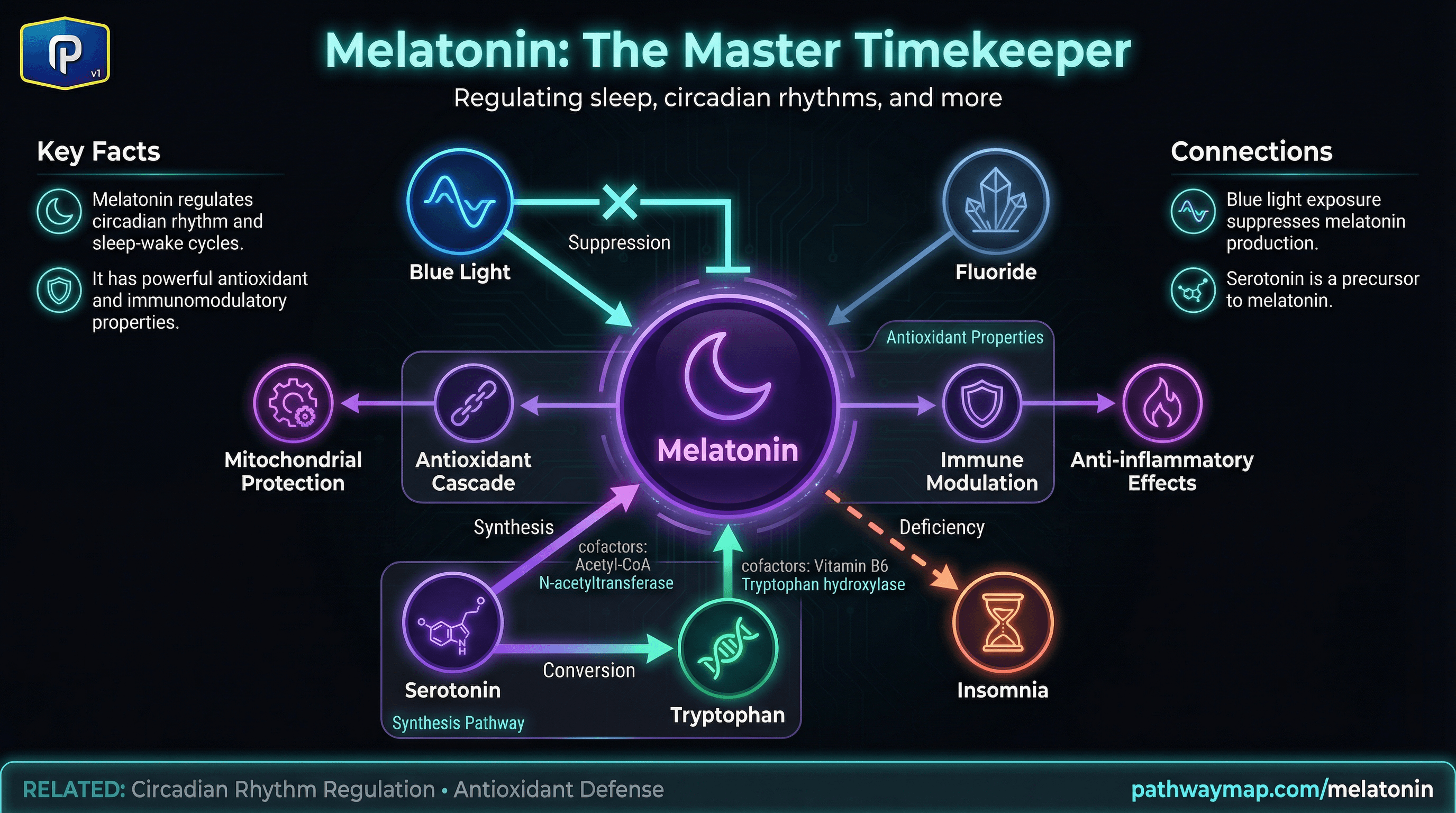
Active neurotransmitter. Can be further converted to melatonin.
Melatonin
Sleep hormone. Serotonin is its direct precursor.
What supports serotonin production.
Tryptophan
The essential amino acid precursor. Found in protein-rich foods. Turkey, eggs, cheese, nuts.
Vitamin B6 (P5P)
Cofactor for the final step converting 5-HTP to serotonin. Also needed for GABA synthesis.
Tetrahydrobiopterin (BH4)
Cofactor for tryptophan hydroxylase. Recycled by folate and B12. MTHFR issues can reduce BH4.
Iron
Required for tryptophan hydroxylase. Iron deficiency impairs serotonin synthesis.
Bright Light
Light exposure increases serotonin synthesis. Explains seasonal depression and why morning light improves mood.
Signs of low serotonin.
About SSRIs and serotonin supplements.
Do not combine 5-HTP or tryptophan supplements with SSRIs or MAOIs without medical supervision.
This combination can cause serotonin syndrome—a potentially dangerous excess of serotonin. Symptoms include agitation, rapid heart rate, high blood pressure, dilated pupils, and in severe cases, seizures.
SSRIs Deplete Nutrients
SSRIs can deplete the very nutrients needed for serotonin synthesis. Learn more about this paradox.