Melatonin
The darkness hormone—regulating your circadian rhythm, sleep-wake cycles, and serving as a powerful antioxidant that protects cells throughout the body.
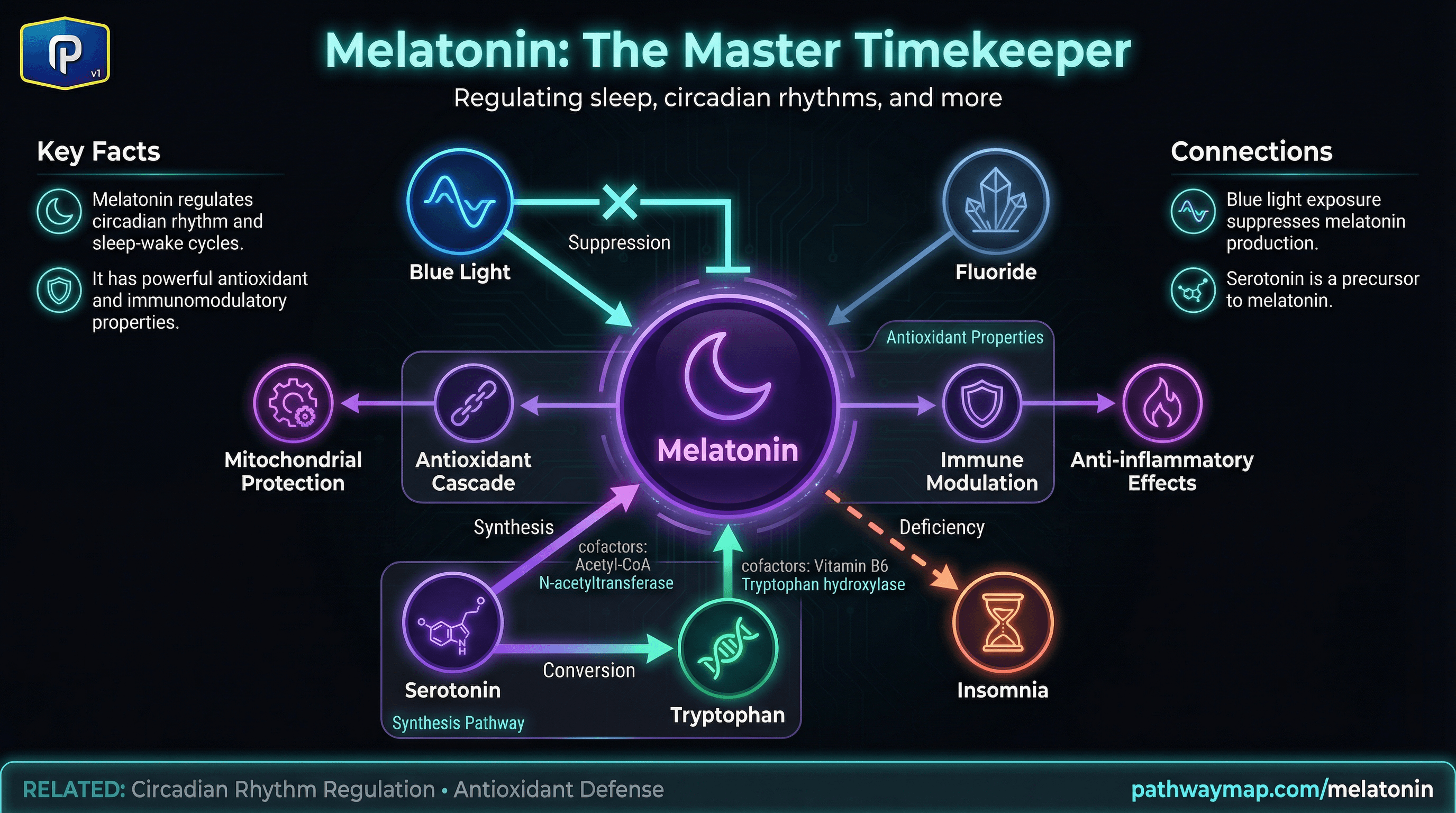
🌙 The Melatonin Synthesis Pathway
Melatonin production follows a precise sequence, mostly occurring in the pineal gland during darkness:
🌃 Circadian Functions
Sleep Signal
Signals darkness to the brain, promoting sleep onset. Doesn't force sleep—prepares the body for it.
Clock Coordinator
Synchronizes peripheral tissue clocks throughout the body with the central clock.
Temperature Regulation
Helps lower core body temperature before sleep—essential for sleep initiation.
Hormone Timing
Influences release patterns of growth hormone, cortisol, and other hormones.
🛡️ Antioxidant Powerhouse
Direct Scavenging
Neutralizes hydroxyl radicals, peroxynitrite, and other reactive species.
Cascade Effect
Uniquely, melatonin's metabolites are also antioxidants—one molecule triggers multiple protective reactions.
Enzyme Upregulation
Increases activity of SOD, catalase, and glutathione peroxidase.
Mitochondrial Protection
Concentrates in mitochondria, protecting energy production from oxidative damage.
⚠️ What Suppresses Melatonin
Blue Light at Night
Screens, LED lights suppress pineal gland. Use blue-blocking glasses or night mode.
Aging
Pineal gland calcification reduces production—supplementation may help older adults.
Caffeine
Blocks adenosine and interferes with melatonin rhythm. Avoid after midday.
Alcohol
Disrupts sleep architecture and suppresses melatonin despite initial drowsiness.
Beta-Blockers
Block norepinephrine signaling needed for melatonin synthesis.
NSAIDs
Ibuprofen, aspirin can reduce melatonin production—avoid before bed.
💊 Supplementation Considerations
Dosing
- 0.3-0.5mg: Physiological dose—mimics natural production
- 1-3mg: Common dose—effective for most people
- 5-10mg+: Pharmacological—may be used for antioxidant effects
Note: More is not always better—start low and find your minimum effective dose.
Timing & Forms
- Timing: 30-60 minutes before desired sleep time
- Immediate release: Best for sleep initiation
- Extended release: Better for sleep maintenance
- Sublingual: Faster absorption, bypasses liver
Metabolic Connections

Serotonin
Direct precursor—serotonin is converted to melatonin in the pineal gland

Tryptophan
Essential amino acid starting the synthesis pathway

Cortisol
Inverse relationship—cortisol rises as melatonin falls in the morning

Glutathione
Melatonin upregulates glutathione synthesis and antioxidant enzymes

Dopamine
Both derived from amino acid precursors—share metabolic resources

Vitamin B6
Required cofactor for converting tryptophan toward serotonin and melatonin