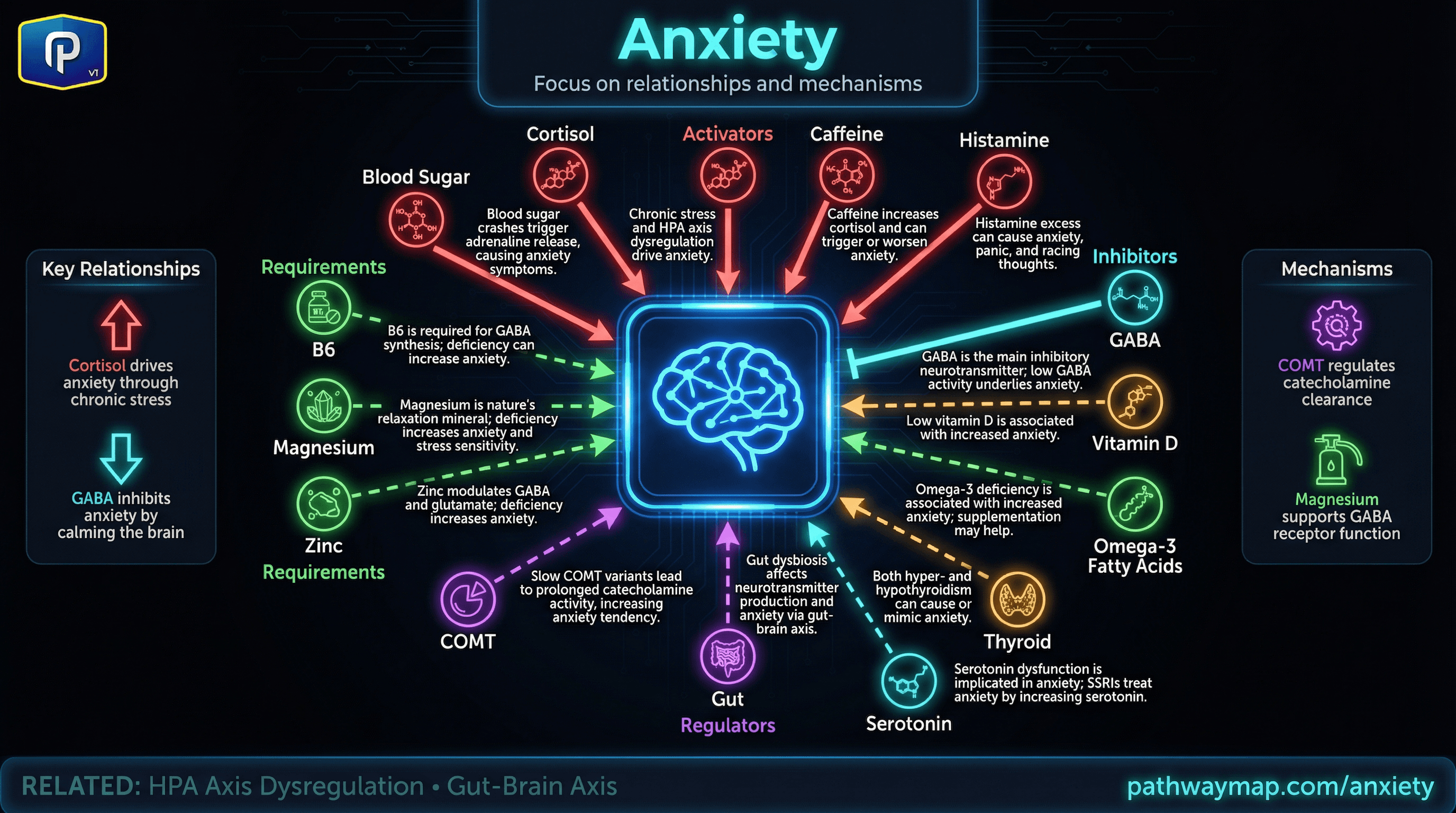
The double-edged hormone.
Cortisol helps you survive stress. But when it stays elevated, it becomes the problem.
The healthy pattern.
Cortisol follows a circadian rhythm. It should peak in the morning and drop at night.
Morning Peak
Cortisol awakening response. Gives you energy to start the day. Should feel alert within 30 minutes of waking.
Evening Drop
Low cortisol allows melatonin to rise. Enables sleep. Should feel naturally tired by 10pm.
Acute vs chronic elevation.
Acute Stress (Adaptive)
Short-term cortisol spikes help you survive and perform.
- ✓Releases stored glucose for energy
- ✓Increases alertness and focus
- ✓Temporarily boosts immune function
- ✓Returns to baseline after stressor ends
Chronic Stress (Destructive)
Long-term elevation damages nearly every system.
- ✗Muscle wasting and central obesity
- ✗Insulin resistance and blood sugar issues
- ✗Immune suppression
- ✗Hippocampal damage (memory problems)
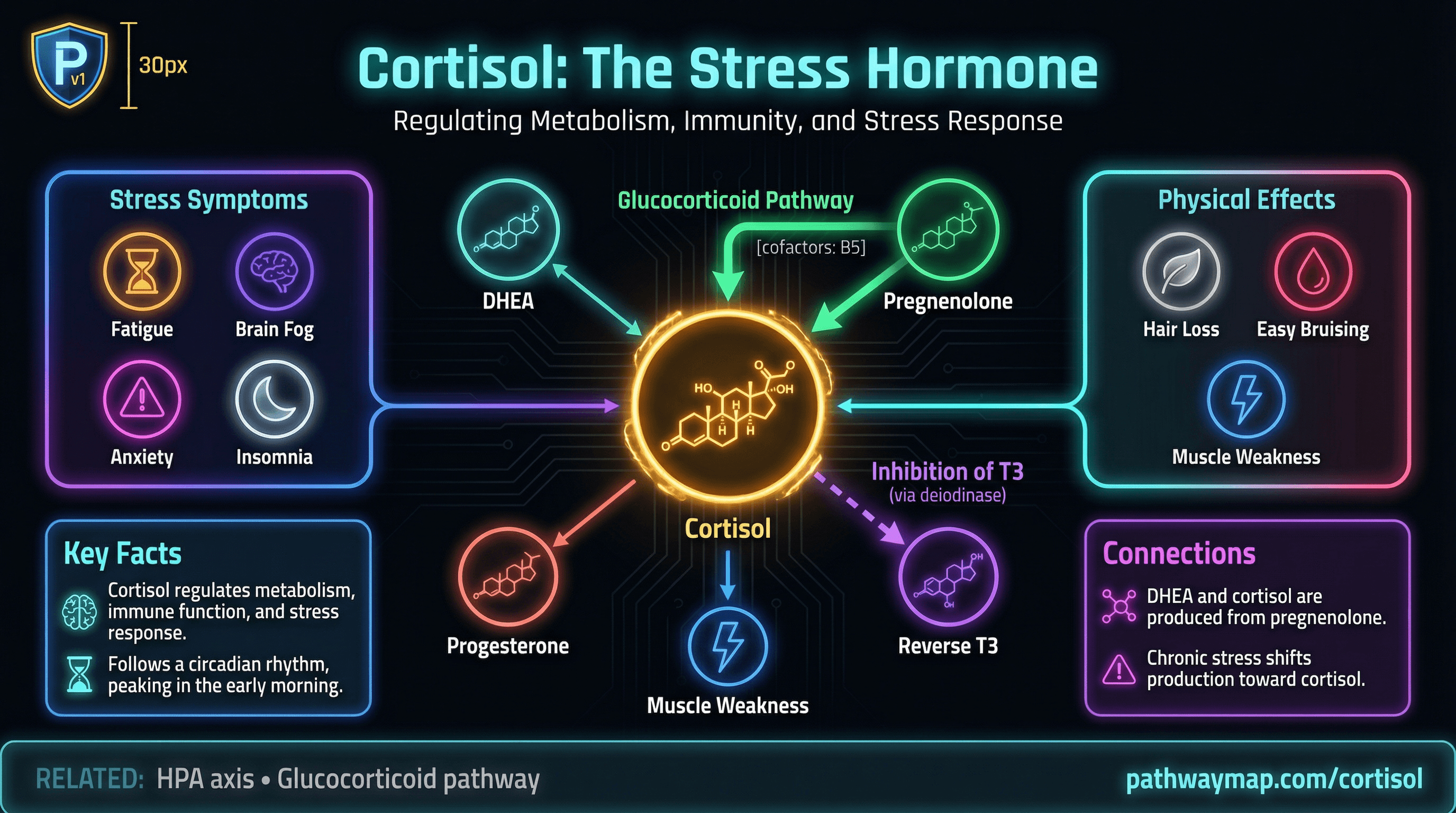
What chronic cortisol does.
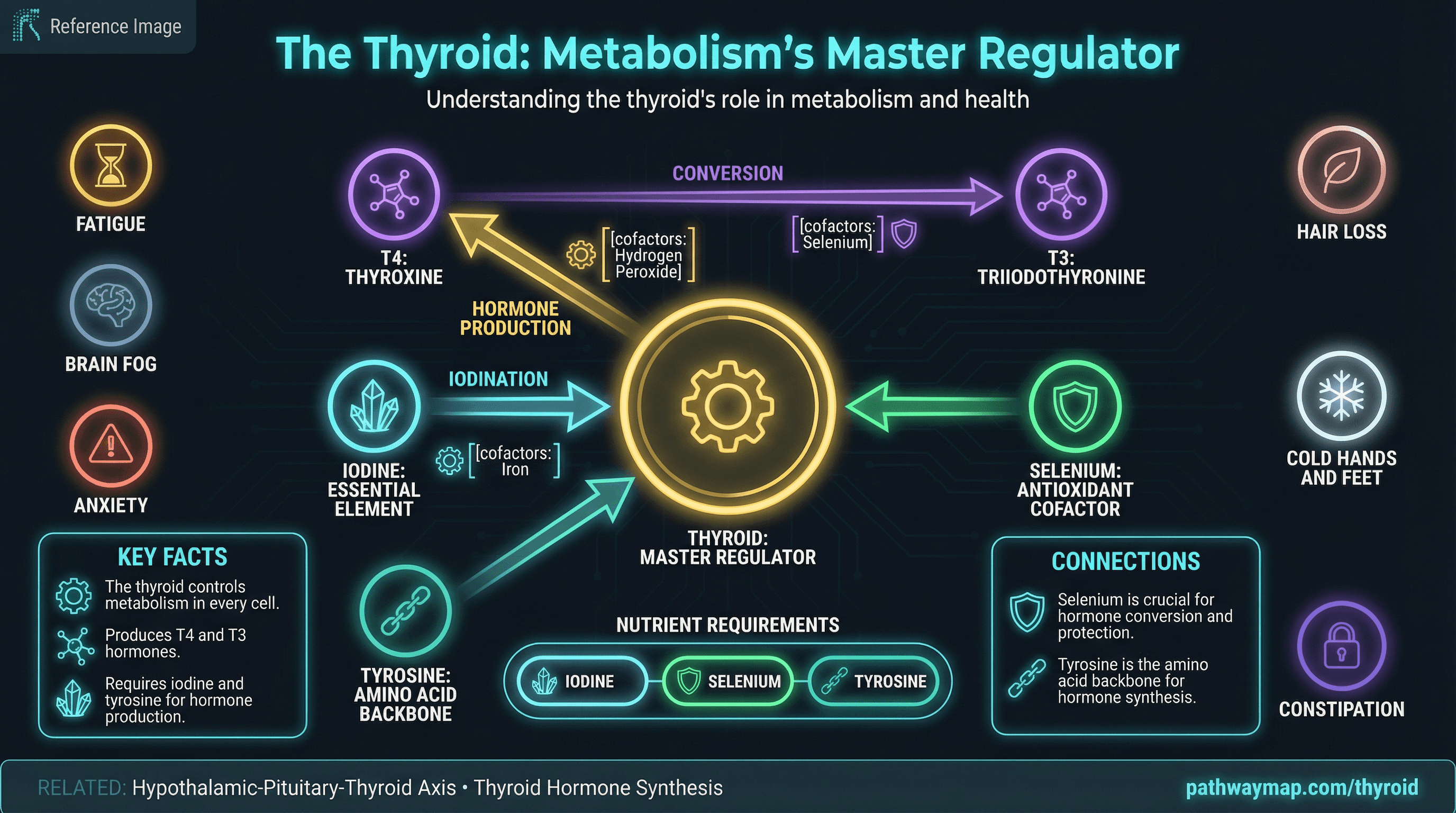
Suppresses Thyroid
Converts T4 to reverse T3 instead of active T3. Slows metabolism even with normal TSH.
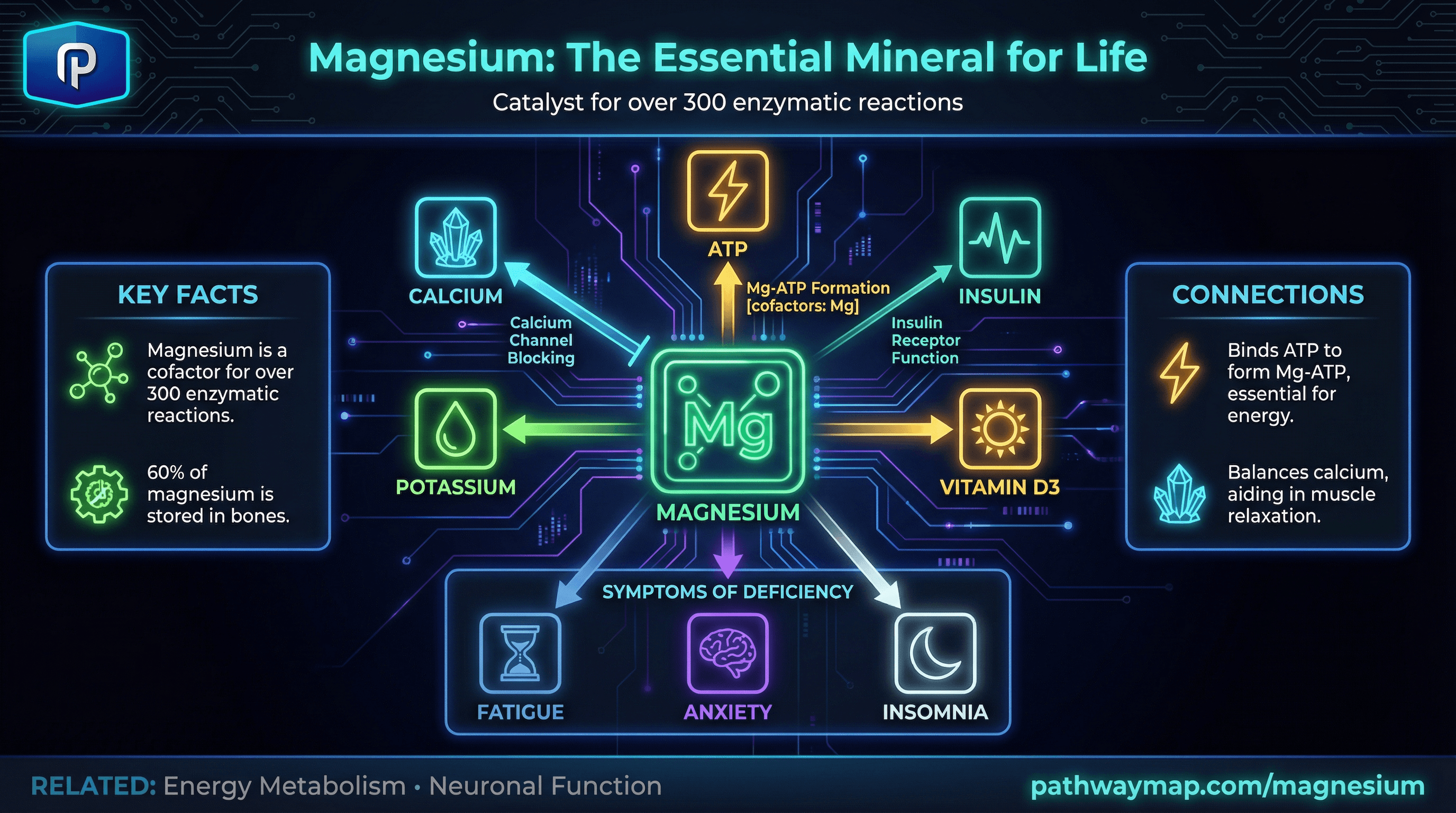
Depletes Magnesium
Increases urinary magnesium excretion. Low magnesium worsens stress response. Vicious cycle.
Steals Progesterone
"Pregnenolone steal" - precursors diverted to cortisol instead of sex hormones.
Impairs Immunity
Lowers secretory IgA. Suppresses immune surveillance. Increases infection susceptibility.
Disrupts Sleep
Evening cortisol blocks melatonin. Poor sleep raises next-day cortisol. Another vicious cycle.
Raises Blood Sugar
Stimulates gluconeogenesis and opposes insulin. Contributes to insulin resistance.
What actually helps.
Sleep
Poor sleep raises cortisol. Good sleep lowers it. This is the foundation. 7-9 hours in a dark, cool room.
Stress Management
Meditation, breathwork, yoga, time in nature. Activates parasympathetic nervous system. Documented cortisol reduction.
Ashwagandha
Best-studied adaptogen for cortisol. Multiple studies show significant cortisol reduction. Start with 300mg 2x/day.
Phosphatidylserine
Blunts cortisol response to stress. 100-300mg/day. Especially useful for exercise-induced cortisol.
Magnesium
Stress depletes magnesium, low magnesium worsens stress response. Glycinate form is calming.
Vitamin C
Adrenal glands have the highest vitamin C concentration. Required for cortisol synthesis. Depleted by stress.