Iron
Essential mineral for oxygen transport, energy production, and many enzymatic reactions. Both deficiency and excess are harmful—iron requires careful balance.
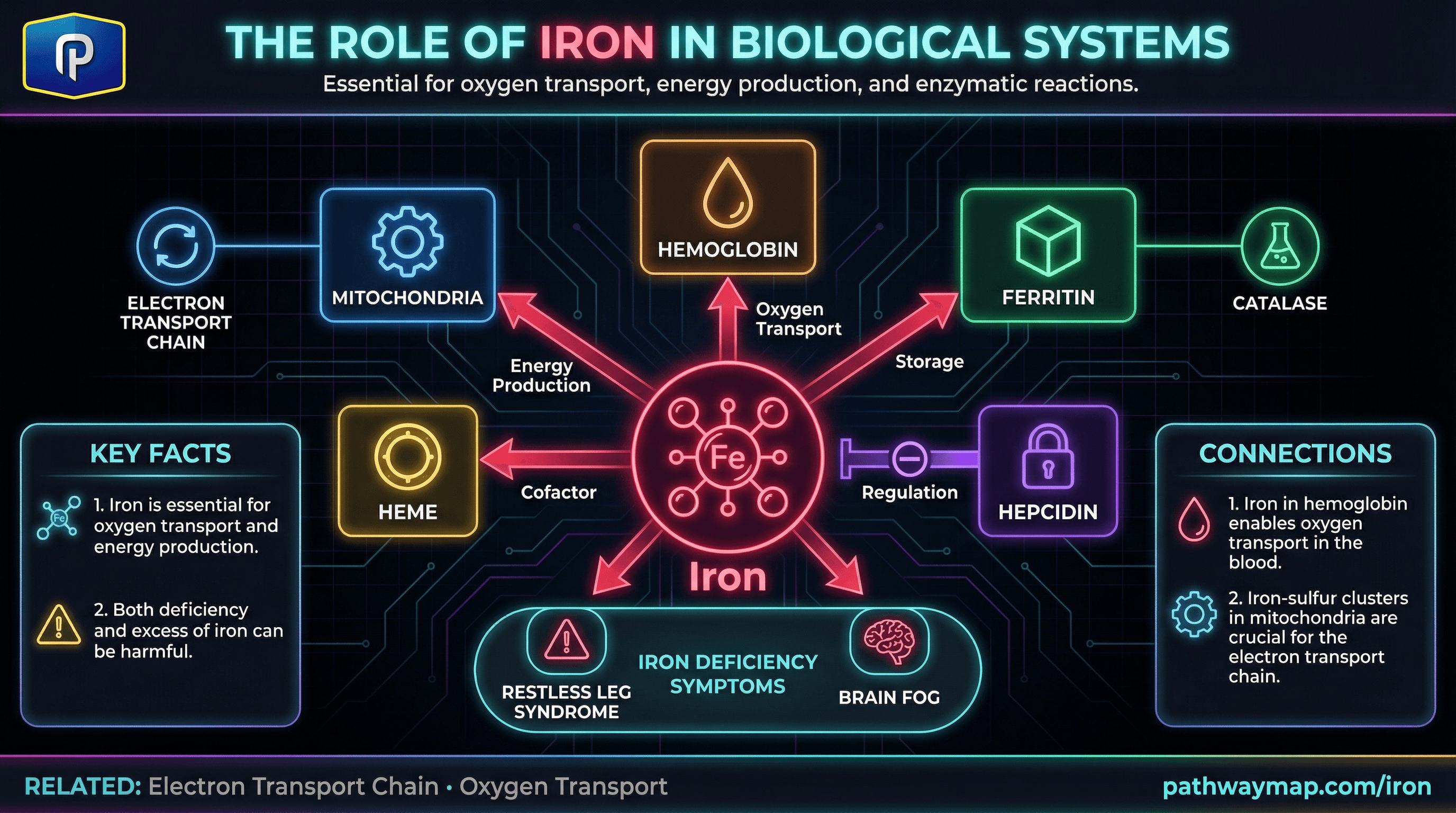
⚔️ The Iron Paradox: Too Little OR Too Much
Iron is unique among nutrients—both deficiency and excess cause serious problems. The body has no active excretion mechanism for iron, meaning once absorbed, it stays until lost through bleeding, cell turnover, or (in women) menstruation. This makes careful assessment essential before supplementing.
Iron Deficiency
- • Fatigue and weakness
- • Cognitive impairment, poor concentration
- • Impaired immunity
- • Restless legs syndrome
- • Pica (craving ice, dirt, etc.)
- • Eventually: anemia
Iron Overload
- • Oxidative damage via Fenton reaction
- • Liver damage and cirrhosis
- • Heart disease and arrhythmias
- • Joint pain (iron arthropathy)
- • Diabetes (pancreatic iron)
- • Bronze skin discoloration
🔴 Core Functions
Oxygen Transport
Hemoglobin (blood) and myoglobin (muscle) carry and store oxygen using iron at their core.
Energy Production
Cytochromes and iron-sulfur clusters in mitochondria are essential for ATP generation.
Enzyme Cofactor
Required for catalase, peroxidases, and hydroxylases including those making neurotransmitters.
DNA Synthesis
Ribonucleotide reductase requires iron for DNA replication.
🧲 Absorption Factors
Enhancers
- • Vitamin C (dramatic effect—pair with iron-rich meals)
- • Heme iron from animal sources
- • Stomach acid (low acid = poor absorption)
- • Copper (for iron mobilization)
Inhibitors
- • Phytates (grains, legumes, nuts)
- • Tannins (tea, coffee, red wine)
- • Calcium (competes for absorption)
- • Antacids and PPIs
🧪 Comprehensive Iron Testing
A single iron test is insufficient. These markers together reveal the full picture:
Ferritin
Storage iron. Low = depleted stores (even without anemia). High + inflammation = confounded.
Serum Iron
Circulating iron. Fluctuates daily and with meals—limited alone.
TIBC
Total iron-binding capacity. High in deficiency (body trying to capture more iron).
Transferrin Saturation
% of transport protein carrying iron. Low in deficiency, high in overload.
Hemoglobin
Red blood cell iron. Low = anemia, but deficiency occurs long before this drops.
CRP or ESR
Inflammation markers. Essential for interpreting ferritin correctly.
🔐 Hepcidin: The Iron Gatekeeper
Hepcidin is the master regulator of iron. This liver hormone controls how much iron enters the bloodstream from the gut and how much is released from storage. High hepcidin = iron lockdown.
Hepcidin Increases When:
- • Inflammation is present (infection, chronic disease)
- • Iron stores are high
- • Result: "Anemia of chronic disease"—iron trapped in storage
Hepcidin Decreases When:
- • Iron stores are low
- • Erythropoiesis is increased (body making more red blood cells)
- • Result: More iron absorption and release
Iron Doesn't Work Without Copper
Iron metabolism is not just about how much iron you take in. It's about whether your body can use it — and that depends on nutrients most practitioners never check.
Ceruloplasmin: The Missing Link
Ceruloplasmin is a copper-dependent ferroxidase enzyme that converts iron from its stored form (Fe²⁺) to a usable form (Fe³⁺) for transport by transferrin. Without adequate bioavailable copper, iron accumulates in tissues but cannot be mobilized. Labs show “low serum iron” and the standard response is to prescribe more iron — but the actual bottleneck may be copper metabolism, not iron intake.
This is why some people supplement iron for months with little improvement. The iron goes in, but without ceruloplasmin to move it, it sits in storage — or worse, accumulates as unbound iron driving oxidative stress via the Fenton reaction.
The Full Mineral Chain
Iron recycling depends on a cascade of nutrients working together. Copper enables ceruloplasmin. Vitamin C enhances absorption and helps reduce iron for use. Retinol (vitamin A) helps mobilize iron from storage and supports ceruloplasmin synthesis. Vitamin B2 (riboflavin) is needed for iron mobilization from ferritin.
A person deficient in any of these cofactors can look “iron deficient” on labs while having plenty of iron — it's just stuck. Supplementing iron without addressing the metabolic machinery that moves it can make things worse, not better.
What Depletes These Cofactors?
Heavy metals displace copper from enzyme binding sites. Chronic infections consume vitamin C and retinol. Mineral-depleted soil means less copper and zinc in food. Glyphosate chelates minerals in the gut. The same environmental factors that drive apparent “iron deficiency” are often depleting the very cofactors needed to use iron — creating a vicious cycle that more iron pills cannot fix.
Metabolic Connections

Hemoglobin
Iron is the core of hemoglobin, carrying oxygen throughout the body

Ferritin
Iron storage protein - low ferritin indicates depleted stores

Thyroid
Iron is required for thyroid hormone synthesis (TPO enzyme)

Dopamine
Iron is a cofactor for tyrosine hydroxylase in dopamine synthesis

Cytochrome P450
Iron-containing enzymes critical for detoxification

Vitamin C
Dramatically enhances non-heme iron absorption

Copper
Ceruloplasmin (copper-dependent) is required to mobilize iron from storage into use

Vitamin A
Retinol helps mobilize iron from storage and supports ceruloplasmin synthesis

Riboflavin (B2)
Required for iron mobilization from ferritin