Vitamin C
The essential antioxidant. Vitamin C is required for collagen, immunity, and adrenal function. Humans lost the ability to make it—we must get it daily from food or supplements.
⚡ What Vitamin C Does
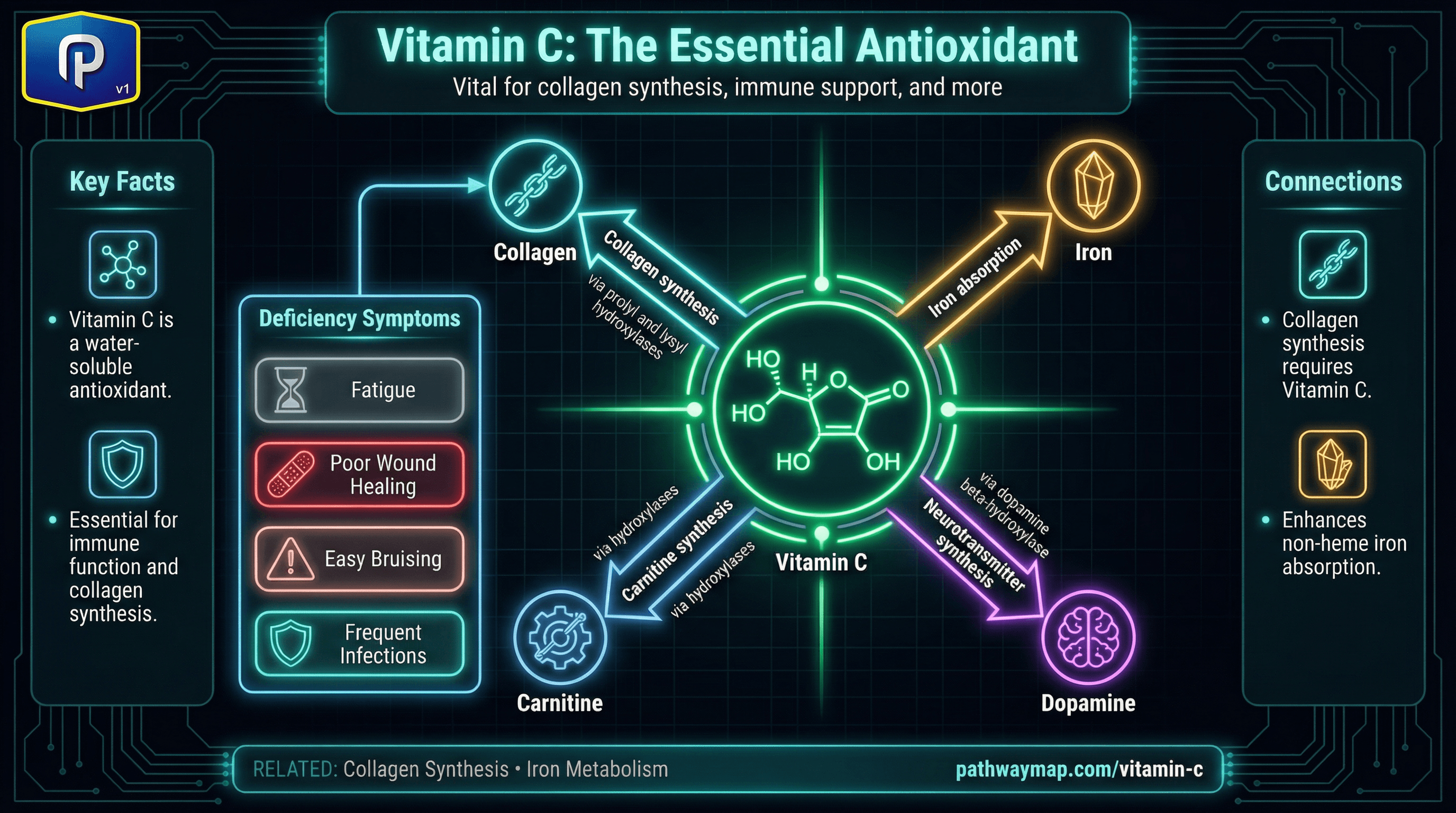
Collagen Synthesis
Essential cofactor for prolyl and lysyl hydroxylases. No vitamin C = no collagen.
Antioxidant
Donates electrons to neutralize free radicals. Recycles vitamin E.
Immune Function
Supports neutrophils, lymphocytes, and natural killer cells.
Iron Absorption
Reduces Fe3+ to Fe2+, dramatically increasing non-heme iron uptake.
Neurotransmitter Synthesis
Cofactor for dopamine beta-hydroxylase (makes norepinephrine).
Adrenal Support
Adrenals store vitamin C and use it for cortisol production.
🧬 Why Humans Need Dietary Vitamin C
Most animals make their own vitamin C. Humans, apes, guinea pigs, and some bats lost this ability:
The GULO Gene
We have a broken copy of L-gulonolactone oxidase (GULO), the enzyme for the final step of vitamin C synthesis. It's a pseudogene—present but non-functional.
Animal Comparison
A goat under stress produces ~13,000mg of vitamin C daily. Our ancestors got it from fruit-heavy diets. Modern diets often fall short.
⚠️ Signs of Vitamin C Deficiency
Skin/Connective Tissue
- • Easy bruising
- • Poor wound healing
- • Rough, bumpy skin
Gums/Teeth
- • Bleeding gums
- • Swollen gums
- • Loose teeth (scurvy)
Energy/Immune
- • Fatigue
- • Frequent infections
- • Slow recovery
Joint/Muscle
- • Joint pain
- • Muscle aches
Hair
- • Corkscrew hairs
- • Dry, splitting hair
Iron Status
- • Iron deficiency anemia
- • (impaired absorption)
🍊 Food Sources
Highest Sources
- • Kakadu plum (3000+ mg/100g)
- • Acerola cherry (1600 mg/100g)
- • Bell peppers (red: 128 mg/100g)
- • Kiwi (93 mg/100g)
- • Broccoli (89 mg/100g)
Common Sources
- • Oranges (53 mg/100g)
- • Strawberries (59 mg/100g)
- • Lemons/limes
- • Tomatoes
- • Papaya, mango
Note: Vitamin C is destroyed by heat and degrades over time. Fresh, raw sources are best.
✅ Supplementation Strategies
Ascorbic Acid
Standard form. Acidic—can cause GI upset at high doses.
Sodium Ascorbate
Buffered, gentler on stomach. Good for higher doses.
Liposomal C
Better absorption at high doses. Bypasses bowel tolerance.
Ester-C
Calcium ascorbate with metabolites. Non-acidic.
Divided Doses
Split doses improve absorption (body excretes excess).
IV Vitamin C
Achieves higher blood levels. Used therapeutically.
Metabolic Connections

Iron
Vitamin C dramatically enhances non-heme iron absorption

Glutathione
Vitamin C recycles oxidized glutathione

Cortisol
Adrenal glands have highest vitamin C concentration

Collagen
Essential cofactor for collagen synthesis enzymes

Copper
Required for copper-dependent enzymes

Histamine
Vitamin C helps degrade histamine