Apoptosis
Cellular suicide for the greater good. Apoptosis is programmed cell death— a highly organized process where cells self-destruct when they're damaged, old, or potentially dangerous. Unlike messy necrosis, apoptosis is clean and controlled. It's essential for development, tissue maintenance, and preventing cancer.
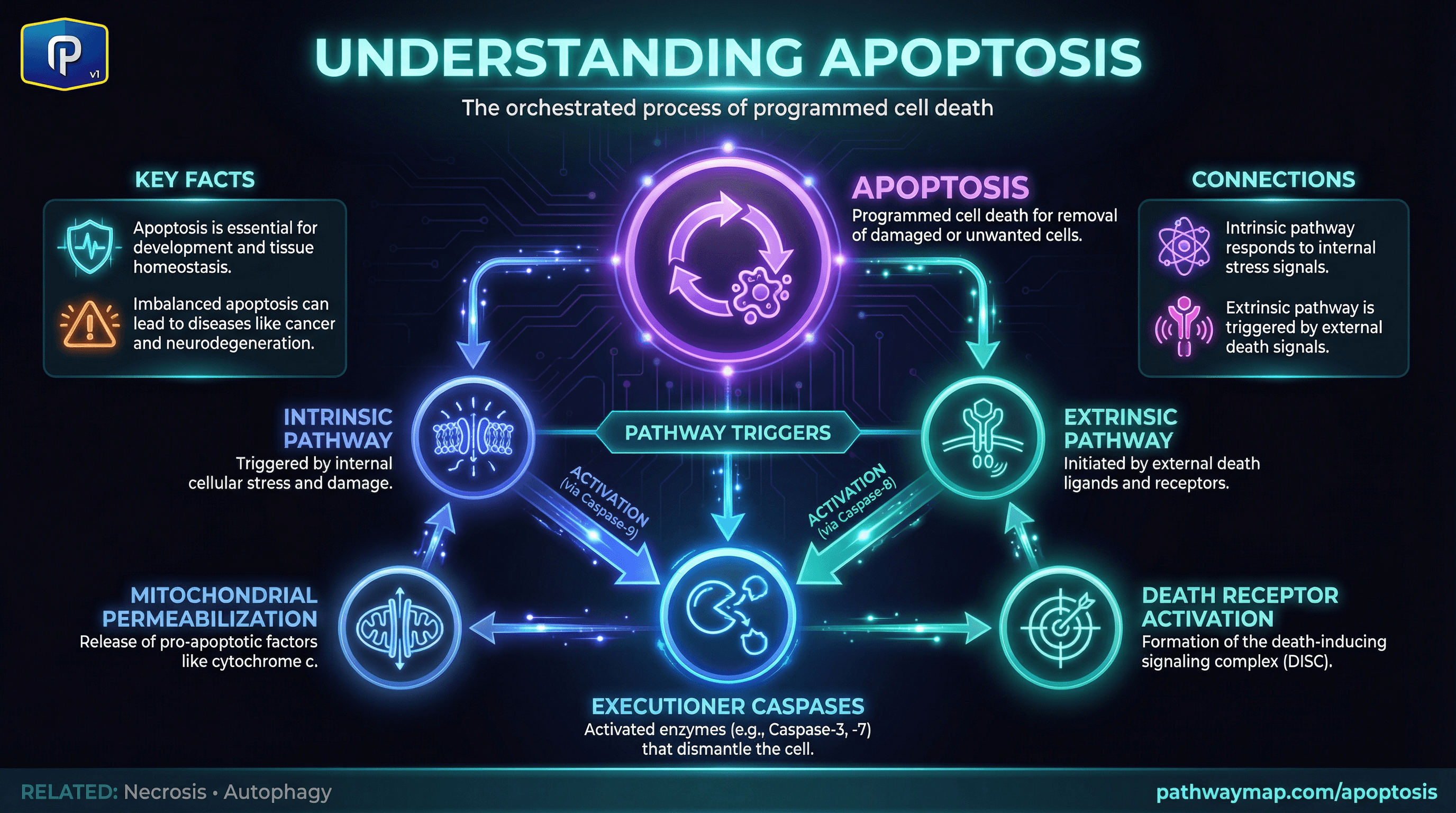
Two Main Pathways
Intrinsic (Mitochondrial)
Triggered by internal stress: DNA damage, oxidative stress, nutrient deprivation. Mitochondria release cytochrome c → caspase cascade.
Extrinsic (Death Receptor)
Triggered by external signals: immune cells, Fas ligand, TNF. Death receptors on cell surface → caspase cascade.
Why Apoptosis Matters
When Working Properly
- Cancer prevention: Kills cells with DNA damage
- Development: Shapes fingers, removes webbing
- Immune function: Removes autoreactive T cells
- Tissue turnover: Makes room for new cells
- Infection defense: Kills virus-infected cells
When Dysregulated
- Too little: Cancer (cells won't die)
- Too little: Autoimmunity (autoreactive cells survive)
- Too much: Neurodegeneration (neurons die)
- Too much: AIDS (T cells die)
- Too much: Heart attack damage
The Cancer Connection
Evading apoptosis is a hallmark of cancer. Cancer cells develop mutations that disable death signals:
Supporting Healthy Apoptosis
Fasting
Promotes autophagy and apoptosis of damaged cells. Cellular housekeeping.
Exercise
Increases apoptosis of senescent cells. Improves immune surveillance.
Polyphenols
Curcumin, resveratrol, EGCG promote apoptosis in cancer cells specifically.
Reduce Inflammation
Chronic inflammation can promote survival of damaged cells.
Vitamin D
Promotes apoptosis in cancer cells. Supports immune surveillance.
Avoid Toxins
Carcinogens can damage apoptosis machinery. Minimize exposure.