BHMT
Betaine-homocysteine methyltransferase - alternative pathway for homocysteine remethylation using betaine.
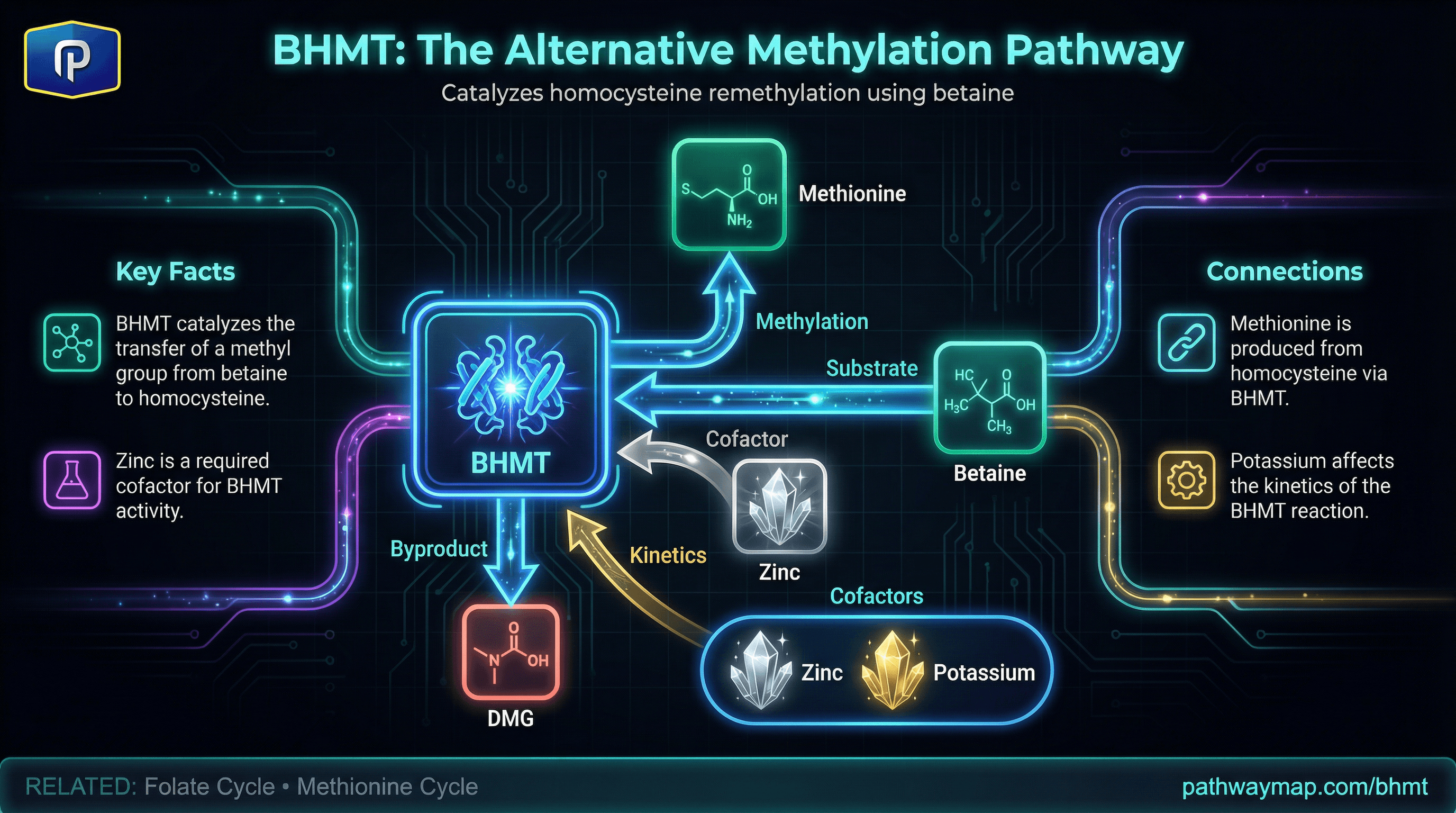
BHMT (betaine-homocysteine methyltransferase) is a zinc-dependent enzyme that catalyzes the transfer of a methyl group from betaine to homocysteine, producing methionine and dimethylglycine (DMG). This reaction is an alternative to the folate/B12-dependent MTR pathway for homocysteine remethylation.
BHMT is primarily expressed in liver and kidney, with minor activity in other tissues. It provides a backup methylation pathway when folate or B12 is limited and helps regulate homocysteine levels independently of these vitamins. The reaction: Homocysteine + Betaine → Methionine + DMG.
This requires zinc as a cofactor and is inhibited by SAH (S-adenosylhomocysteine). DMG produced is further metabolized through DMGDH and sarcosine dehydrogenase, ultimately regenerating folate cycle intermediates. Genetic variants in BHMT can affect enzyme activity and homocysteine levels.
The BHMT pathway becomes more important during pregnancy (high methylation demands), in liver disease, and in those with MTHFR variants affecting the primary remethylation pathway. Supporting BHMT involves adequate betaine/choline intake, zinc status, and potassium (which affects the reaction kinetics).
Foods rich in betaine include beets, spinach, and quinoa.
Supplemental TMG directly provides substrate for this pathway.
Metabolic Connections
BHMT connects to 8 other pathways.
Nutrients
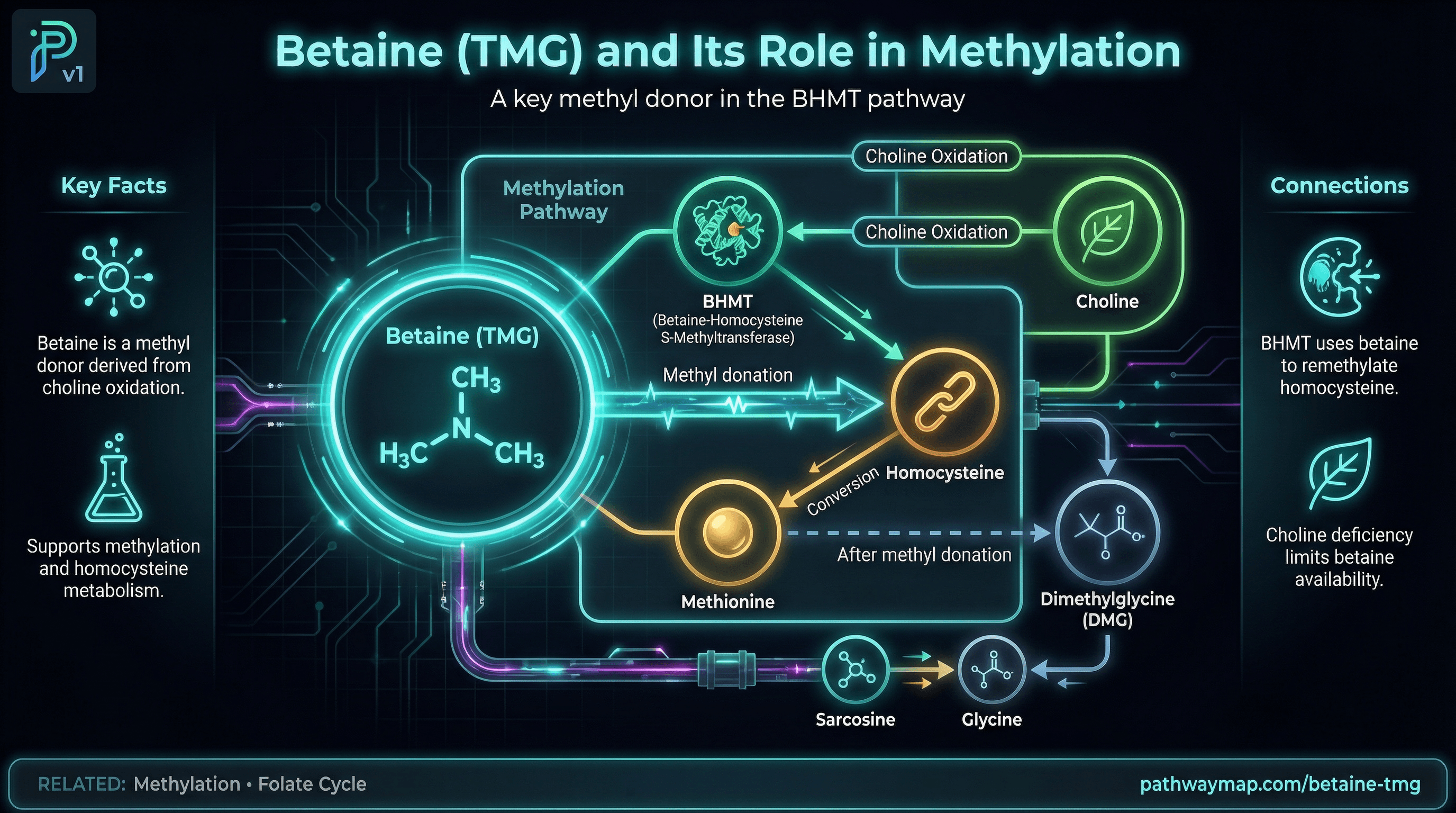
Betaine (TMG)
Betaine is used by BHMT to remethylate homocysteine in an alternative B12-independent pathway
Trimethylglycine - methyl donor for BHMT pathway, supporting methylation and homocysteine metabolism.

Choline
Choline-derived betaine provides methyl groups for BHMT-mediated remethylation
Essential nutrient for brain development, liver function, and methylation via the BHMT pathway.
Amino Acids

Dimethylglycine (DMG)
DMG is produced by BHMT when betaine donates a methyl group
Product of betaine demethylation; can donate methyl groups to folate pool; intermediate in choline metabolism.
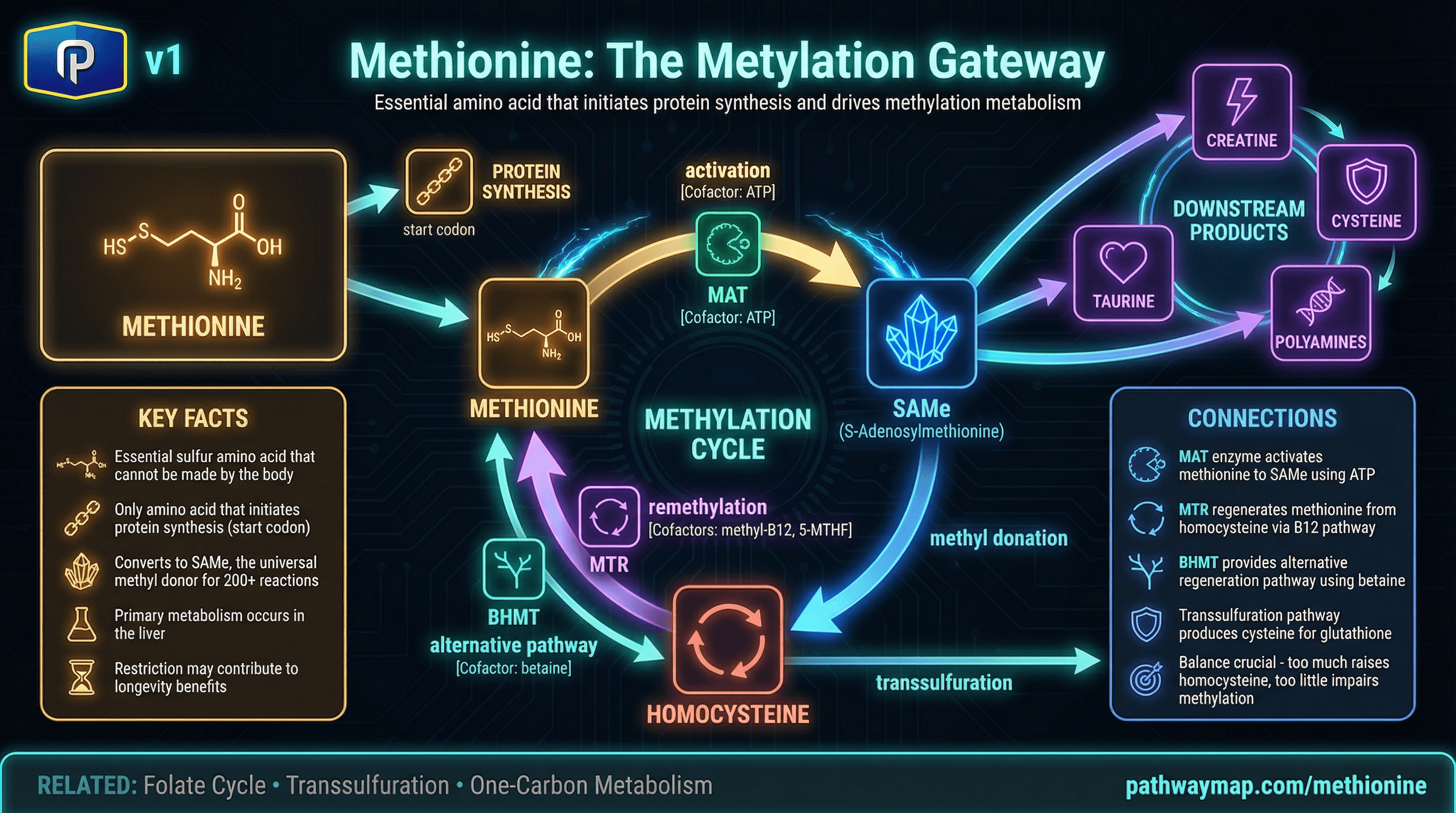
Methionine
Essential sulfur amino acid that initiates methylation cycle. Precursor to SAMe, cysteine, and taurine.
Methionine
BHMT provides alternative pathway to regenerate methionine from homocysteine using betaine
Essential sulfur amino acid that initiates methylation cycle. Precursor to SAMe, cysteine, and taurine.


