Blue Light
High-energy visible light (400-500nm) that suppresses melatonin and affects circadian rhythm.
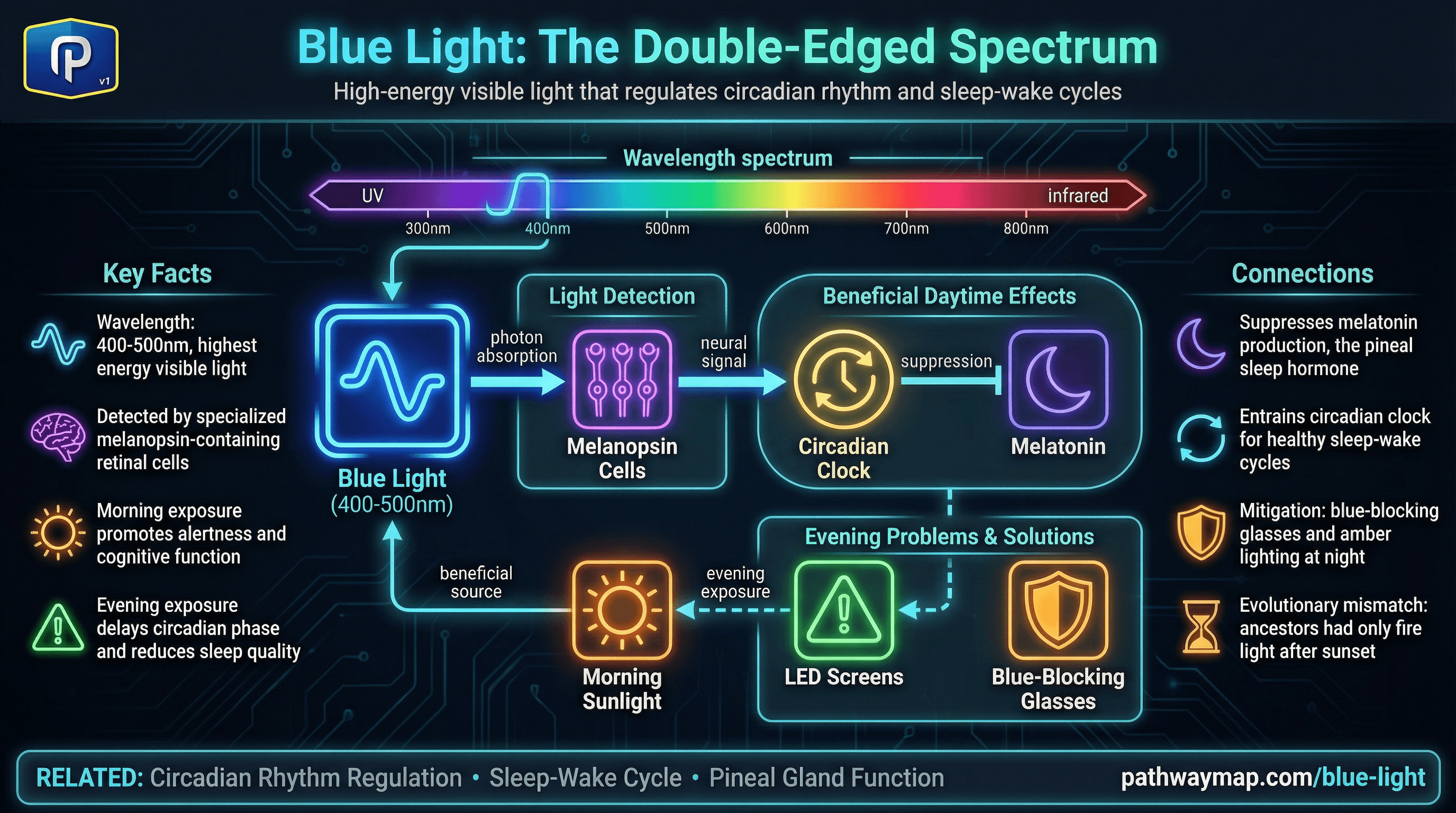
Blue light is the portion of the visible spectrum with wavelengths between 400-500nm. It has the highest energy of visible light and plays important biological roles, particularly in regulating circadian rhythm through specialized retinal ganglion cells containing melanopsin.
Blue light exposure during the day is beneficial: it suppresses melatonin appropriately, promotes alertness and cognitive function, and helps entrain the circadian clock. Morning sunlight exposure (which contains blue light) is important for establishing healthy circadian rhythm.
Problems arise from blue light exposure at night, which suppresses melatonin production, delays circadian phase, reduces sleep quality, and may contribute to metabolic dysfunction, mood disorders, and long-term health issues.
Sources of problematic evening blue light
LED screens (phones
tablets
computers
TVs)
LED and fluorescent lighting
increasingly prevalent in modern environments.
This represents an evolutionary mismatch - our ancestors had only fire light after sunset.
Mitigation strategies
blue-blocking glasses in the evening
screen settings and apps that reduce blue light (night shift mode)
amber/red lighting for evening hours
simply reducing screen time before bed.
Daytime blue light exposure from sunlight should be maintained for circadian health.
Metabolic Connections
Blue Light connects to 2 other pathways.