Complex IV
Cytochrome c oxidase - terminal complex of the electron transport chain that reduces oxygen to water.
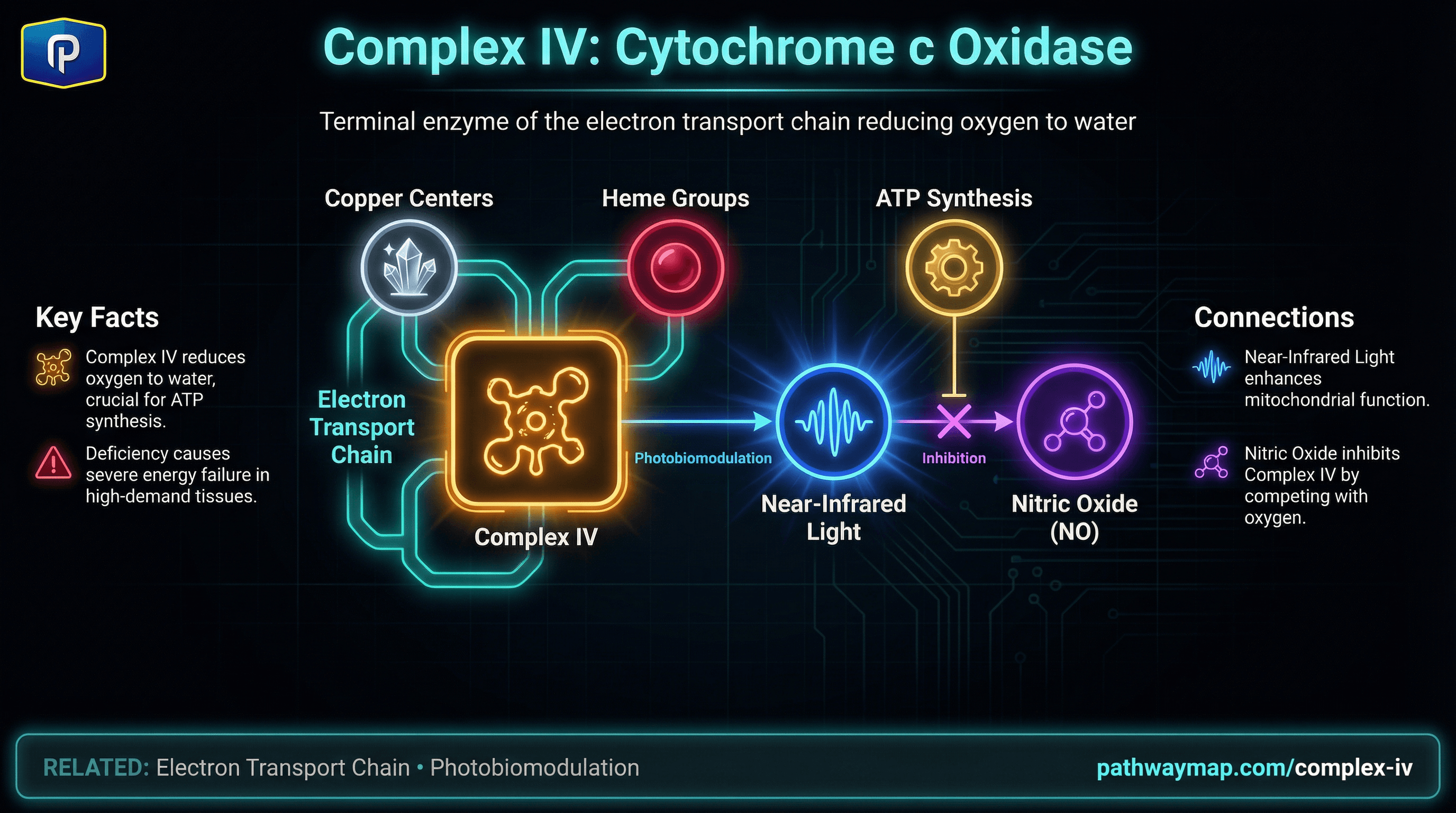
Complex IV (cytochrome c oxidase) is the terminal enzyme of the mitochondrial electron transport chain. It receives electrons from cytochrome c, uses them to reduce molecular oxygen to water, and pumps protons to contribute to ATP synthesis. The reaction: 4 cytochrome c (reduced) + O2 + 8H+ → 4 cytochrome c (oxidized) + 2H2O + 4H+ (pumped).
This four-electron reduction of O2 is crucial - partial reduction would produce reactive oxygen species.
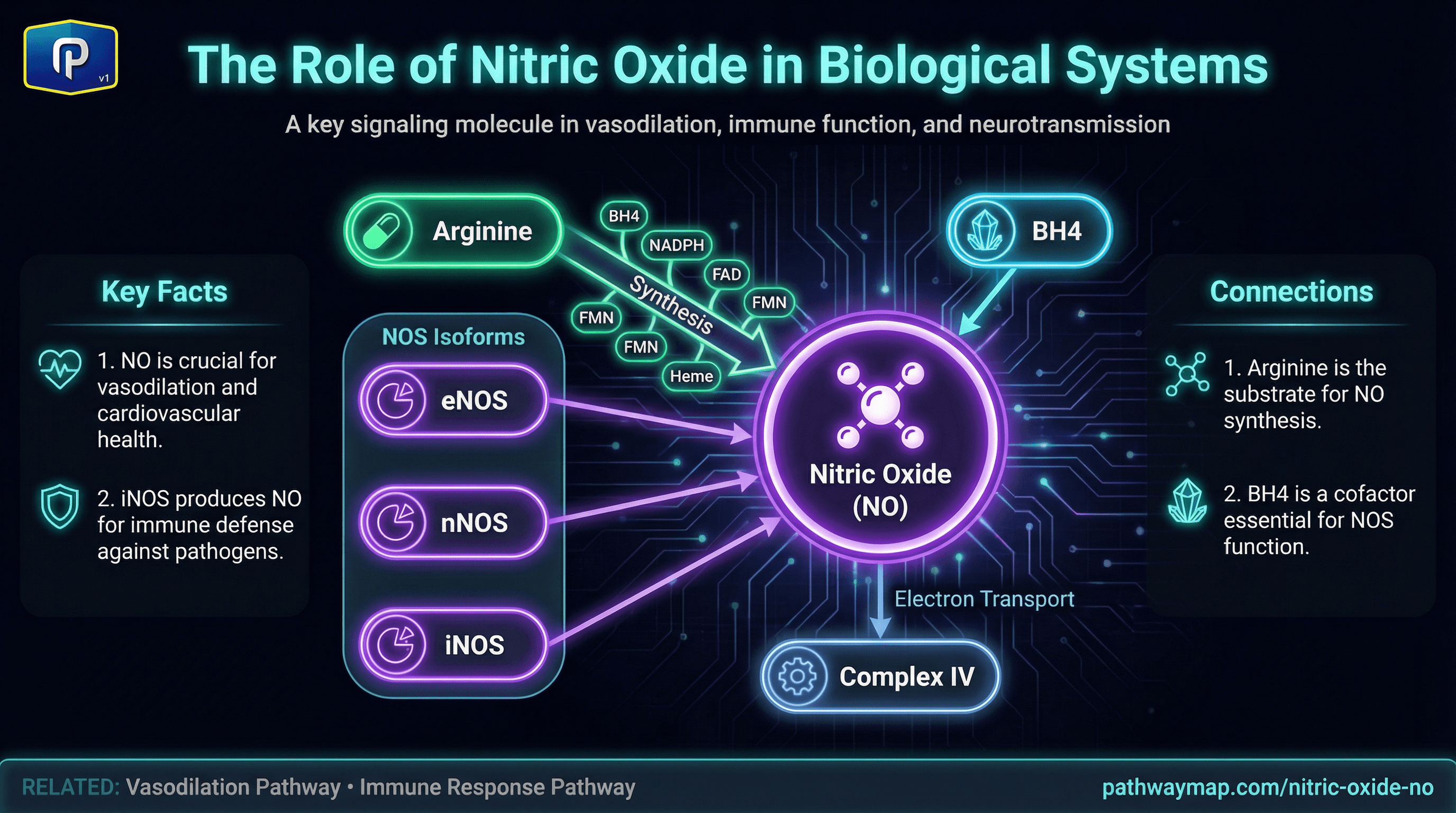
Complex IV contains: copper centers (CuA and CuB), heme groups (heme a and heme a3), and is the only complex that directly interacts with oxygen.
Both copper and iron are essential for function.
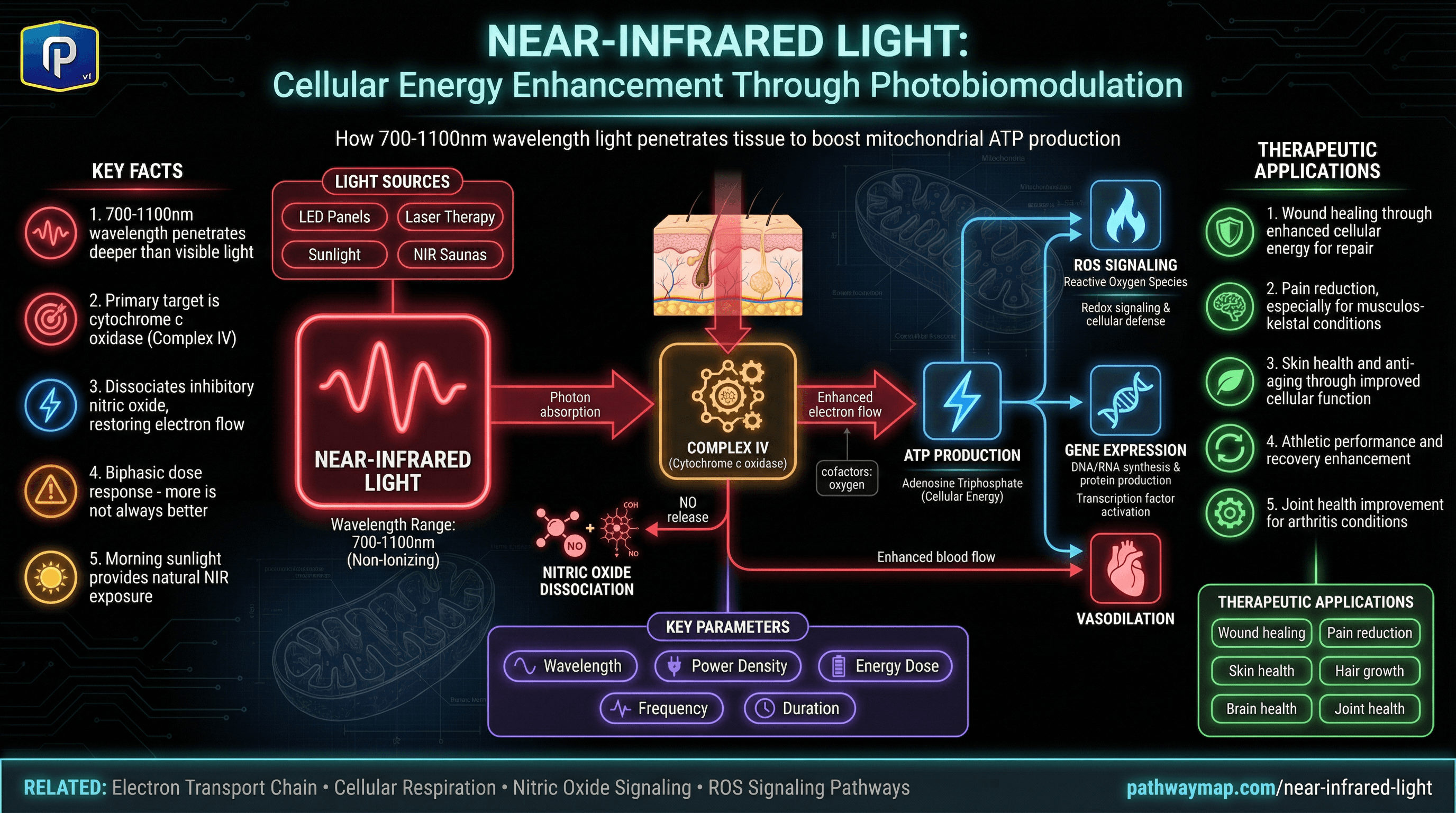
Nitric oxide reversibly inhibits Complex IV by competing with oxygen at the binuclear center. This is physiologically important for oxygen distribution and metabolic regulation, but excessive NO can impair energy production. Near-infrared light (660-850nm) can dissociate NO from Complex IV, restoring oxygen binding and ATP production - this is a primary mechanism of photobiomodulation (red light therapy).
Complex IV deficiency causes severe energy failure affecting high-demand tissues (brain, heart, muscle). Supporting function requires adequate copper, iron, cardiolipin (membrane lipid), and managing NO levels.
Metabolic Connections
Complex IV connects to 4 other pathways.