Near-Infrared Light
Light in the 700-1100nm range that penetrates tissue and enhances mitochondrial function (photobiomodulation).
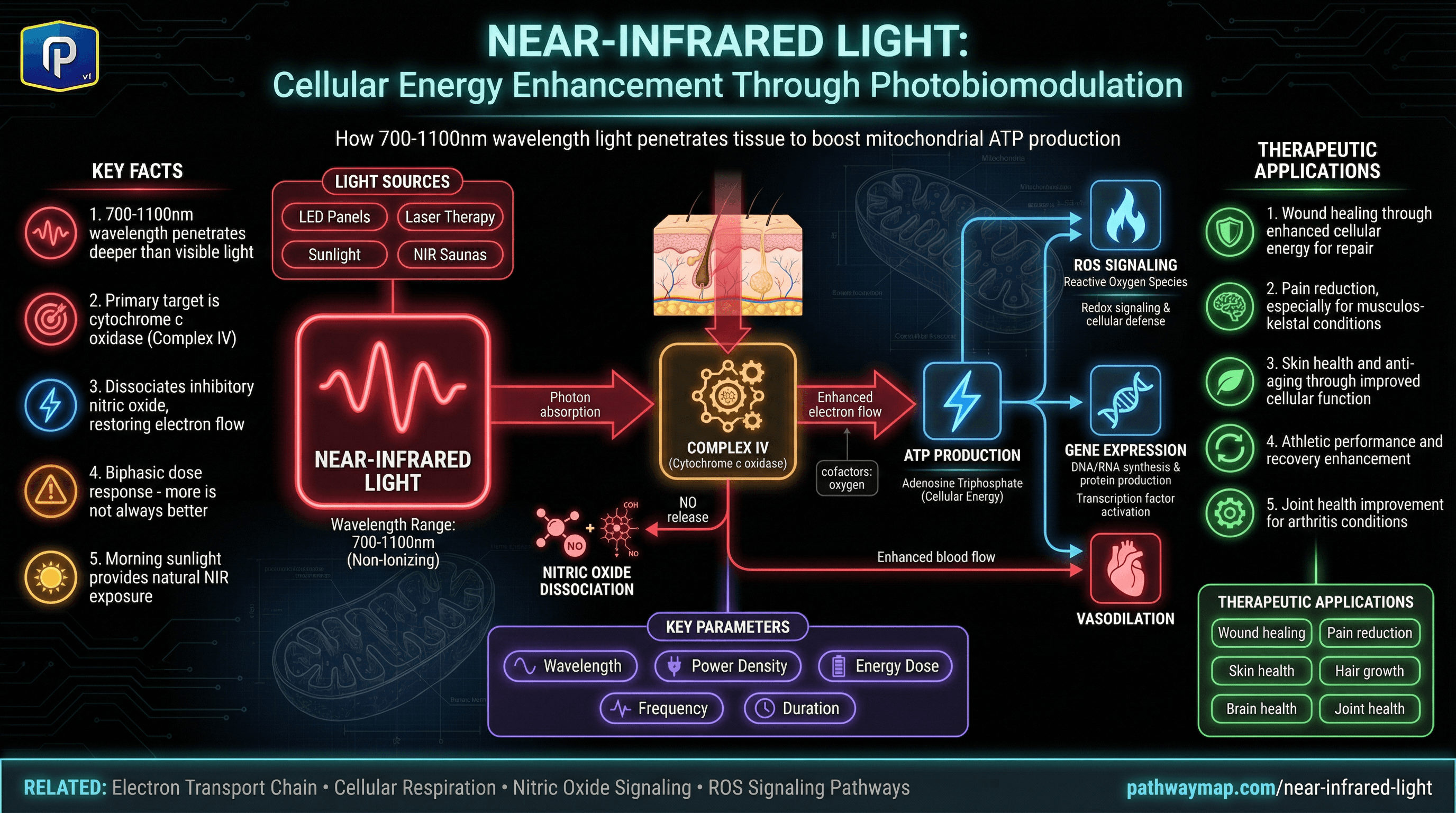
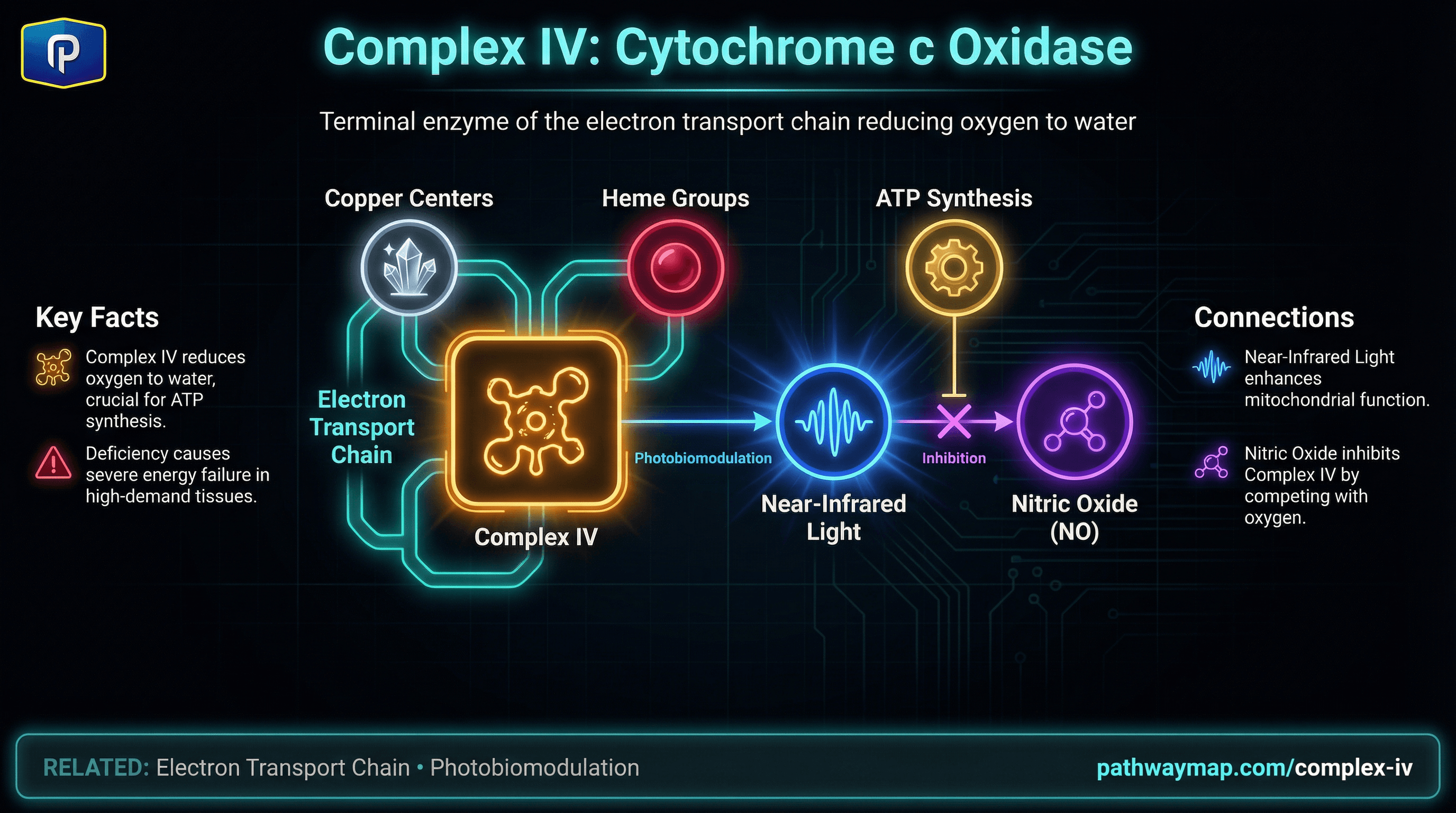
Near-infrared (NIR) light (700-1100nm wavelength) penetrates deeper into tissues than visible light and has therapeutic effects through photobiomodulation - the stimulation of cellular function by light. Primary mechanism: NIR light is absorbed by cytochrome c oxidase (Complex IV of the electron transport chain).
This dissociates inhibitory nitric oxide from the enzyme, restoring oxygen binding and electron flow. The result is increased ATP production. Secondary effects: Increased ATP production, Brief ROS signaling (activates protective pathways), Nitric oxide release (local vasodilation), and Gene expression changes (including increased antioxidant enzymes).
Therapeutic applications: Wound healing (enhanced cellular energy for repair), Pain reduction (especially musculoskeletal), Skin health and anti-aging, Hair growth (stimulates follicles), Brain health (transcranial photobiomodulation), Joint health and arthritis, and Athletic performance and recovery. Delivery methods: LED panels and devices, Laser therapy (more focused), Natural sunlight (contains NIR), and Saunas that emit NIR.
Red light (620-700nm) and NIR have overlapping benefits but NIR penetrates deeper (muscles, joints, brain). Red is more superficial (skin, wounds). Parameters matter: wavelength, power density (irradiance), total energy (joules), pulsing frequency, and treatment duration all affect outcomes.
More is not always better - there's a biphasic dose response. Morning sunlight exposure provides natural NIR along with other beneficial wavelengths.
Metabolic Connections
Near-Infrared Light connects to 2 other pathways.