CPT1
Carnitine palmitoyltransferase 1 - rate-limiting enzyme for fatty acid entry into mitochondria.
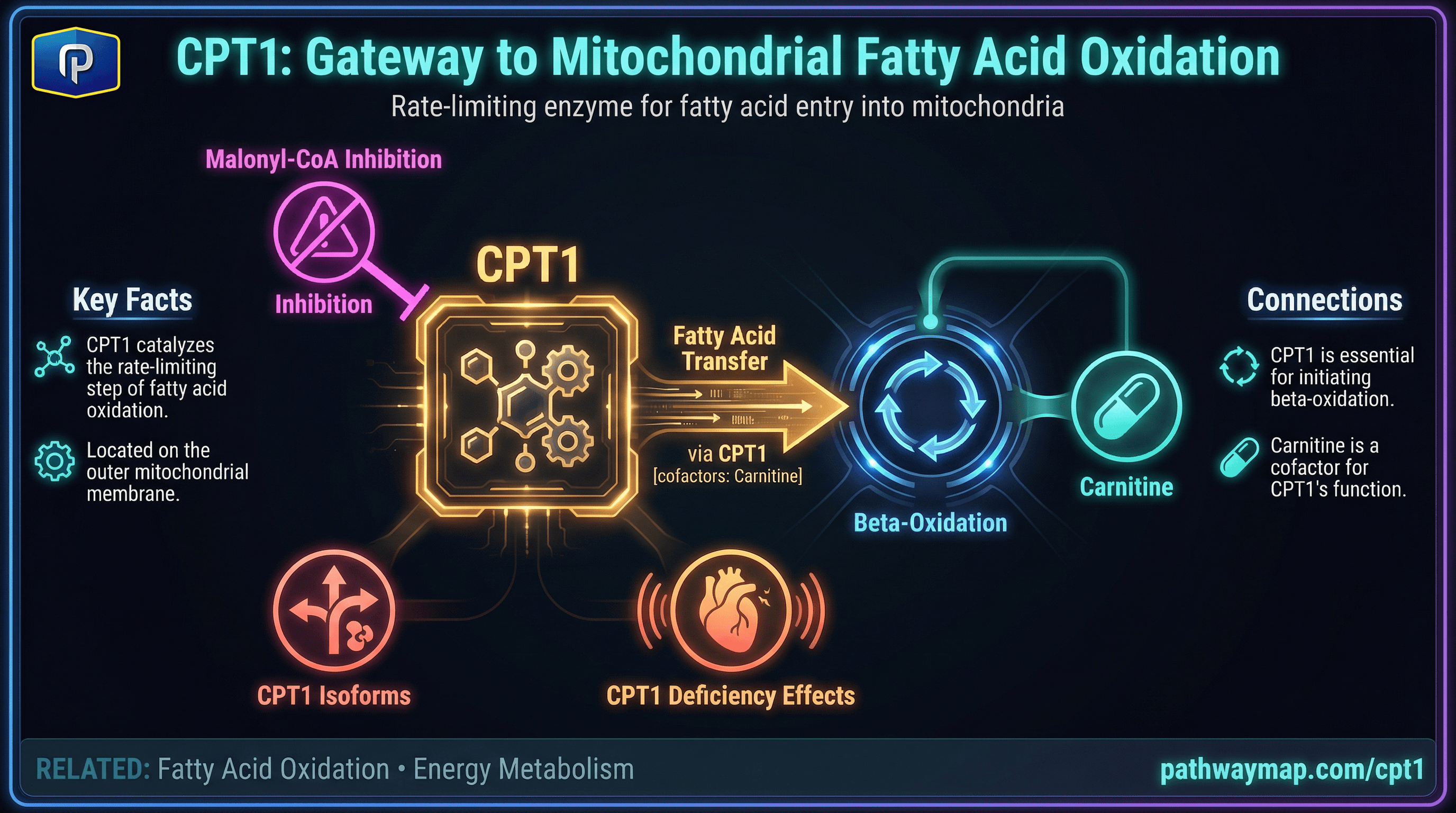
CPT1 (carnitine palmitoyltransferase 1) is located on the outer mitochondrial membrane and catalyzes the rate-limiting step of fatty acid oxidation: transferring long-chain fatty acyl groups from CoA to carnitine. The reaction: Fatty acyl-CoA + Carnitine → Acylcarnitine + CoA.
The acylcarnitine can then cross the inner mitochondrial membrane via carnitine-acylcarnitine translocase (CACT). CPT1 isoforms: CPT1A (liver) - regulated by energy status, CPT1B (muscle and heart) - major form in oxidative tissues, and CPT1C (brain) - different function, may regulate food intake.
CPT1 is inhibited by malonyl-CoA (produced by acetyl-CoA carboxylase during fatty acid synthesis). This makes metabolic sense: when the cell is making fat, it shouldn't simultaneously be burning it. High insulin promotes malonyl-CoA production and inhibits fat burning.
During fasting, exercise, or low-carbohydrate states, malonyl-CoA levels fall, CPT1 is disinhibited, and fatty acid oxidation increases. This is why these states promote fat burning. CPT1 deficiency causes: inability to oxidize fatty acids during fasting, hypoketotic hypoglycemia, hepatomegaly, and cardiomyopathy.
Supporting fatty acid oxidation requires adequate carnitine and metabolic conditions that reduce malonyl-CoA (fasting, low carbohydrate intake, exercise).
Metabolic Connections
CPT1 connects to 4 other pathways.
Processes
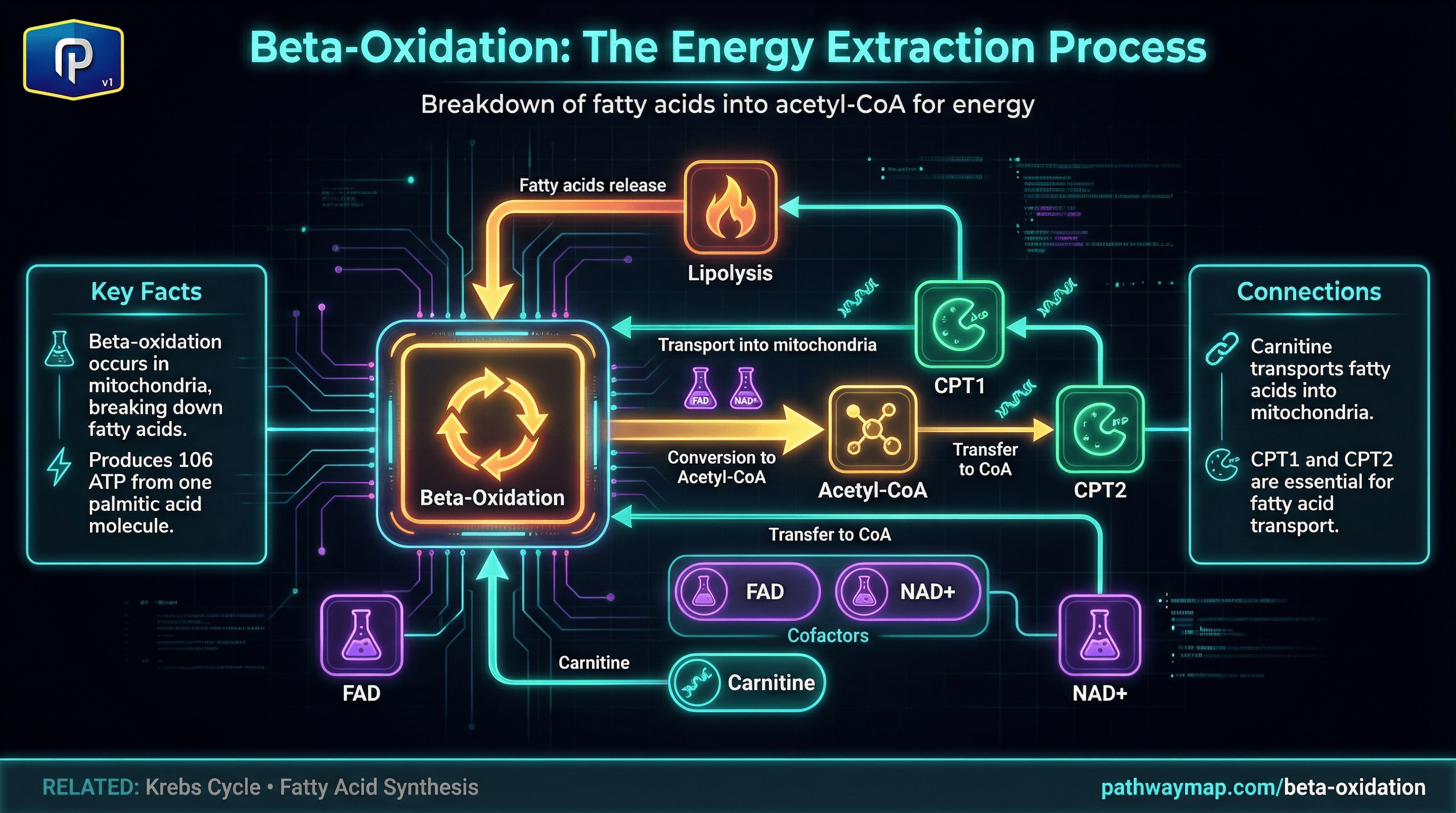
Beta-Oxidation
CPT1 is the rate-limiting enzyme that transfers fatty acids onto carnitine for mitochondrial entry
Mitochondrial breakdown of fatty acids into acetyl-CoA units for energy production.
Beta-Oxidation
CPT1 is the rate-limiting enzyme that transfers fatty acids onto carnitine for mitochondrial entry
Mitochondrial breakdown of fatty acids into acetyl-CoA units for energy production.
Cofactors

Carnitine
CPT1 transfers fatty acids onto carnitine for transport across the mitochondrial membrane
Amino acid derivative that transports long-chain fatty acids into mitochondria for energy production.
Carnitine
CPT1 transfers fatty acids onto carnitine for transport across the mitochondrial membrane
Amino acid derivative that transports long-chain fatty acids into mitochondria for energy production.