Beta-Oxidation
Mitochondrial breakdown of fatty acids into acetyl-CoA units for energy production.
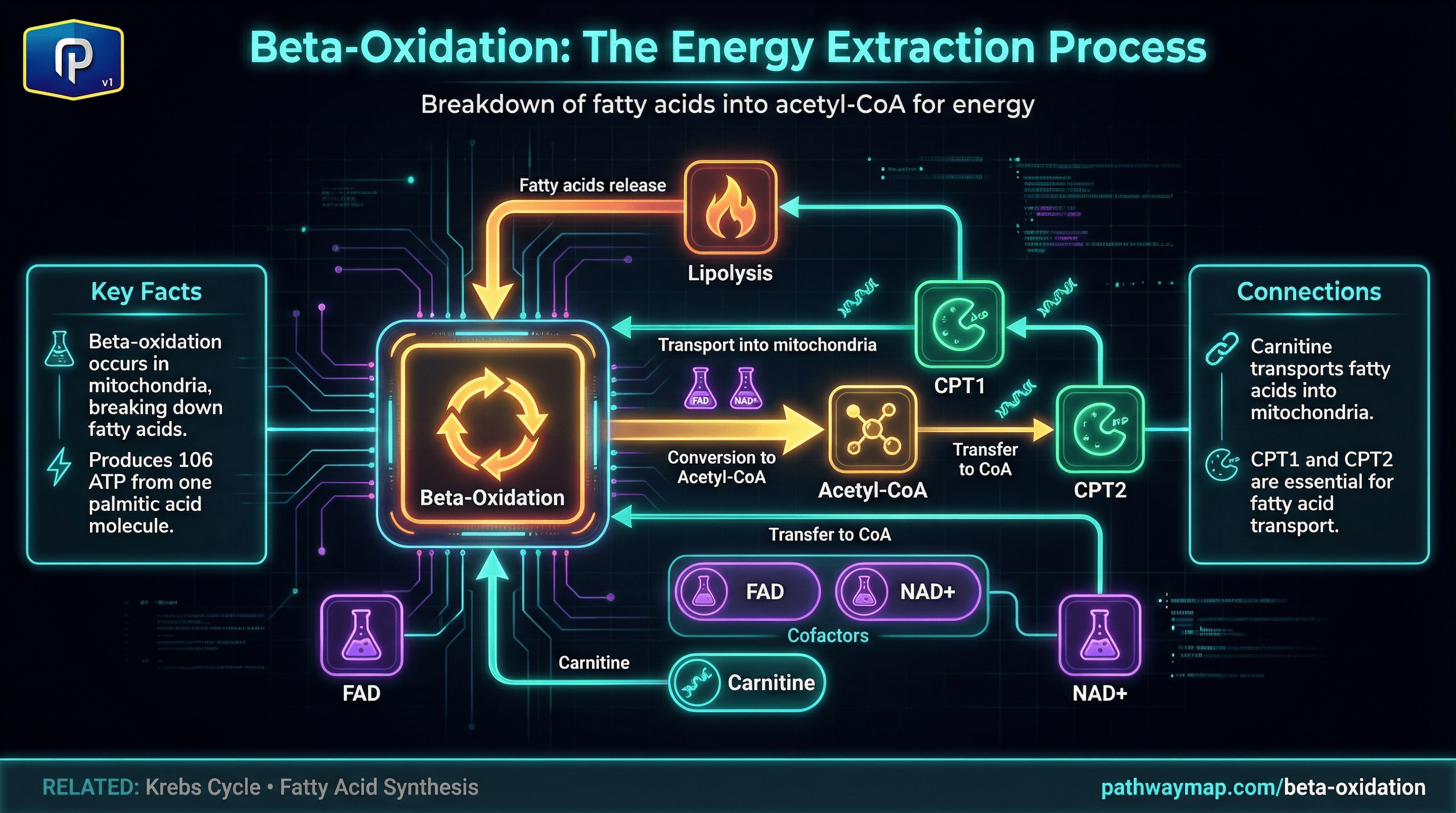
Beta-oxidation is the catabolic process by which fatty acids are broken down in mitochondria to generate acetyl-CoA for the Krebs cycle and subsequent ATP production. The process involves repeated cycles of four reactions, each cycle shortening the fatty acid by two carbons and producing one acetyl-CoA, one FADH2, and one NADH.
The process requires several key components: Carnitine transports fatty acids across the mitochondrial membrane (via CPT1 and CPT2). CoA activates fatty acids for processing. FAD and NAD+ accept electrons. Multiple acyl-CoA dehydrogenases handle different chain lengths.
A single palmitic acid (16-carbon) molecule yields 106 ATP through complete oxidation - far more than glucose's 30-32 ATP. This makes fat the most energy-dense fuel source. However, beta-oxidation requires adequate oxygen (it's purely aerobic) and cannot provide rapid energy like glycolysis.
Beta-oxidation is upregulated during fasting, low-carbohydrate diets, and prolonged exercise. It is inhibited by high insulin levels and malonyl-CoA (produced during fatty acid synthesis). Genetic defects in beta-oxidation enzymes cause metabolic disorders with hypoglycemia and muscle weakness.
Carnitine deficiency impairs fatty acid transport into mitochondria. Supporting factors include carnitine, B2 (for FAD), and adequate CoQ10.
Metabolic Connections
Beta-Oxidation connects to 9 other pathways.
Metabolites
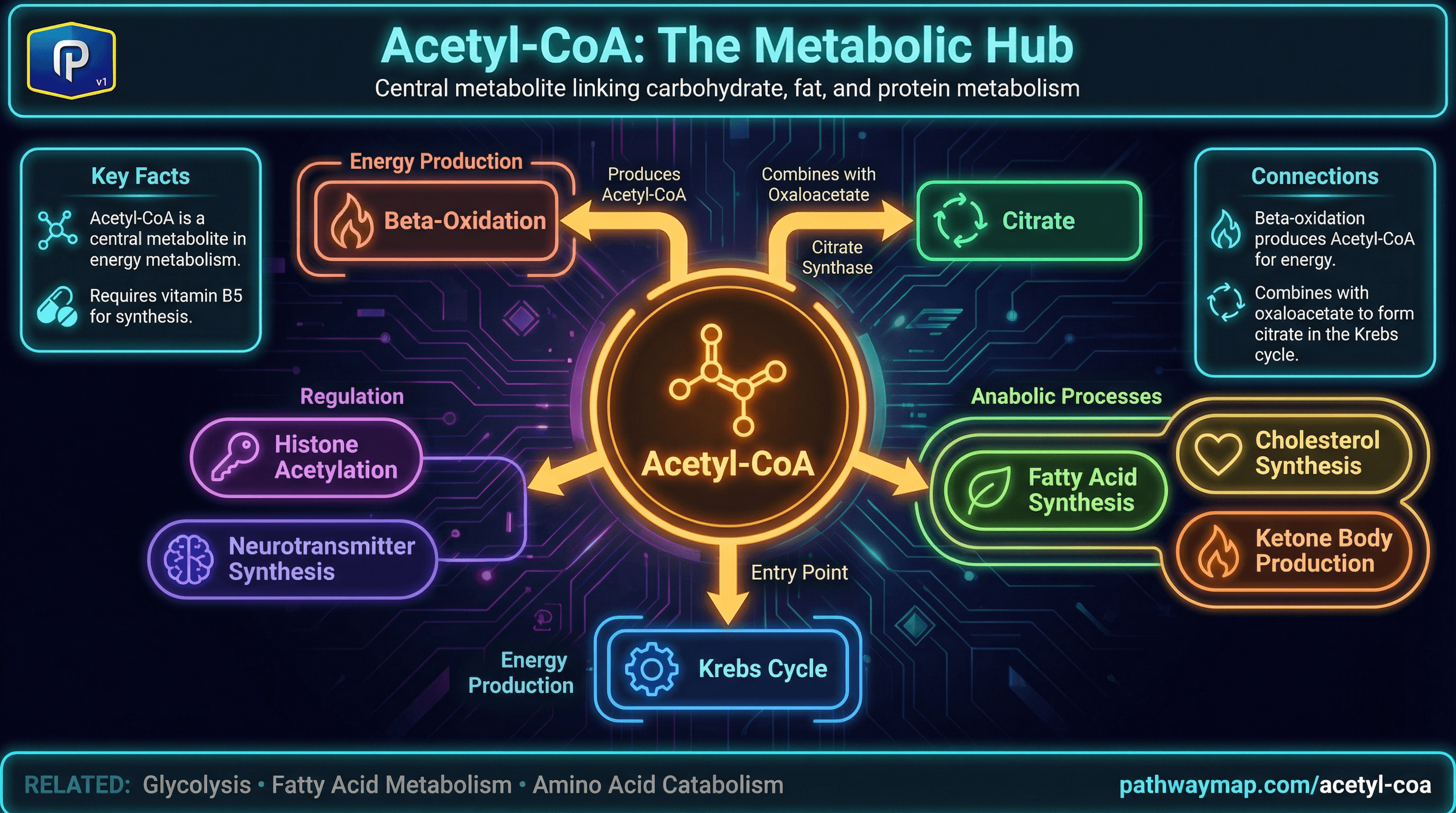
Acetyl-CoA
Beta-oxidation breaks down fatty acids into acetyl-CoA units for the Krebs cycle
Central metabolite linking carbohydrate, fat, and protein metabolism. Entry point to Krebs cycle for energy production.
Acetyl-CoA
Beta-oxidation of fatty acids produces acetyl-CoA units that feed into the Krebs cycle for energy
Central metabolite linking carbohydrate, fat, and protein metabolism. Entry point to Krebs cycle for energy production.
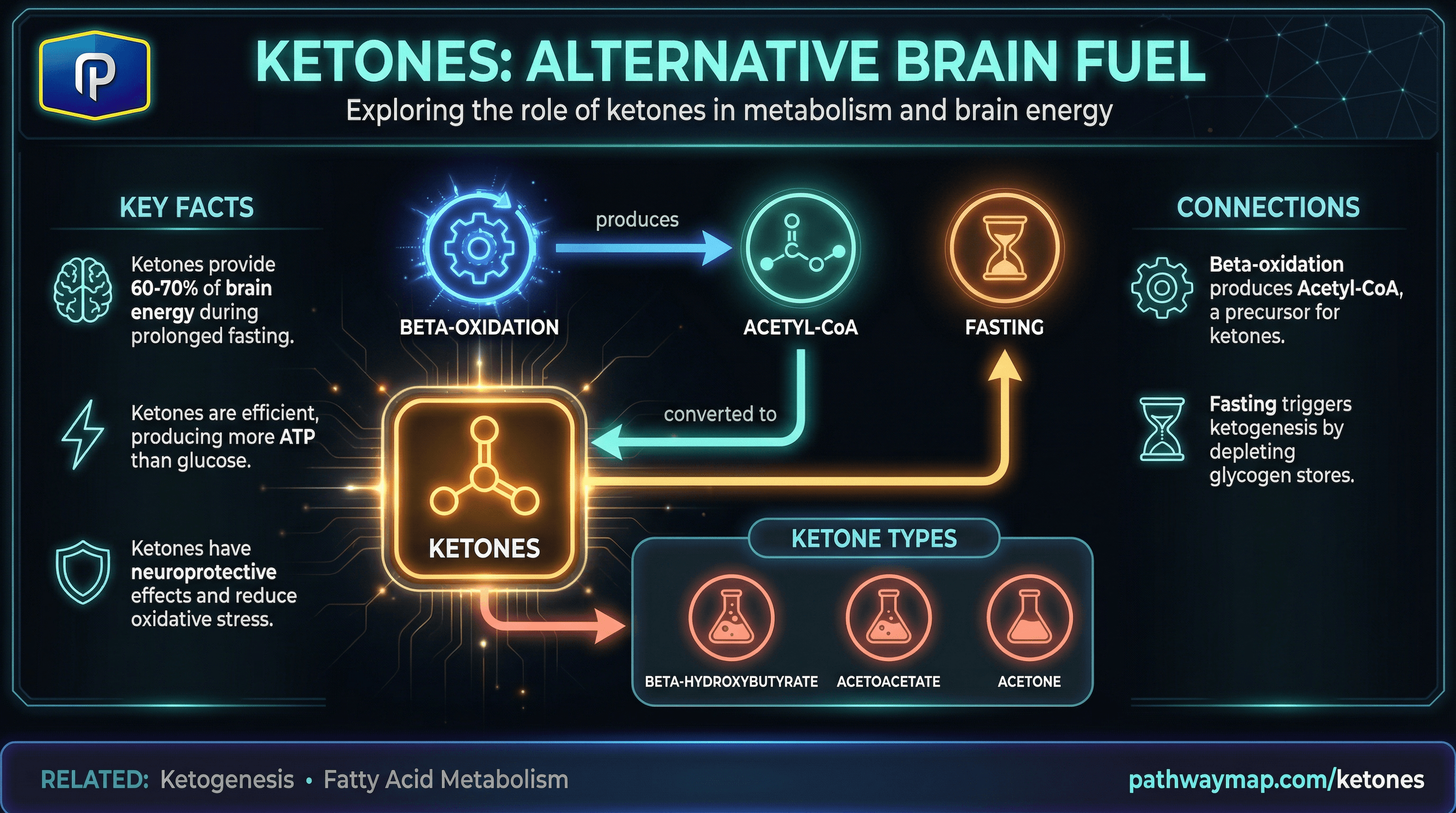
Ketones
Beta-oxidation produces acetyl-CoA which can be converted to ketones during fasting
Alternative brain fuel produced from fat during fasting or low-carb eating. Include beta-hydroxybutyrate, acetoacetate, and acetone.
Processes
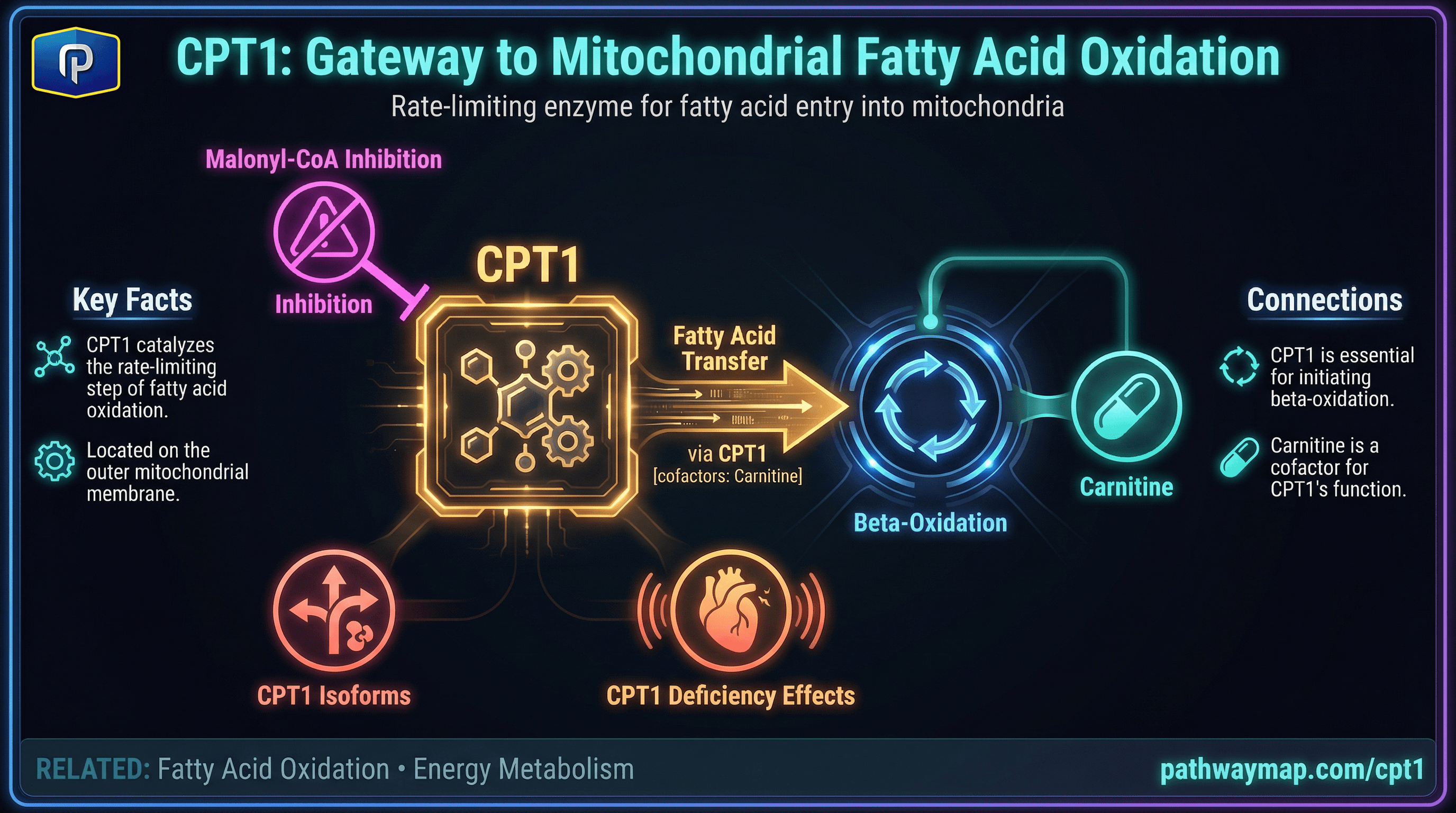
CPT1
CPT1 is the rate-limiting enzyme that transfers fatty acids onto carnitine for mitochondrial entry
Carnitine palmitoyltransferase 1 - rate-limiting enzyme for fatty acid entry into mitochondria.
CPT1
CPT1 is the rate-limiting enzyme that transfers fatty acids onto carnitine for mitochondrial entry
Carnitine palmitoyltransferase 1 - rate-limiting enzyme for fatty acid entry into mitochondria.
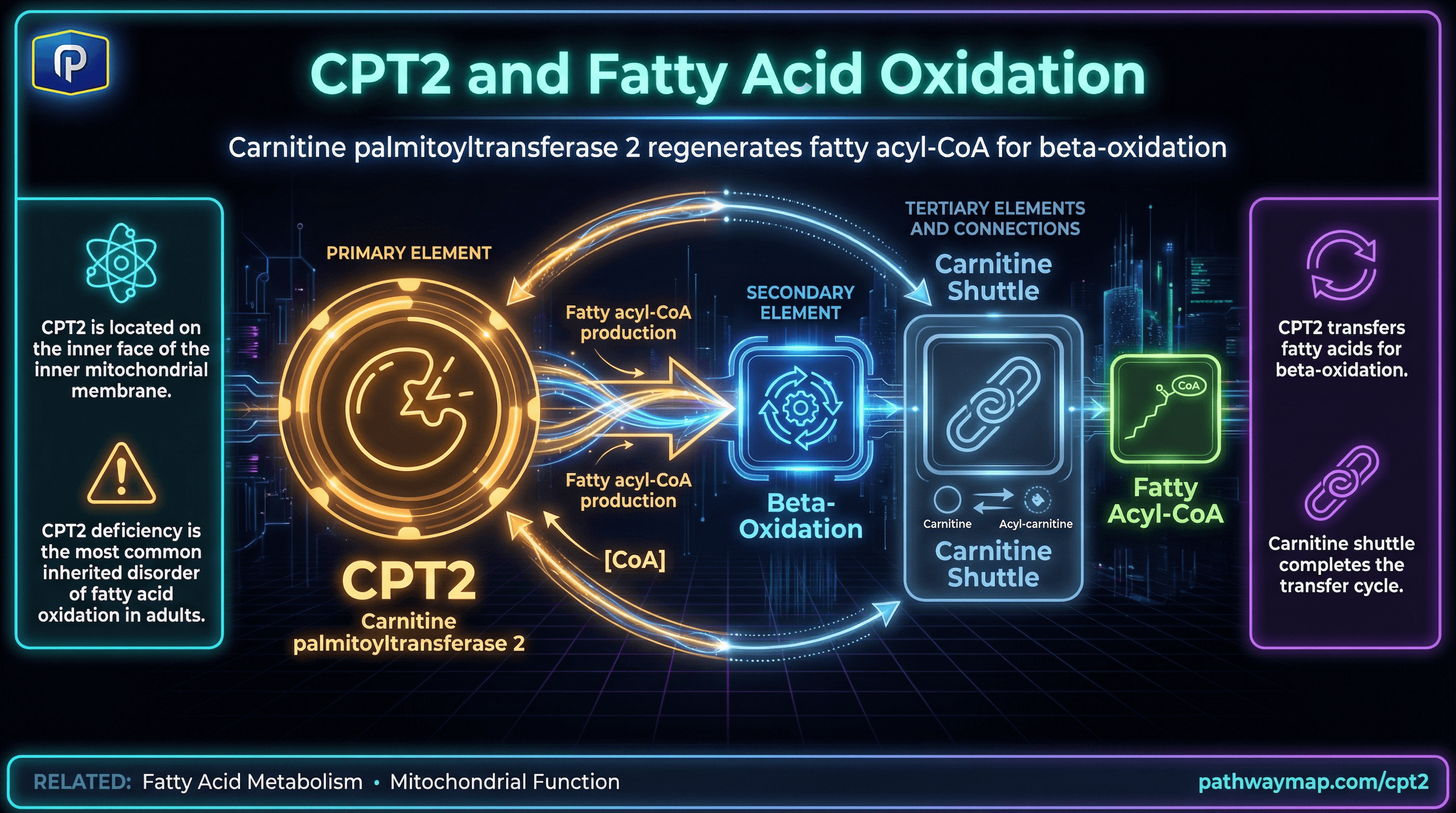
CPT2
CPT2 transfers fatty acids from carnitine back to CoA inside mitochondria for beta-oxidation
Carnitine palmitoyltransferase 2 - regenerates fatty acyl-CoA inside mitochondria for beta-oxidation.
CPT2
CPT2 transfers fatty acids from carnitine back to CoA inside mitochondria for beta-oxidation
Carnitine palmitoyltransferase 2 - regenerates fatty acyl-CoA inside mitochondria for beta-oxidation.
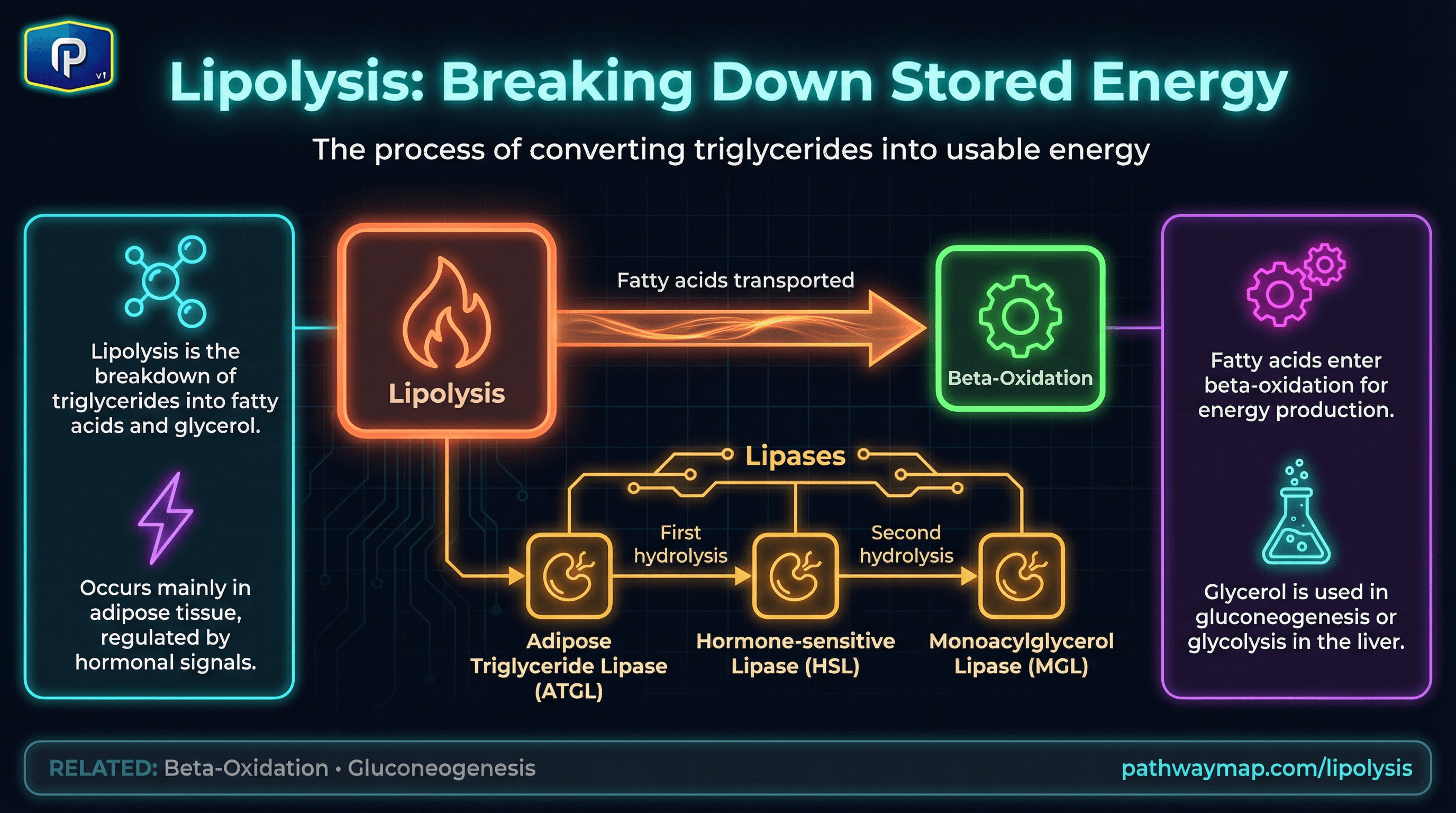
Lipolysis
Lipolysis releases fatty acids from triglycerides, providing substrates for beta-oxidation
Breakdown of stored triglycerides into fatty acids and glycerol. Activated by fasting, exercise, and catecholamines.
Lipolysis
Lipolysis releases fatty acids from triglycerides, providing substrates for beta-oxidation
Breakdown of stored triglycerides into fatty acids and glycerol. Activated by fasting, exercise, and catecholamines.