ProcessFat Metabolism
Lipolysis
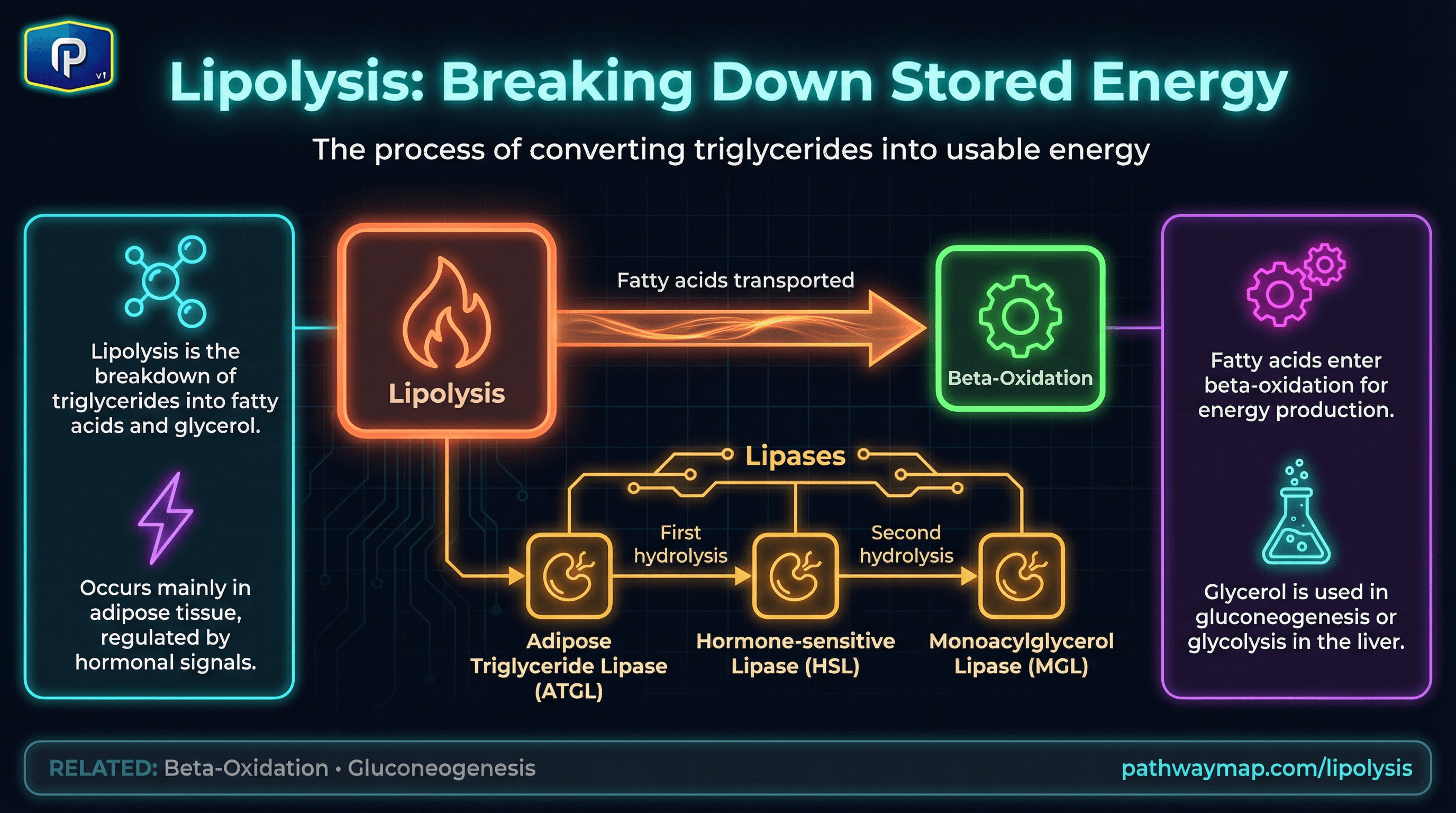
Unlocking stored energy. Lipolysis is the breakdown of triglycerides (stored fat) into free fatty acids and glycerol. This process allows the body to access its vast energy reserves stored in adipose tissue. Insulin blocks it; fasting, exercise, and stress hormones activate it.
Adipose
Location
3 FFA
Per Triglyceride
HSL
Key Enzyme
Insulin
Main Inhibitor
The Lipolysis Process
Triglyceride
Stored in fat cell
→
HSL Activated
Hormone-sensitive lipase
→
Breakdown
Sequential cleavage
→
3 FFA + Glycerol
Released to blood
Hormonal Regulation
Activators (↑ Lipolysis)
- Epinephrine/Adrenaline: Fight or flight
- Norepinephrine: Sympathetic activation
- Glucagon: Fasting signal
- Cortisol: Chronic stress, fasting
- Growth hormone: Fat mobilization
- Thyroid hormones: Metabolic rate
Inhibitors (↓ Lipolysis)
- Insulin: Powerful inhibitor (fed state)
- Fed state: Glucose available, store fat
- Nicotinic acid: Niacin flush blocks lipolysis
- Alpha-2 receptors: In stubborn fat areas
Where Do Products Go?
Free Fatty Acids (FFA)
- • Travel bound to albumin in blood
- • Taken up by muscles for β-oxidation
- • Used by heart (preferred fuel)
- • Liver converts to ketones (ketogenesis)
- • Provide 9 kcal/gram energy
Glycerol
- • Goes to liver
- • Converted to glucose (gluconeogenesis)
- • Can enter glycolysis
- • Minor but useful substrate
Enhancing Fat Burning
Fasting
Low insulin = active lipolysis. Extended fasting maximizes fat burning.
Low-Carb Diet
Lower insulin levels. More time in fat-burning mode.
Exercise
Catecholamines activate HSL. Fasted exercise may enhance effect.
Cold Exposure
Activates brown fat. Increases norepinephrine. Boosts lipolysis.
Caffeine
Increases catecholamines. Mild lipolysis boost. Enhanced with exercise.
Sleep
Growth hormone released during sleep. Nighttime fat burning period.