CPT2
Carnitine palmitoyltransferase 2 - regenerates fatty acyl-CoA inside mitochondria for beta-oxidation.
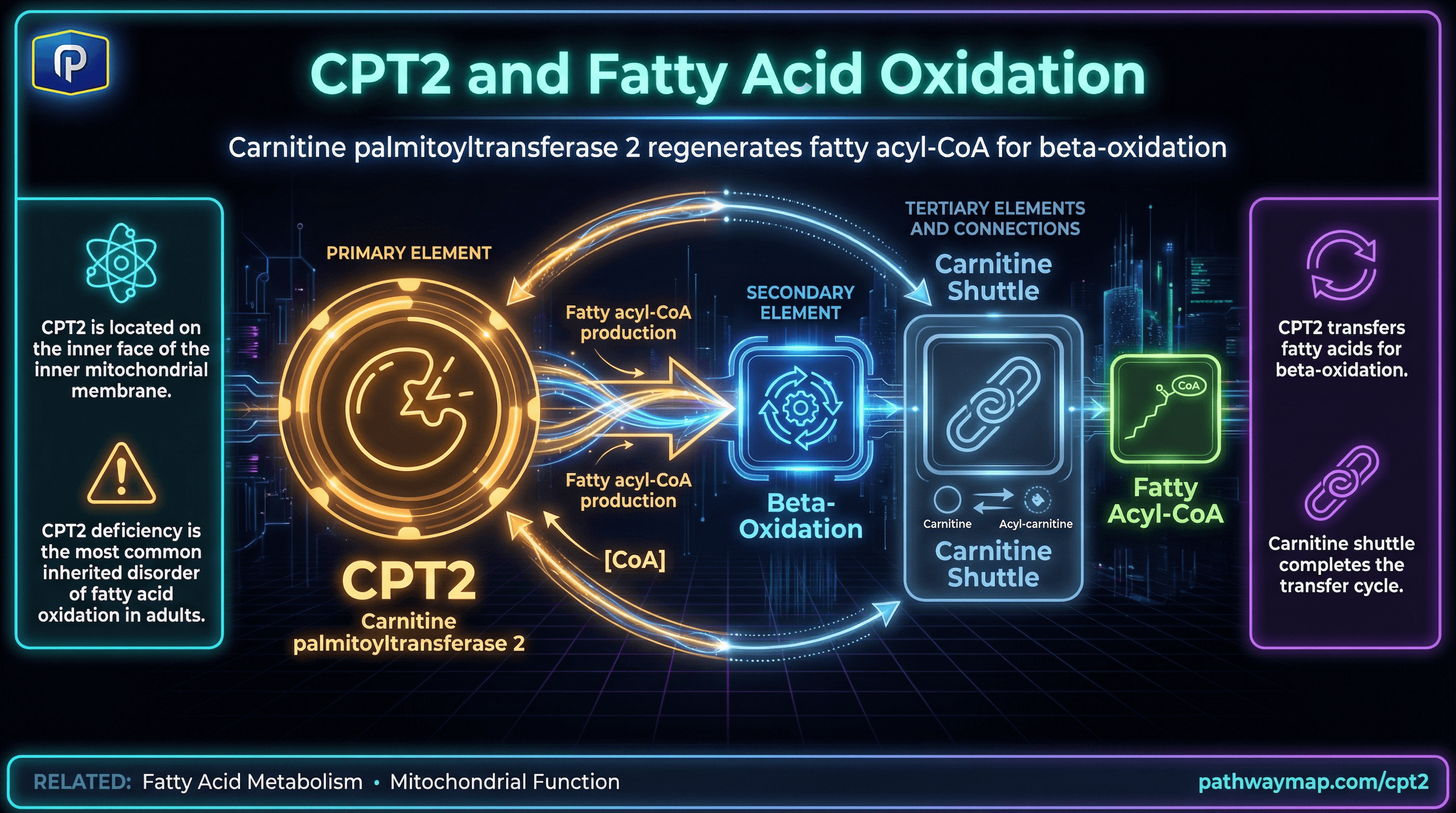
CPT2 (carnitine palmitoyltransferase 2) is located on the inner face of the inner mitochondrial membrane. It completes the carnitine shuttle by transferring the fatty acyl group from carnitine back to CoA inside the mitochondrial matrix. The reaction: Acylcarnitine + CoA → Fatty acyl-CoA + Carnitine.
The fatty acyl-CoA can then undergo beta-oxidation, while carnitine returns to the cytoplasm via the translocase to pick up another fatty acid. CPT2 deficiency is the most common inherited disorder of fatty acid oxidation in adults. There are three clinical forms: Lethal neonatal (severe, multi-organ failure), Infantile (hepatic, cardiac, muscle involvement), and Adult muscular (most common, episodic muscle pain and rhabdomyolysis triggered by fasting, exercise, or illness).
The adult form typically presents in young adulthood with exercise intolerance and muscle pain after prolonged exercise or fasting. Rhabdomyolysis with myoglobinuria can occur. Between episodes, patients are normal.
Management
avoiding prolonged fasting
limiting strenuous exercise
ensuring adequate carbohydrate intake before exercise
potentially medium-chain triglyceride (MCT) supplementation (MCTs don't require CPT for mitochondrial entry).
CPT2 efficiency affects how well an individual can burn fat during exercise or fasting, explaining some inter-individual variation in fat adaptation capacity.
Metabolic Connections
CPT2 connects to 2 other pathways.
Processes
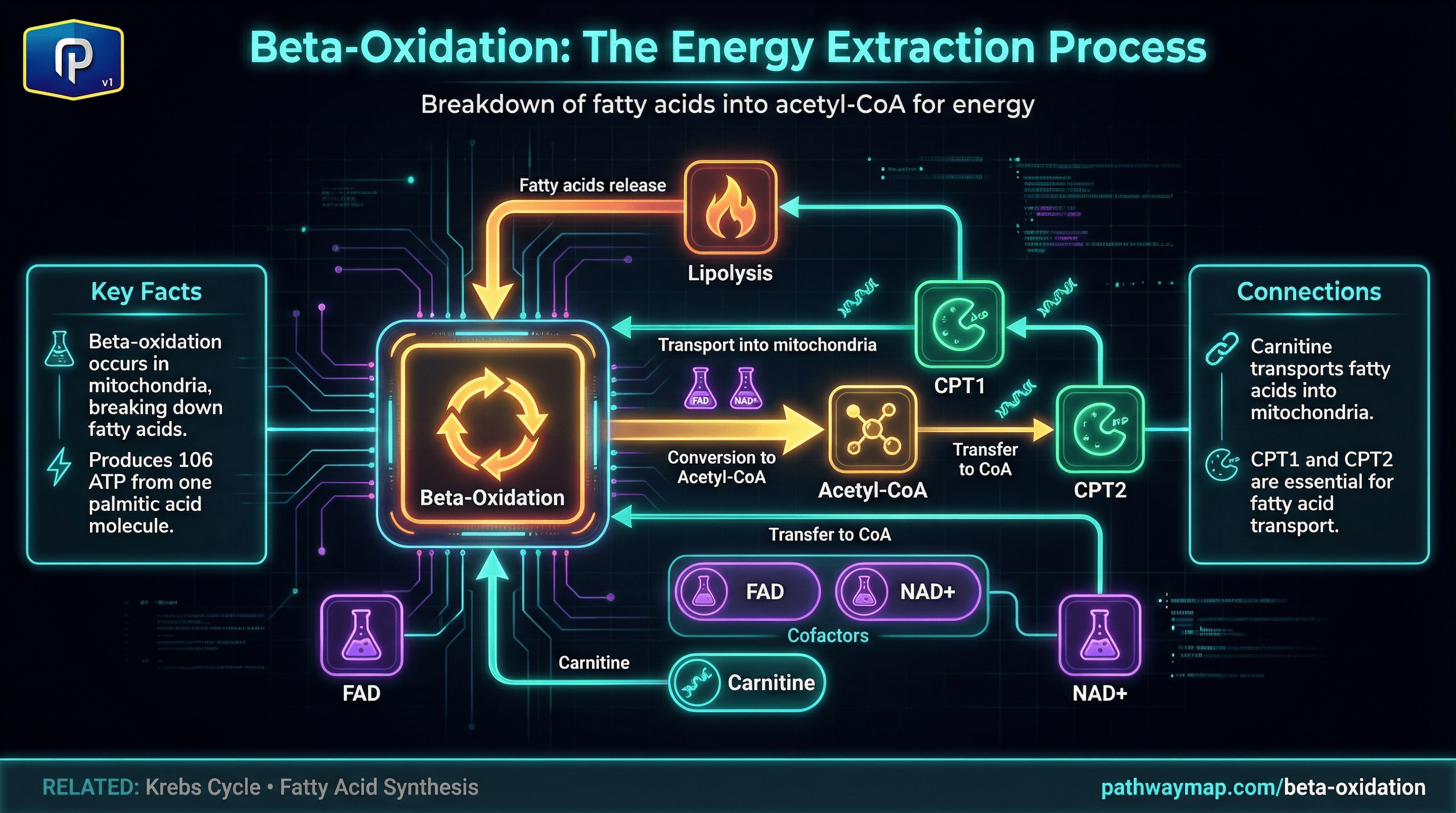
Beta-Oxidation
CPT2 transfers fatty acids from carnitine back to CoA inside mitochondria for beta-oxidation
Mitochondrial breakdown of fatty acids into acetyl-CoA units for energy production.
Beta-Oxidation
CPT2 transfers fatty acids from carnitine back to CoA inside mitochondria for beta-oxidation
Mitochondrial breakdown of fatty acids into acetyl-CoA units for energy production.