Growth Hormone
The repair and regeneration hormone. Growth hormone (somatotropin) pulses from the pituitary gland during deep sleep and fasting. It promotes tissue repair, fat burning, muscle preservation, and bone density. Declines with age but can be naturally optimized through lifestyle.
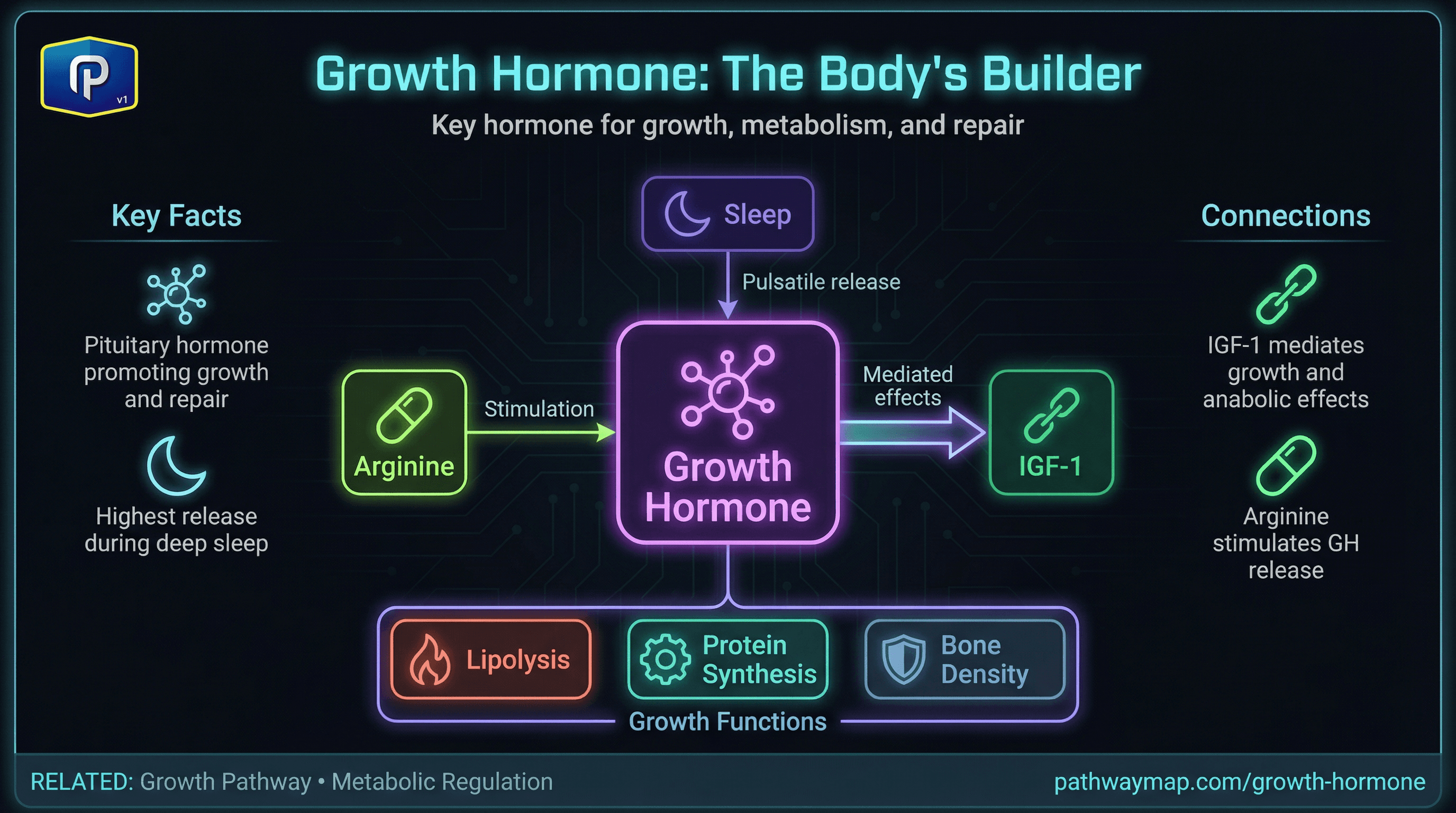
What Growth Hormone Does
Fat Burning
Potent lipolytic hormone. Mobilizes fat stores for energy. Preserves muscle during fasting.
Muscle Building
Promotes protein synthesis via IGF-1. Increases lean body mass. Anti-catabolic.
Tissue Repair
Accelerates wound healing. Repairs damaged tissues. Regenerative effects throughout body.
Bone Density
Stimulates bone formation. Works with IGF-1 for skeletal health. Critical during development.
Immune Function
Supports immune cell function. GH decline may explain age-related immune weakness.
Organ Maintenance
Maintains organ size and function. Brain, heart, kidneys all have GH receptors.
GH Release Pattern
What Increases GH
- Deep sleep: Largest pulses during first hours of sleep
- Fasting: Dramatically rises during extended fasts
- Intense exercise: HIIT, sprints, heavy lifting
- Ghrelin: Hunger hormone stimulates GH
- Low blood sugar: Hypoglycemia triggers GH
What Decreases GH
- High insulin: Eating suppresses GH pulses
- Poor sleep: Disrupted sleep = less GH
- Obesity: Fat accumulation suppresses GH
- High blood sugar: Glucose blunts GH response
- Aging: GH declines 14% per decade after 30
Naturally Optimizing GH
Prioritize Deep Sleep
70-80% of daily GH released during sleep. Dark room, cool temp, consistent schedule.
Intermittent Fasting
Fasting boosts GH 5x. Don't eat 2-3 hours before bed. Consider time-restricted eating.
High Intensity Exercise
Sprints, heavy lifting, HIIT all boost GH. More intensity = more GH response.
Reduce Body Fat
Belly fat especially suppresses GH. Losing fat restores GH production.