Manganese
The mitochondrial guardian. Manganese is a trace mineral that activates SOD2 (superoxide dismutase 2), your primary mitochondrial antioxidant. It's also needed for bone formation, blood sugar regulation, and neurotransmitter synthesis. Deficiency is rare but toxicity from overexposure is a concern.
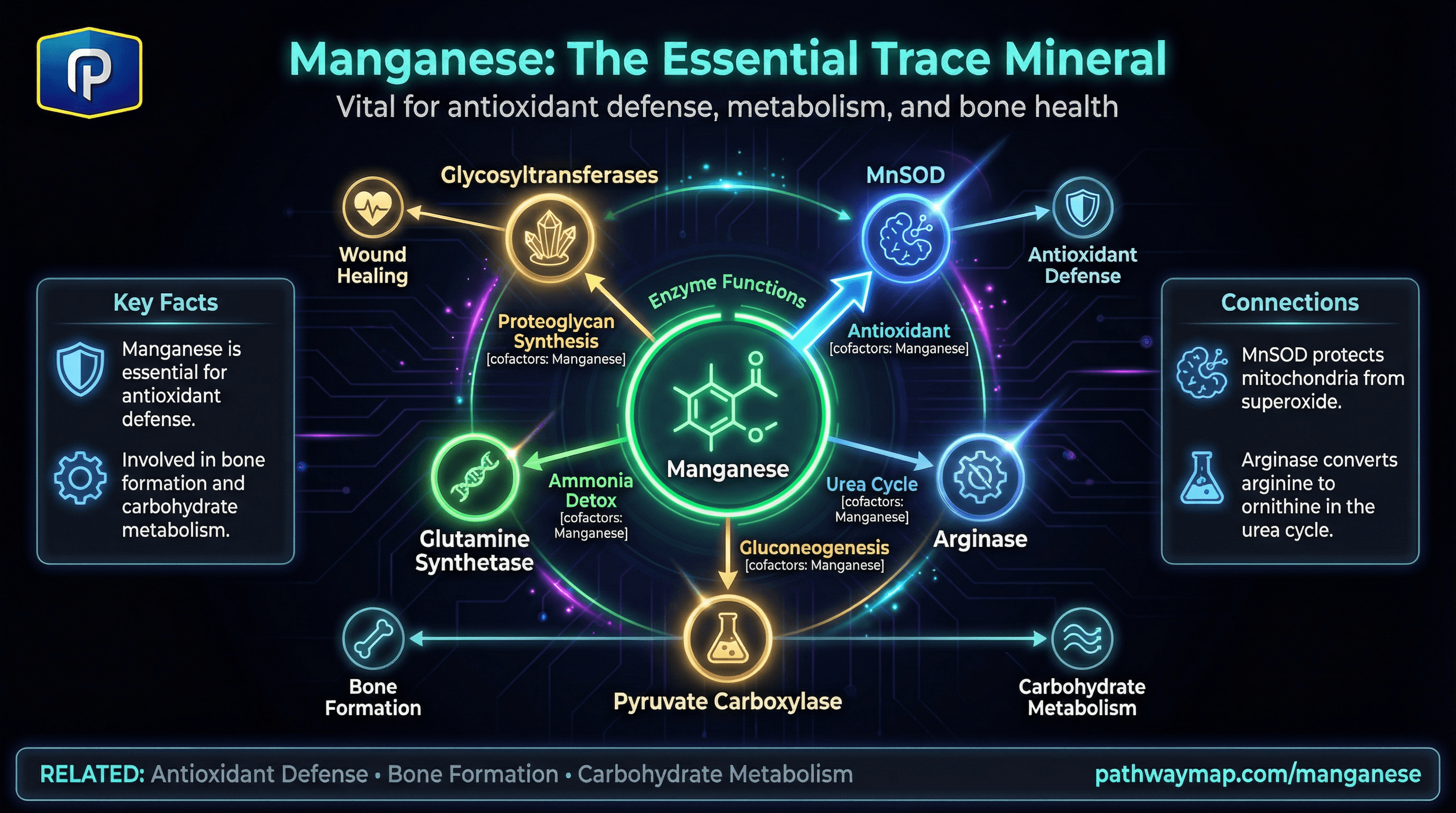
What Manganese Does
SOD2 Activation
Manganese superoxide dismutase protects mitochondria from superoxide damage. Critical antioxidant.
Bone Formation
Needed for bone matrix synthesis. Works with calcium, zinc, copper for bone health.
Blood Sugar
Involved in gluconeogenesis and glucose metabolism. Low Mn linked to diabetes risk.
Arginase
Mn-dependent enzyme in urea cycle. Clears ammonia from amino acid metabolism.
Cartilage
Required for glycosaminoglycan synthesis. Joint health and connective tissue.
Thyroid
Cofactor for enzymes in thyroid hormone production and metabolism.
Food Sources
Best Sources
- Mussels: Highest food source
- Nuts: Hazelnuts, pecans, almonds
- Whole grains: Oats, brown rice
- Legumes: Chickpeas, lentils
- Tea: Significant source for tea drinkers
- Pineapple: Good fruit source
Absorption Factors
- Iron competes: High iron reduces Mn absorption
- Phytates: In grains can reduce absorption
- Low absorption: Only 1-5% typically absorbed
- Deficiency rare: Wide availability in foods
Manganese Toxicity
Unlike most minerals, manganese toxicity is more common than deficiency:
Sources of Excess
Welding fumes, mining, well water contamination, excessive supplements, TPN nutrition.
Manganism
Parkinson-like syndrome from accumulation in brain's basal ganglia. Movement disorders, psychiatric symptoms.
Upper Limit
11mg/day tolerable upper limit. Don't supplement without testing. Food sources are safe.