Mitophagy
Quality control for your power plants. Mitophagy is the targeted destruction of damaged mitochondria. When mitochondria become dysfunctional—leaking reactive oxygen species and producing less ATP—they must be cleared and replaced. This process declines with age, contributing to cellular decline. Fasting and exercise activate it.
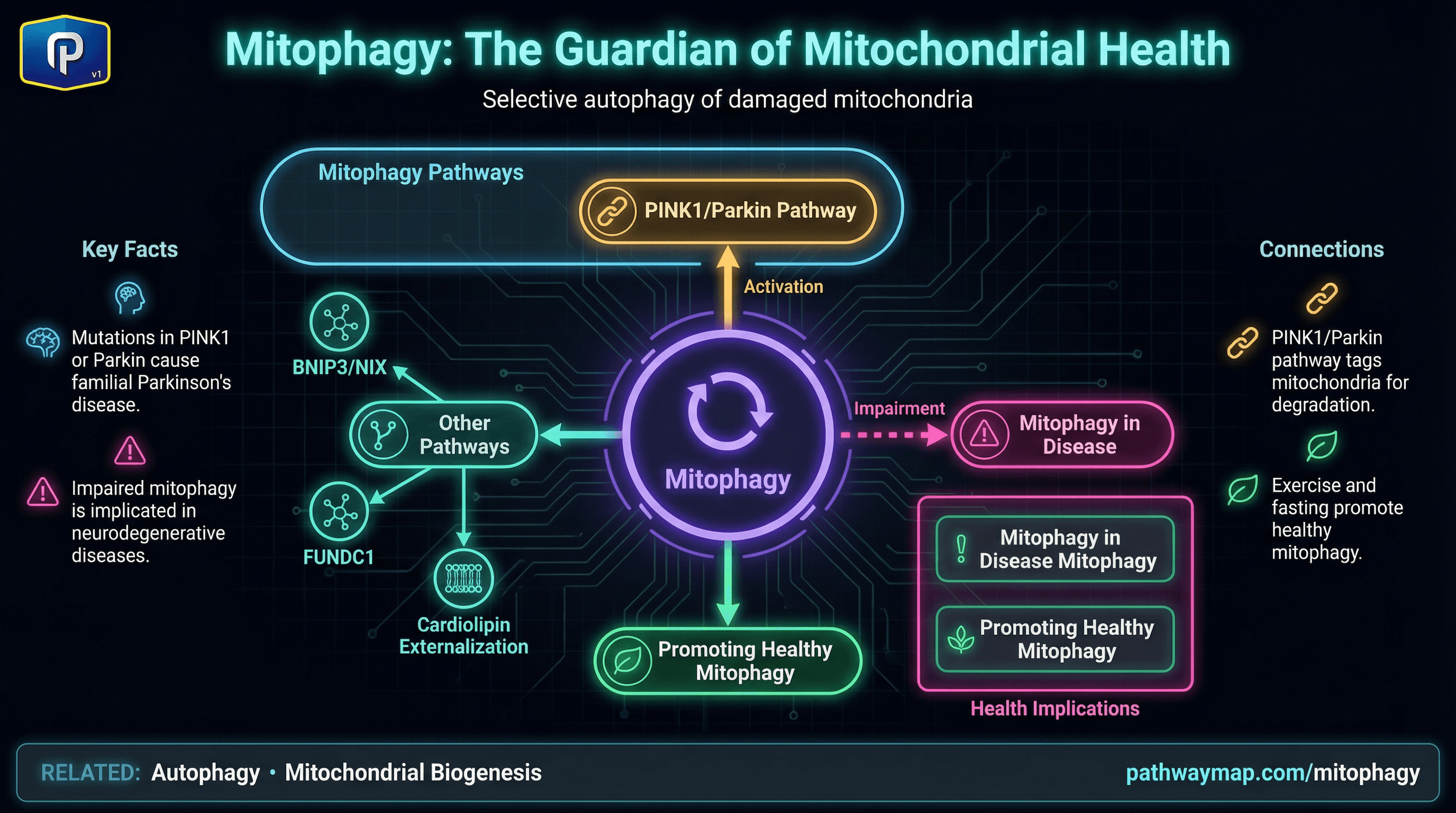
How Mitophagy Works
Damage Detection
PINK1 accumulates on damaged mitochondria. Signals dysfunction.
Parkin Recruitment
PINK1 recruits Parkin protein. Together they tag mitochondria for destruction.
Ubiquitination
Parkin adds ubiquitin tags. Marks mitochondria for autophagy machinery.
Autophagosome Engulfment
Membrane surrounds damaged mitochondria. Isolates for degradation.
Lysosomal Fusion
Fuses with lysosome. Enzymes digest mitochondrial components.
Component Recycling
Amino acids, lipids reused. New mitochondria built. Biogenesis triggered.
Why Mitophagy Matters
Reduces ROS
Damaged mitochondria produce excess reactive oxygen species. Removal stops this.
Prevents Disease
Parkinson's involves PINK1/Parkin mutations. Impaired mitophagy central.
Energy Production
Clears poor performers. Makes room for new, efficient mitochondria.
Aging Connection
Declines with age. Damaged mitochondria accumulate. Energy drops.
Enhancing Mitophagy
Fasting
Powerful trigger. 24+ hours particularly effective. AMPK activation.
Exercise
Especially intense exercise. Creates mitochondrial stress. Triggers turnover.
Cold Exposure
Hormetic stress. Activates mitochondrial quality control pathways.
Urolithin A
Pomegranate metabolite. Direct mitophagy activator. Timeline supplement.
NAD+ Precursors
NR, NMN support NAD+. Required for SIRT1 which promotes mitophagy.
Spermidine
Autophagy inducer. Found in aged cheese, wheat germ, legumes.