Neuromelanin
Dark pigment in dopaminergic neurons that binds metals and toxins. Its loss characterizes Parkinson's disease.
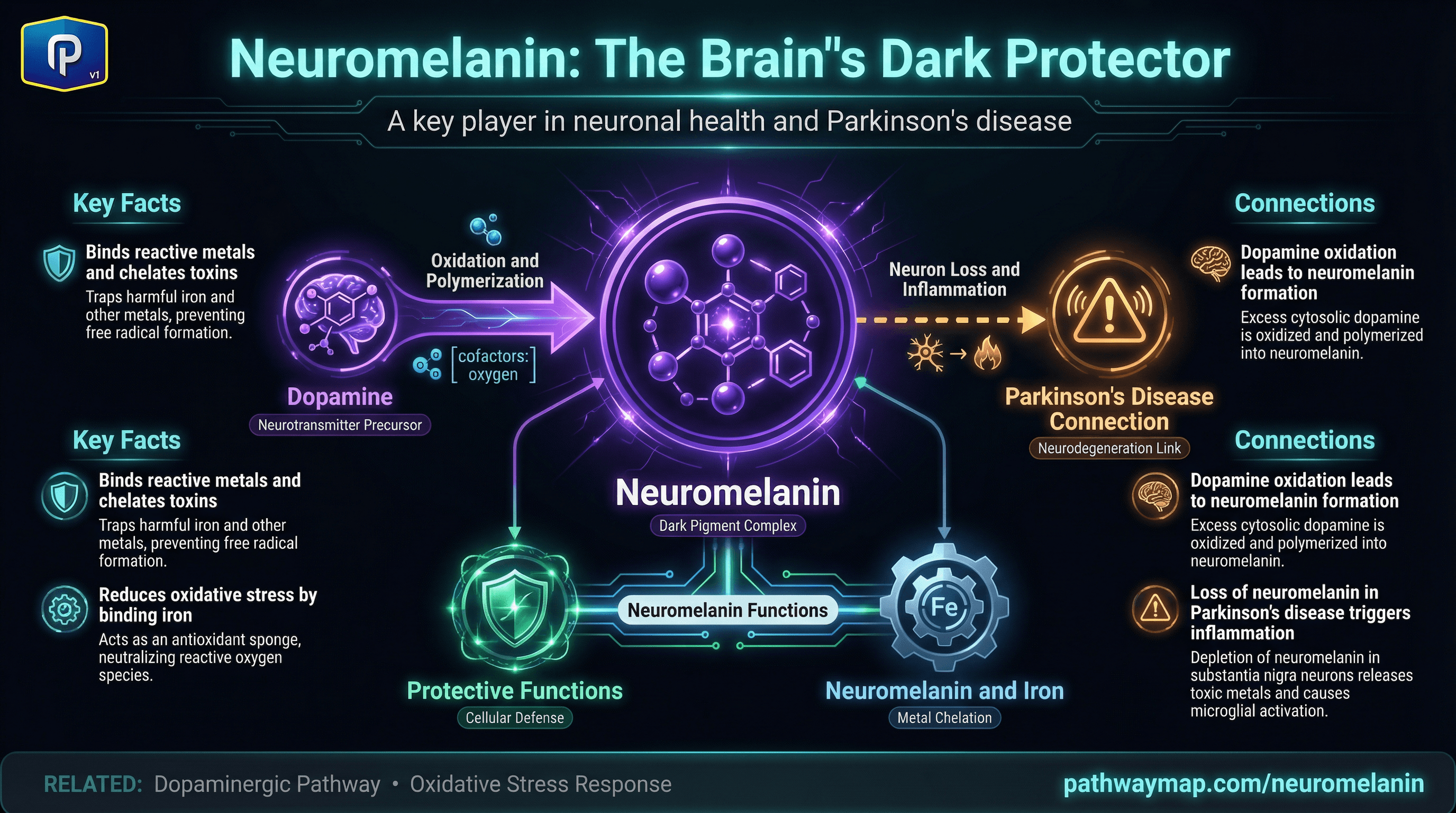
Neuromelanin is a dark pigment found predominantly in catecholaminergic neurons of the substantia nigra (dopamine) and locus coeruleus (norepinephrine). Unlike melanin in skin, neuromelanin accumulates throughout life and its loss is a hallmark of Parkinson's disease.
Formation: Neuromelanin is produced from the oxidation of excess cytosolic dopamine and norepinephrine that escapes vesicular storage.
It is essentially a polymerized form of oxidized catecholamines, combined with lipids and proteins.
Protective functions: Binds reactive metals (iron, copper, zinc), sequestering them safely, Chelates toxins (including pesticides and heavy metals), Reduces oxidative stress by binding iron that would otherwise catalyze ROS production, and Stores excess catecholamines safely. Parkinson's disease connection: The substantia nigra (where dopamine neurons reside) gets its name ('black substance') from neuromelanin.
In Parkinson's disease, neuromelanin-containing neurons are selectively lost. When these neurons die, neuromelanin is released and can trigger microglial activation and inflammation - potentially accelerating further damage. Neuromelanin and iron: Neuromelanin binds iron, and iron accumulation in the substantia nigra is seen in Parkinson's.
Whether iron accumulation is cause or consequence is debated, but the neuromelanin-iron interaction is clearly important. Implications: Protecting dopaminergic neurons (antioxidants, reducing iron accumulation), supporting dopamine packaging into vesicles (reducing cytosolic oxidation), and maintaining healthy catecholamine levels may help preserve neuromelanin-containing neurons.
Metabolic Connections
Neuromelanin connects to 2 other pathways.