PTH
Parathyroid hormone - regulates blood calcium by stimulating bone resorption, kidney reabsorption, and vitamin D activation.
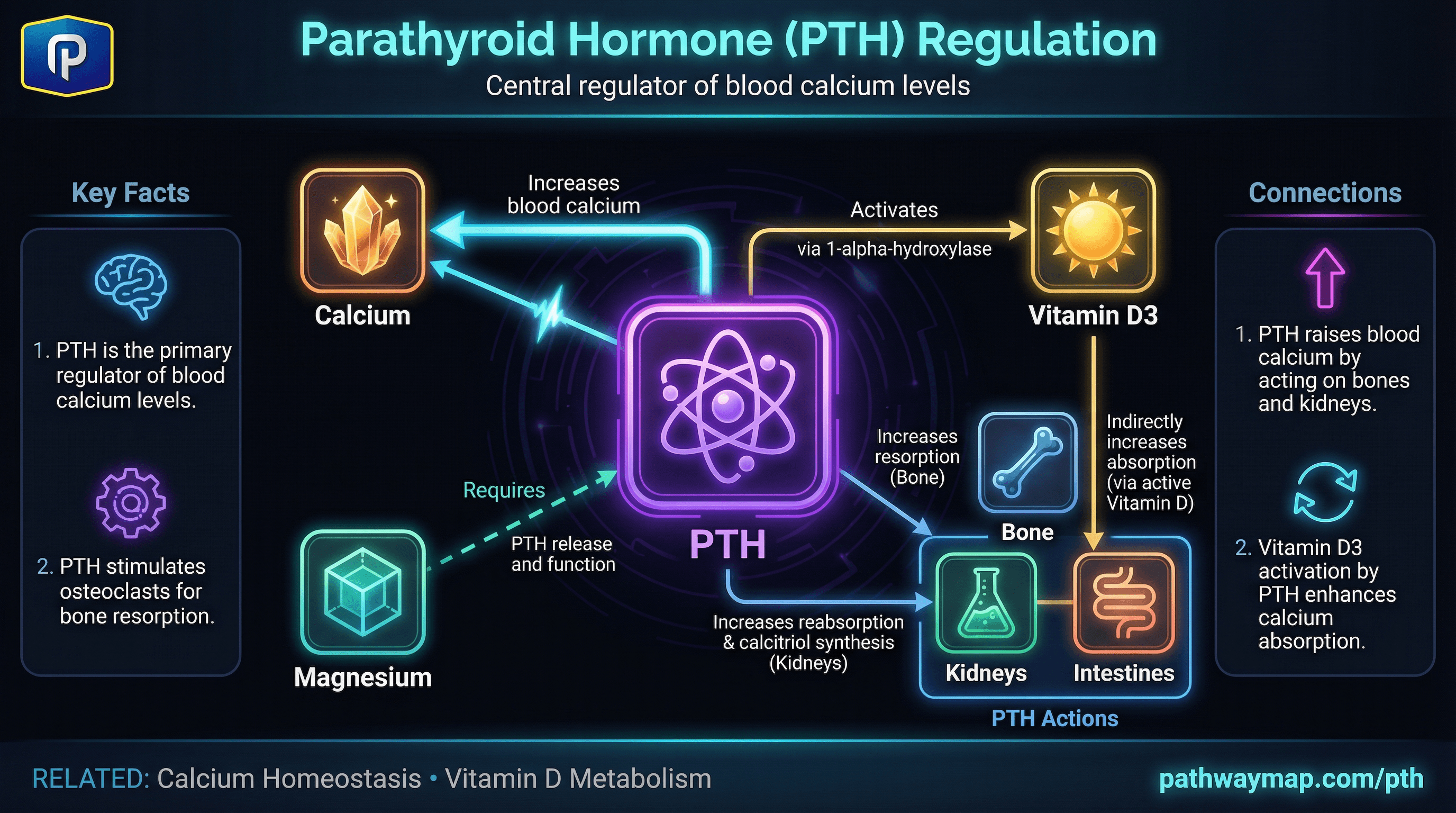
Parathyroid hormone (PTH) is the primary regulator of blood calcium levels. It is secreted by the four parathyroid glands in response to low blood calcium and acts to raise calcium through multiple mechanisms. PTH actions: Bone - stimulates osteoclasts to resorb bone, releasing calcium and phosphorus.
Kidneys - increases calcium reabsorption, decreases phosphorus reabsorption (promotes phosphorus excretion), and activates vitamin D (1-alpha-hydroxylase converts 25-OH-D to active 1,25-OH2-D).
Indirectly - active vitamin D increases intestinal calcium absorption.
Regulation: Low blood calcium stimulates PTH release. High blood calcium suppresses PTH. Vitamin D provides negative feedback on PTH. Magnesium is required for PTH secretion and action. Primary hyperparathyroidism: Excess PTH (usually from adenoma) causes hypercalcemia, bone loss, kidney stones, and various symptoms ('bones, stones, groans, and moans').
Secondary hyperparathyroidism: Elevated PTH in response to low calcium or vitamin D deficiency. Common in chronic kidney disease (can't activate vitamin D). Causes bone loss as the body maintains blood calcium at bone's expense. Nutrient interactions: Vitamin D - adequate D reduces PTH; deficiency elevates it.
Magnesium - required for PTH secretion; deficiency impairs PTH function. Calcium - inverse relationship with PTH. Optimal PTH: Depends on vitamin D status. In the presence of adequate vitamin D (>40 ng/mL), PTH should be in the lower part of the reference range.
Elevated PTH with normal calcium suggests vitamin D insufficiency.
Metabolic Connections
PTH connects to 3 other pathways.
Major Minerals

Calcium
PTH raises blood calcium through bone resorption and kidney reabsorption
Most abundant mineral in the body. Essential for bones, muscle contraction, nerve signaling, and blood clotting.
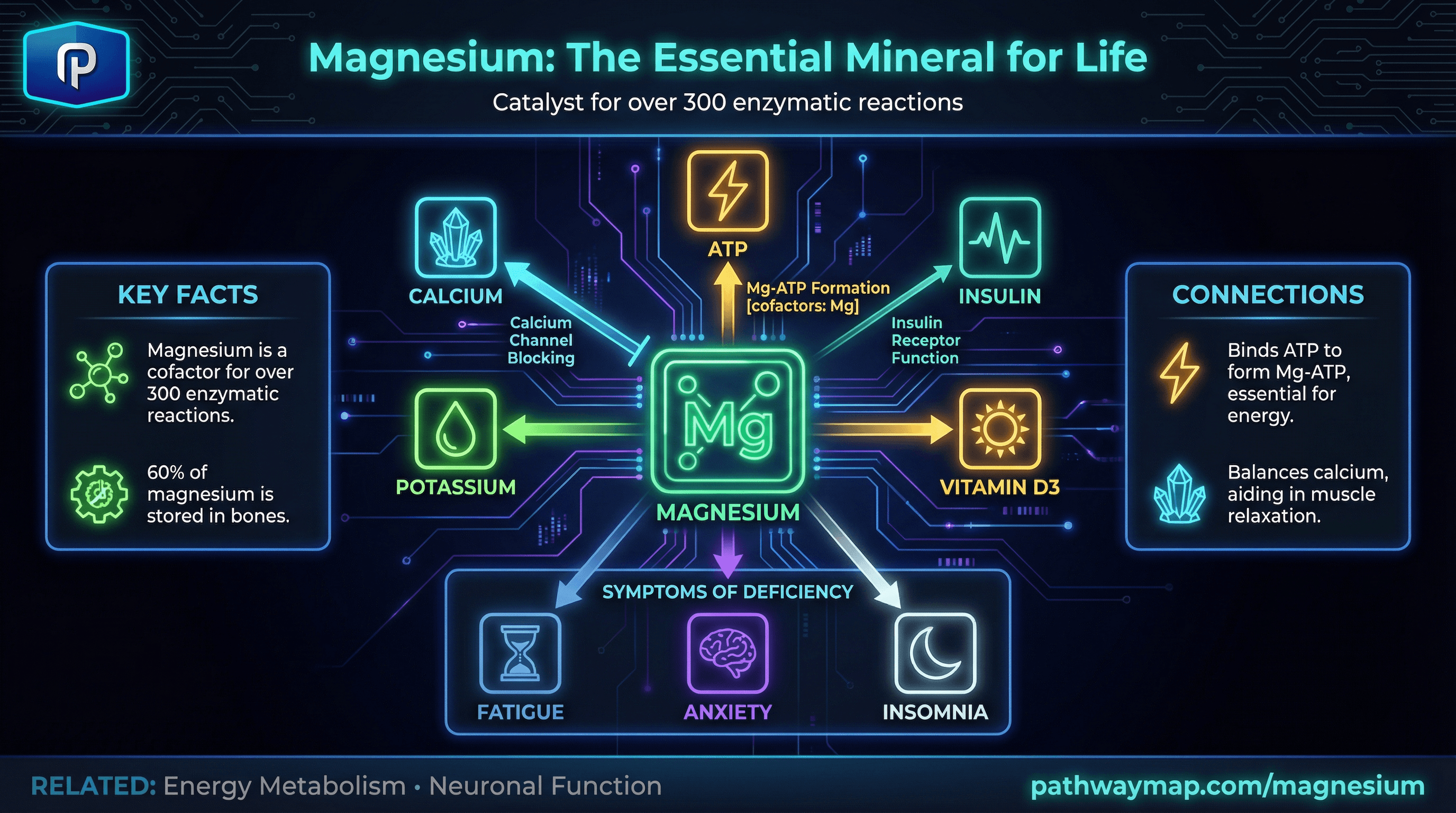
Magnesium
Magnesium is required for PTH secretion and target tissue response
Essential mineral involved in 300+ enzymatic reactions. Required for ATP, muscle/nerve function, and blood pressure regulation.