Pyruvate
End product of glycolysis. Gateway to Krebs cycle (via acetyl-CoA) or lactate under anaerobic conditions.
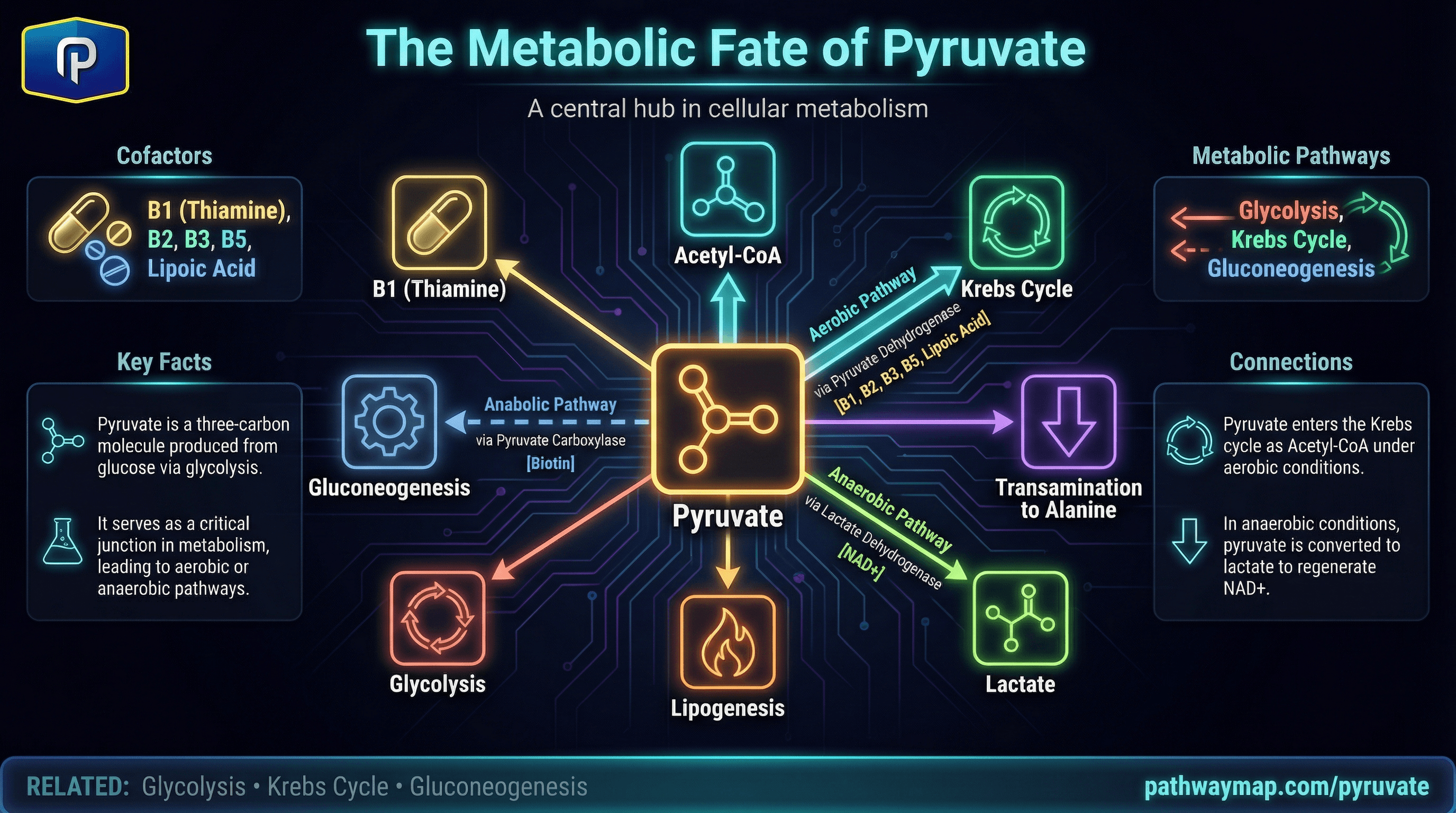
Pyruvate is a three-carbon molecule produced from glucose via glycolysis.
It sits at a critical metabolic junction, with its fate determined by oxygen availability and cellular needs.
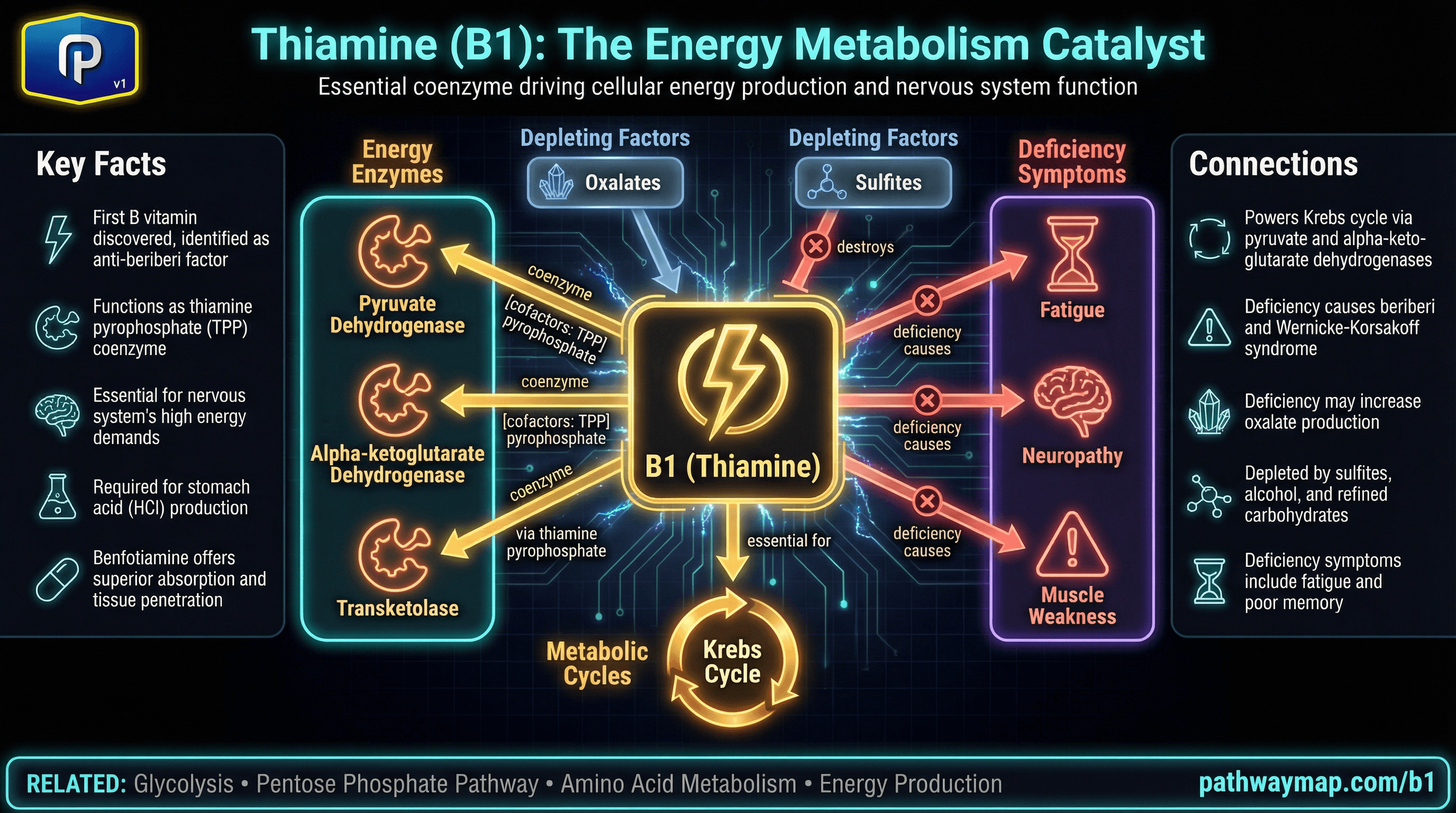
Aerobic fate: Pyruvate enters mitochondria via the mitochondrial pyruvate carrier (MPC). Pyruvate dehydrogenase complex (PDC) converts it to acetyl-CoA, releasing CO2 and generating NADH. Acetyl-CoA enters the Krebs cycle for complete oxidation. This pathway requires thiamine (B1), riboflavin (B2), niacin (B3), pantothenic acid (B5), and lipoic acid.
Anaerobic fate: When oxygen is limited or mitochondria are dysfunctional, lactate dehydrogenase (LDH) converts pyruvate to lactate, regenerating NAD+ to allow glycolysis to continue. This provides rapid but inefficient ATP production. Other fates: Gluconeogenesis (pyruvate to glucose via pyruvate carboxylase, requires biotin), Transamination to alanine (for nitrogen transport), and Lipogenesis (via acetyl-CoA).
PDC regulation: PDC is inhibited by high acetyl-CoA/CoA and NADH/NAD+ ratios, and by pyruvate dehydrogenase kinase (PDK). It's activated by pyruvate, CoA, NAD+, and pyruvate dehydrogenase phosphatase. Insulin activates PDC; starvation/diabetes inhibits it.
Pyruvate supplements: Sometimes used for weight loss and athletic performance, though evidence is limited.
Metabolic Connections
Pyruvate connects to 7 other pathways.
Metabolites
Acetyl-CoA
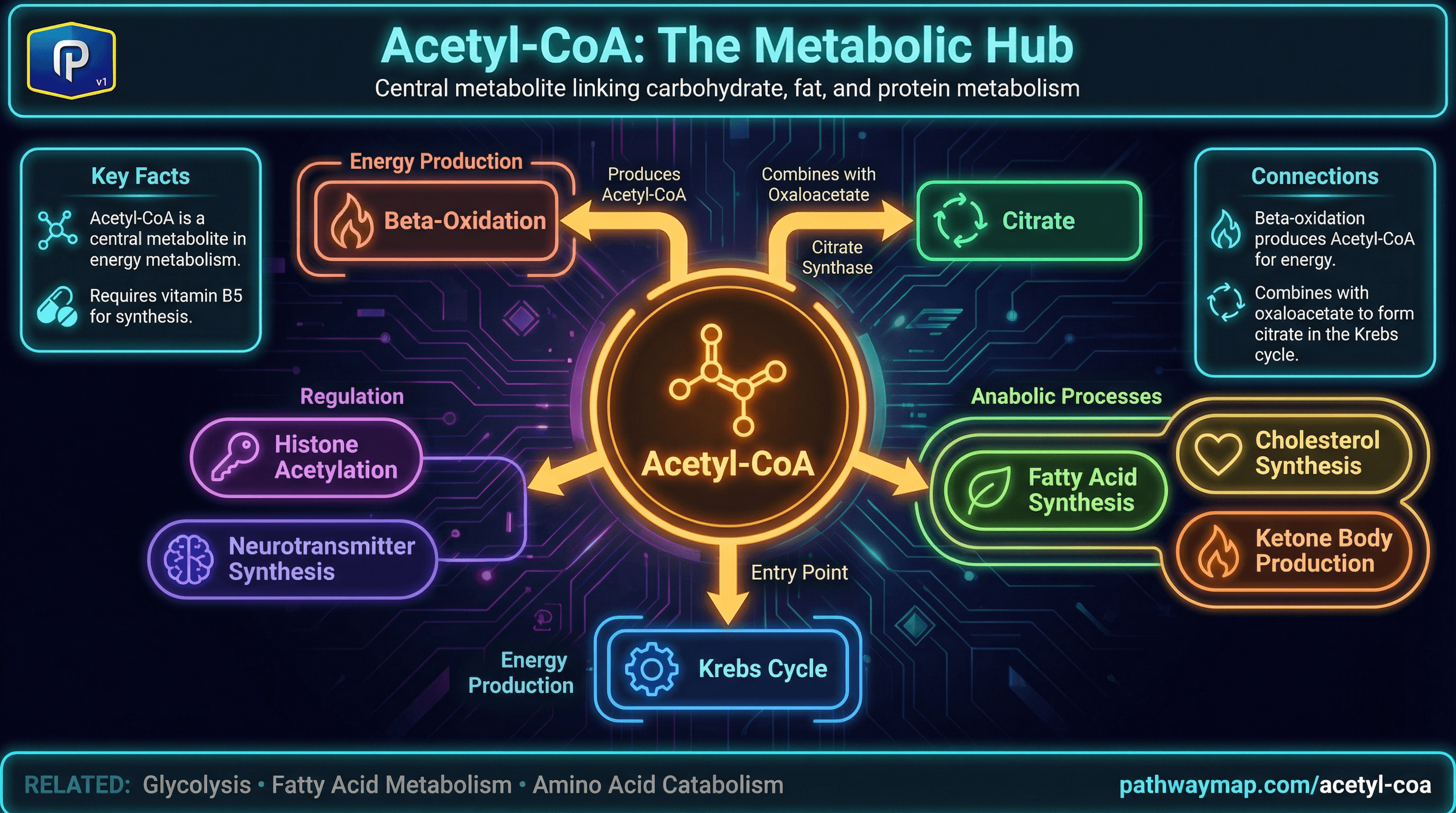
Pyruvate is converted to acetyl-CoA by pyruvate dehydrogenase for the Krebs cycle
Central metabolite linking carbohydrate, fat, and protein metabolism. Entry point to Krebs cycle for energy production.
Lactate
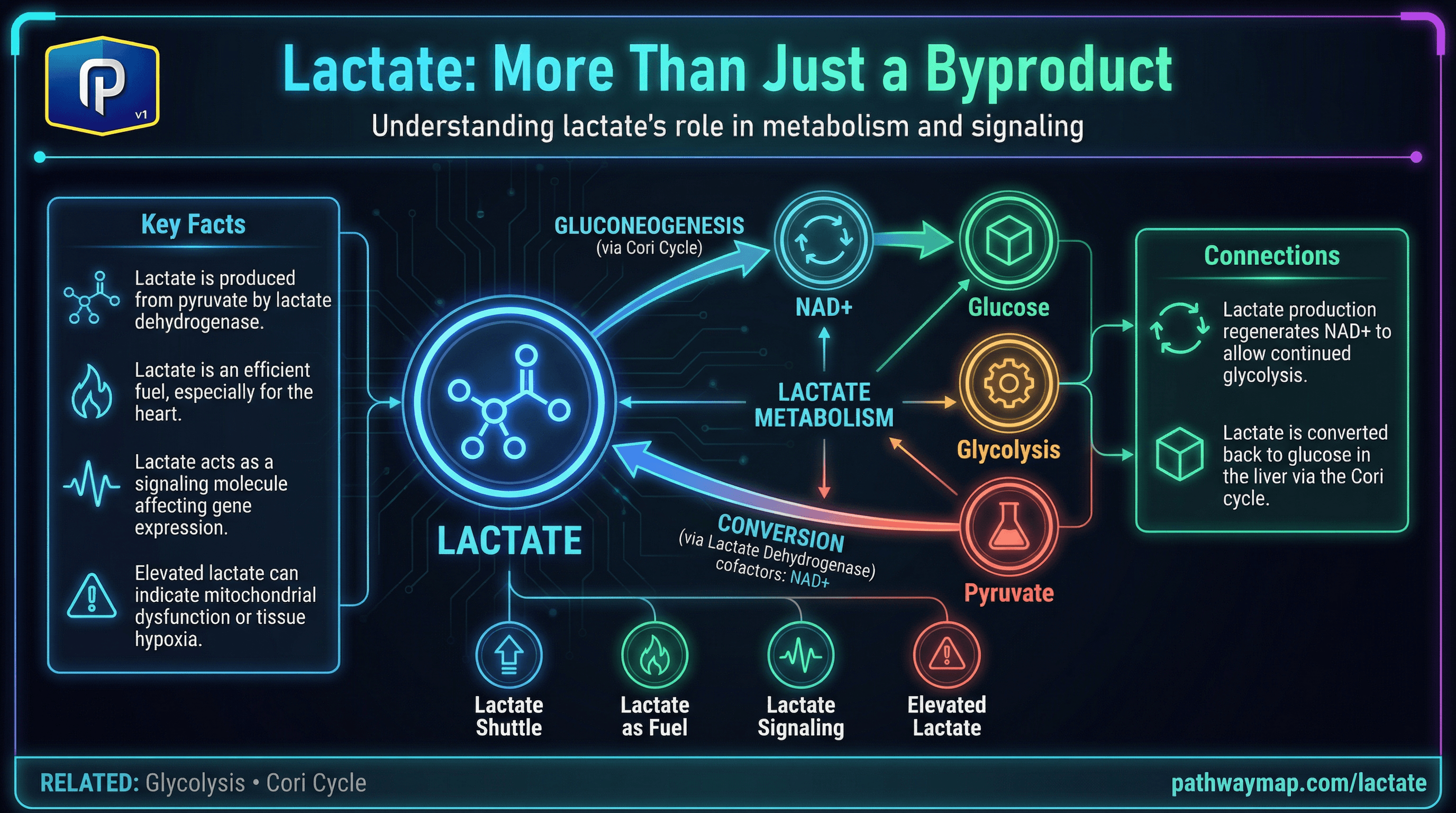
Pyruvate is converted to lactate under anaerobic conditions
Product of anaerobic glycolysis. Shuttled between tissues as fuel source. Not a waste product.
Lactate
Lactate is produced from pyruvate by lactate dehydrogenase
Product of anaerobic glycolysis. Shuttled between tissues as fuel source. Not a waste product.
Metabolic Cycles

Glycolysis
Pyruvate is the end product of glycolysis
Ten-step pathway breaking down glucose to pyruvate, producing ATP and NADH. Occurs in cytoplasm without oxygen.
Glycolysis
Pyruvate is the end product of glycolysis
Ten-step pathway breaking down glucose to pyruvate, producing ATP and NADH. Occurs in cytoplasm without oxygen.
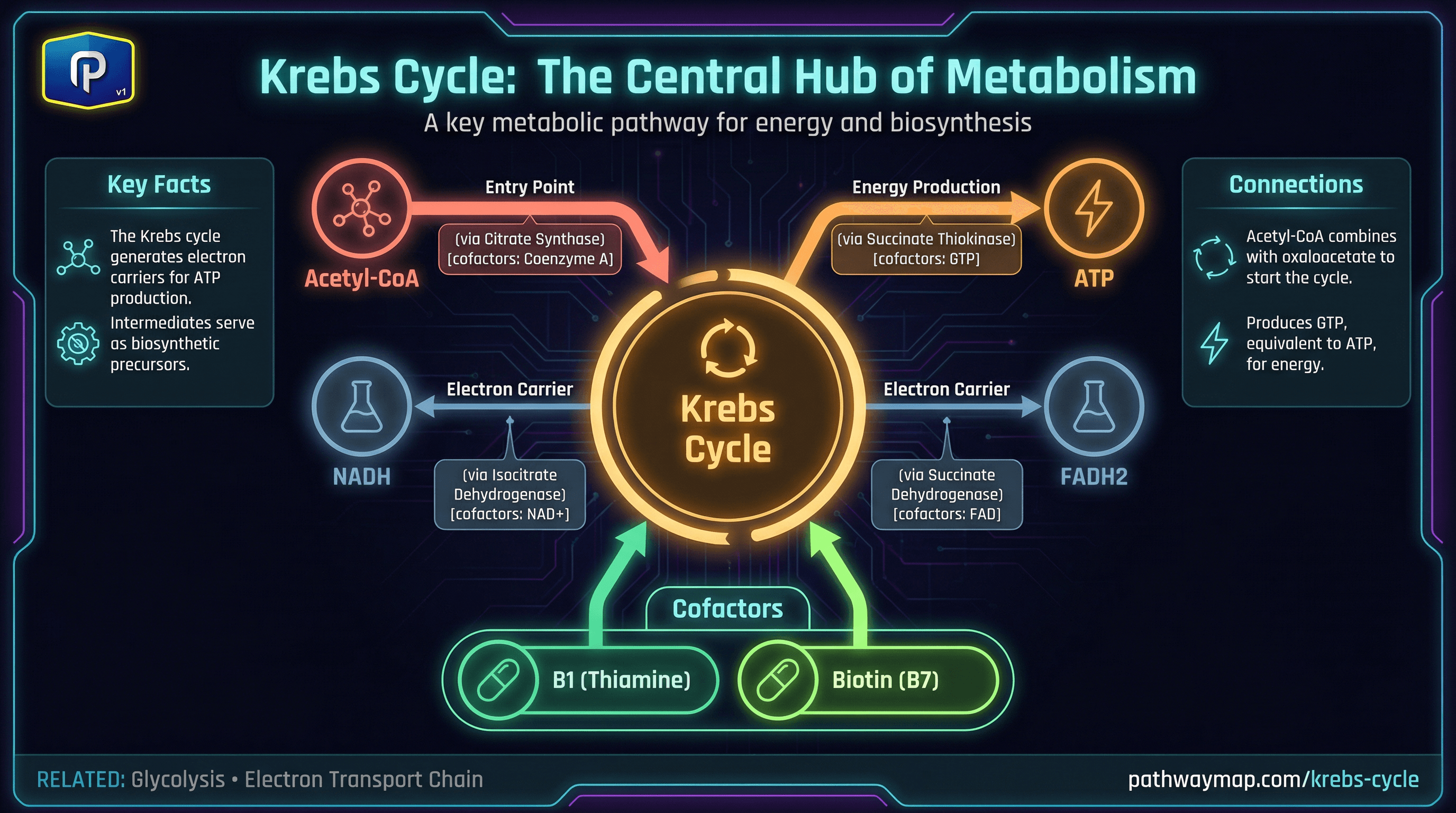
Krebs Cycle
Pyruvate enters the Krebs cycle as acetyl-CoA under aerobic conditions
Central metabolic pathway (citric acid cycle) that generates electron carriers for ATP production and biosynthetic precursors.