Reverse T3
Inactive thyroid hormone isomer that blocks T3 receptors. Increases during stress, illness, and caloric restriction.
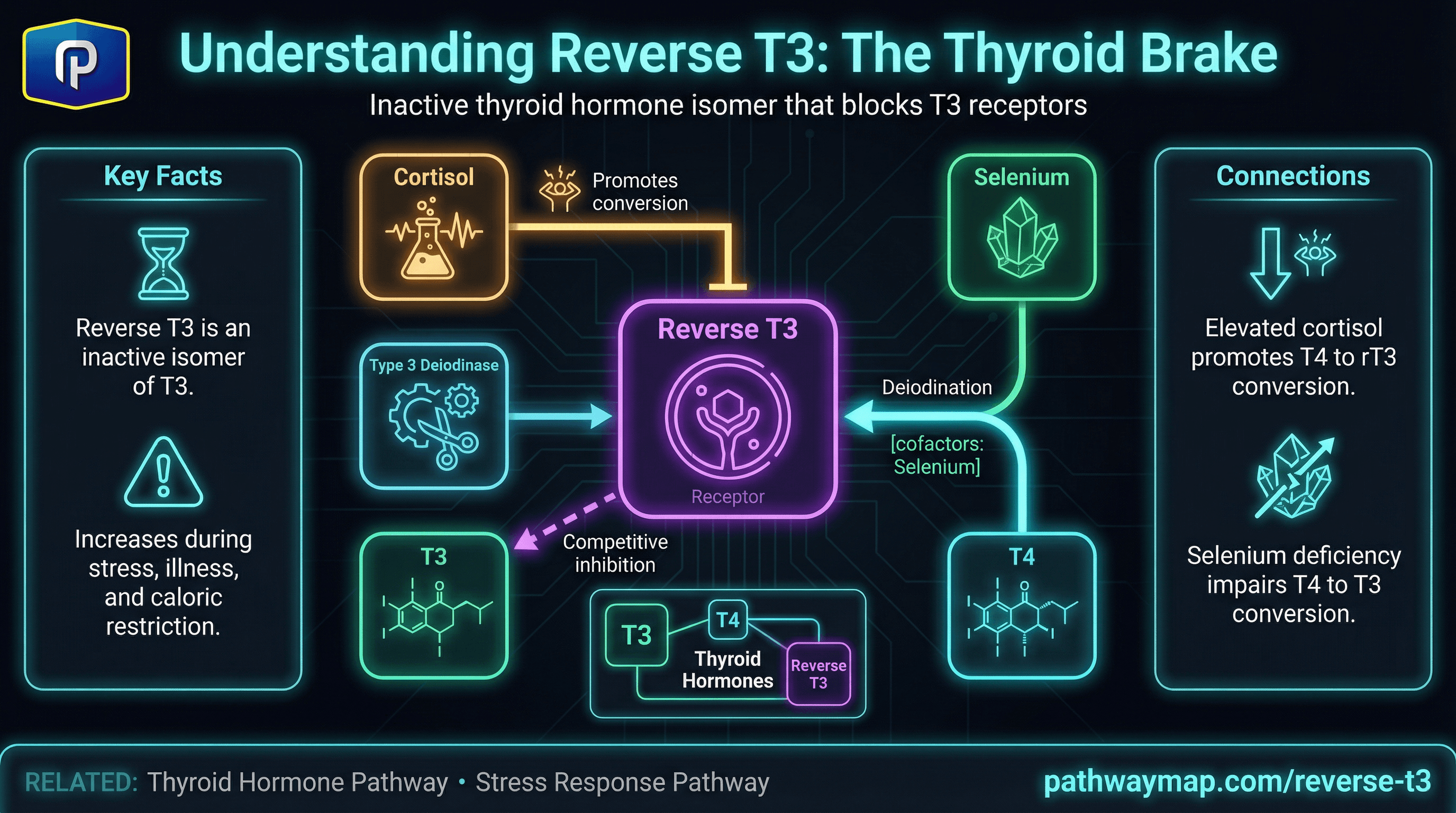
Reverse T3 (rT3) is an inactive isomer of T3 (triiodothyronine) produced when T4 is deiodinated at the inner ring instead of the outer ring. While T3 is produced by type 1 and type 2 deiodinases (D1, D2), rT3 is produced by type 3 deiodinase (D3) and also from alternative deiodination of T4.
rT3 is metabolically inactive and may actually block T3 receptors, acting as a competitive inhibitor. This makes it a thyroid 'brake' mechanism. Physiological role: rT3 production increases during times when metabolic slowdown is advantageous - starvation, severe illness, major surgery, and extreme stress.
This conserves energy when survival is threatened ('non-thyroidal illness syndrome' or 'euthyroid sick syndrome'). Causes of elevated rT3: Chronic stress (elevated cortisol promotes D3 activity), Caloric restriction and dieting, Chronic illness and inflammation, Liver or kidney disease, Iron deficiency (impairs deiodinase function), Selenium deficiency, High reverse T3 medications (beta-blockers, amiodarone), and Chronic T4-only treatment (inadequate T4 to T3 conversion).
Clinical significance: High rT3 with hypothyroid symptoms despite 'normal' TSH and T4 suggests cellular hypothyroidism. The T3/rT3 ratio is more useful than rT3 alone - a ratio below 0.2 (when both are in ng/dL) suggests problematic rT3 dominance. Addressing high rT3: Treat underlying cause (stress, illness, calorie restriction), Support T4 to T3 conversion (selenium, zinc, iron), Consider T3 supplementation (may be needed if conversion is impaired), and Optimize cortisol (both high and low cortisol affect conversion).
Metabolic Connections
Reverse T3 connects to 6 other pathways.
Hormones
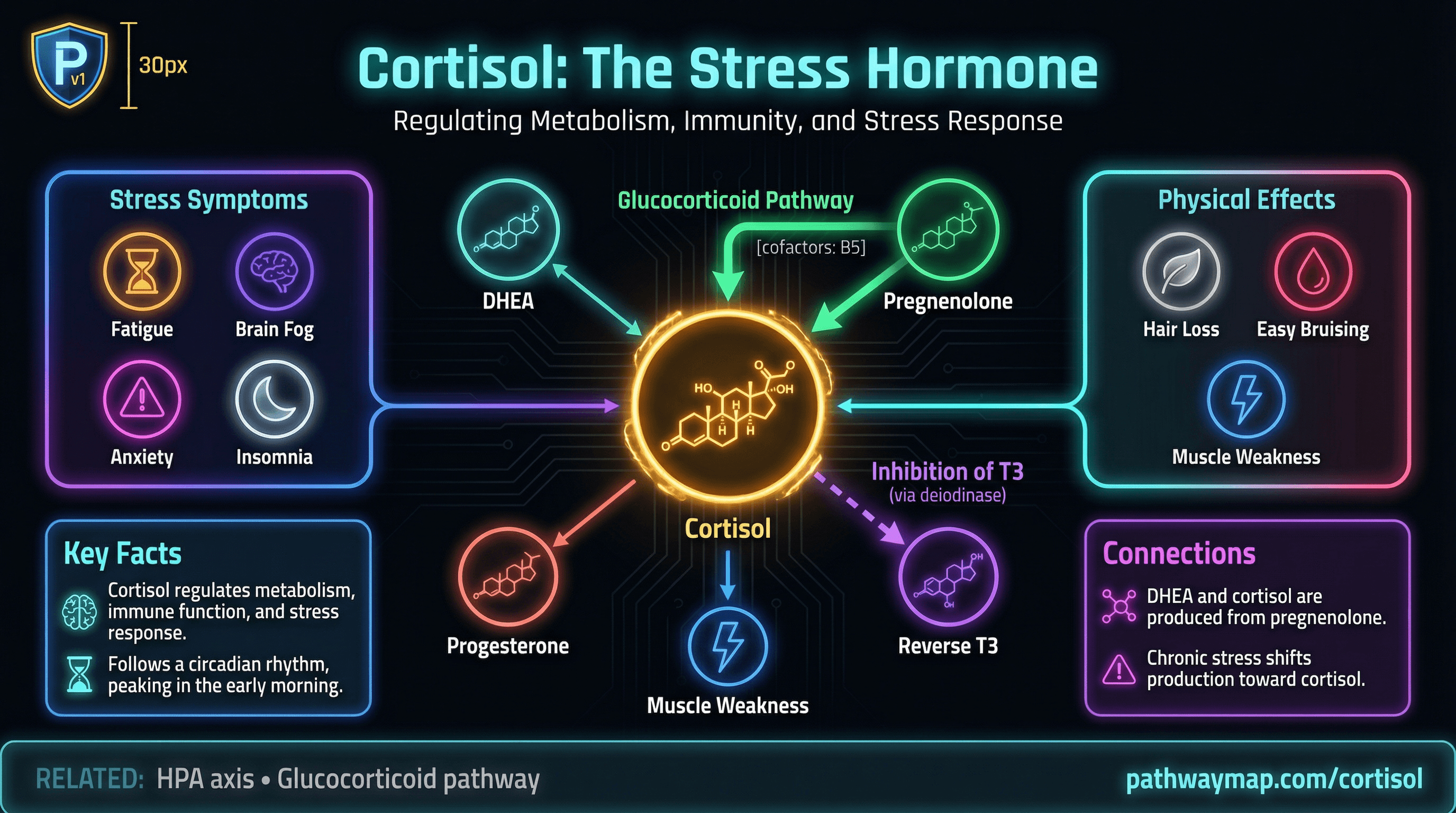
Cortisol
Elevated cortisol promotes conversion of T4 to reverse T3 instead of active T3
Primary stress hormone from adrenal cortex. Regulates metabolism, immune function, blood sugar, and stress response.
Cortisol
Elevated cortisol promotes conversion of T4 to reverse T3 instead of active T3
Primary stress hormone from adrenal cortex. Regulates metabolism, immune function, blood sugar, and stress response.
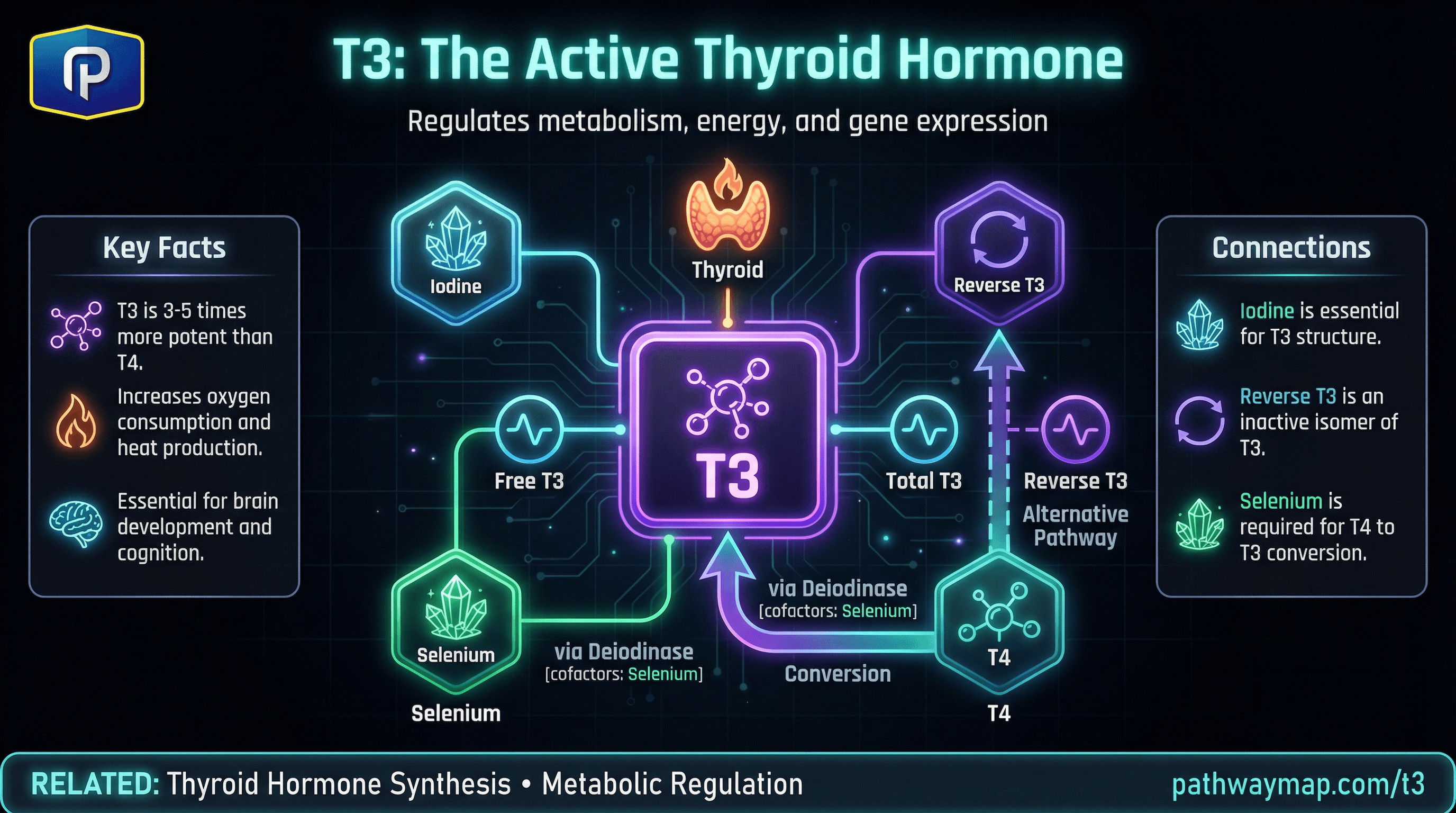
T3
Reverse T3 is an inactive isomer that can block T3 receptors
Triiodothyronine - the active thyroid hormone. Regulates metabolism, energy, body temperature, and gene expression in virtually all tissues.
T3
T3 and reverse T3 are alternative products of T4 deiodination with opposite effects
Triiodothyronine - the active thyroid hormone. Regulates metabolism, energy, body temperature, and gene expression in virtually all tissues.
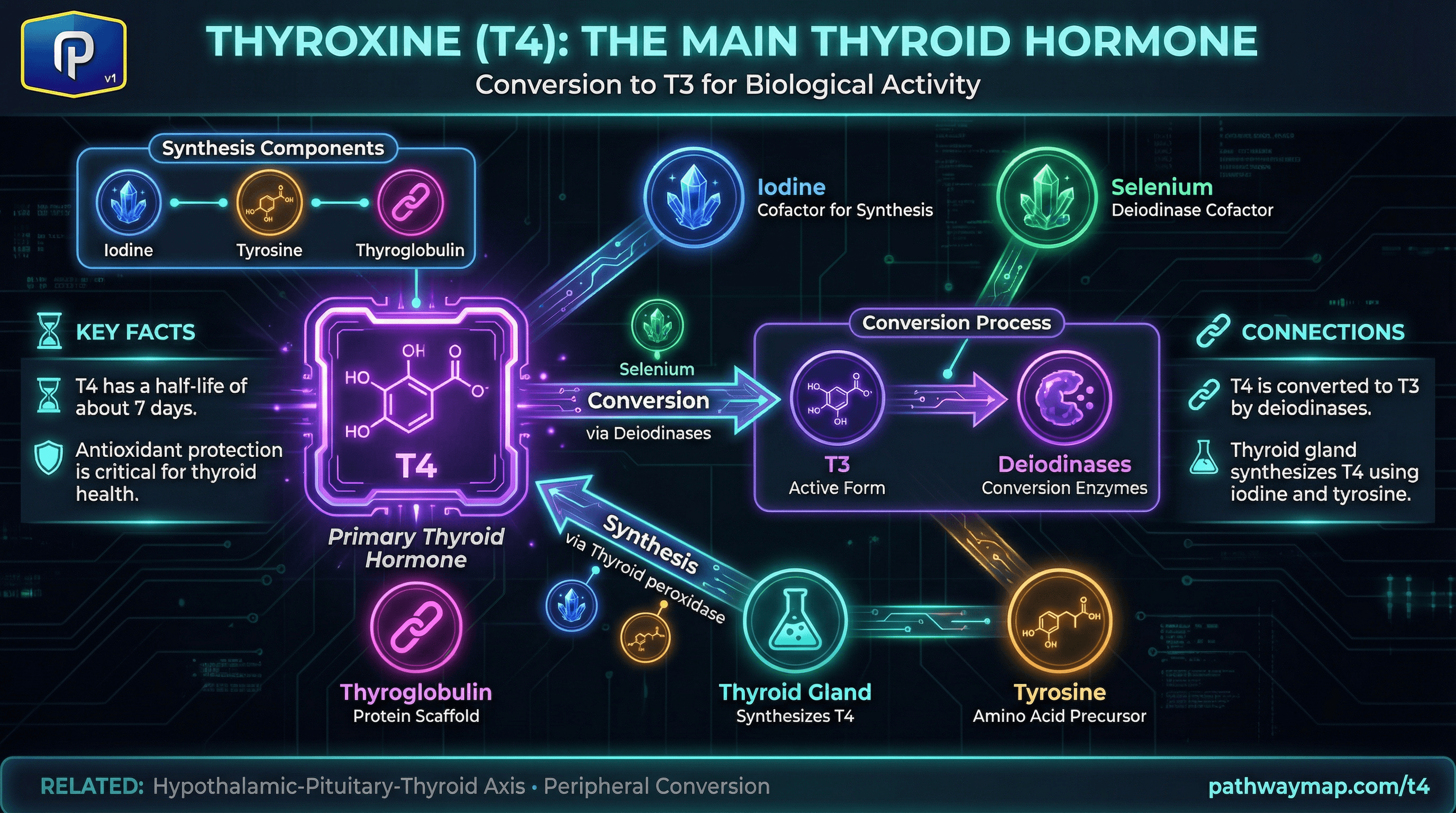
T4
Reverse T3 is produced when T4 is deiodinated at the wrong position (inner ring)
Thyroxine - the main thyroid hormone produced by the thyroid gland. Converted to active T3 in peripheral tissues.
