Serine
Non-essential amino acid; substrate for cystathionine synthesis; precursor for glycine, sphingolipids, and phospholipids.
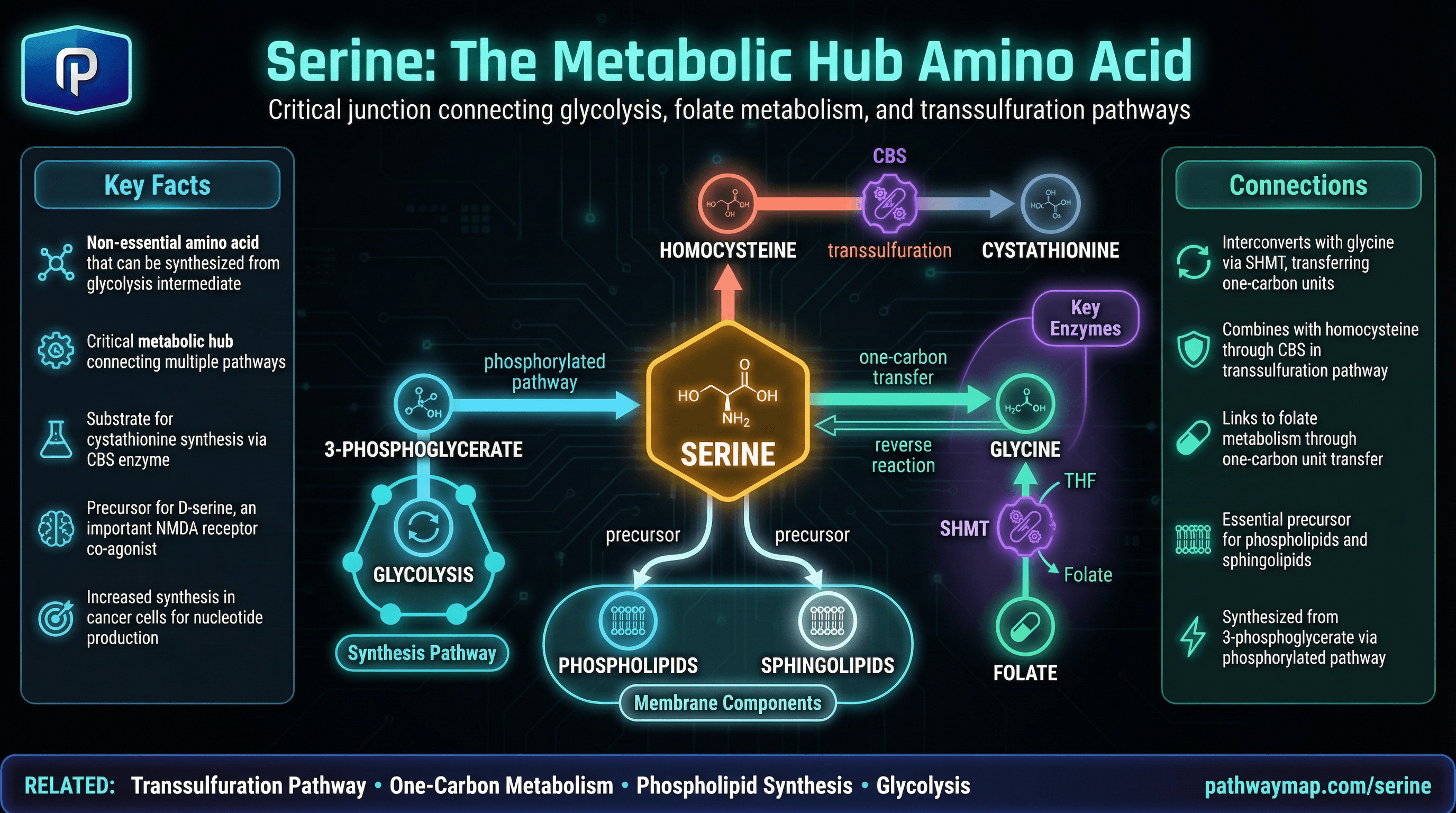
Serine is a non-essential amino acid that serves as a critical metabolic hub.
It is combined with homocysteine by CBS to form cystathionine in the transsulfuration pathway. Serine can be converted to glycine by serine hydroxymethyltransferase (SHMT), donating a one-carbon unit to THF in the process - this links serine to folate metabolism.
Serine is also a precursor for phosphatidylserine, sphingolipids, and D-serine (important NMDA receptor co-agonist). Serine can be synthesized from 3-phosphoglycerate (glycolysis intermediate) via the phosphorylated pathway, or from glycine via SHMT. Cancer cells often have increased serine synthesis and utilization due to high demand for nucleotides and methylation.
Metabolic Connections
Serine connects to 10 other pathways.

Metabolites
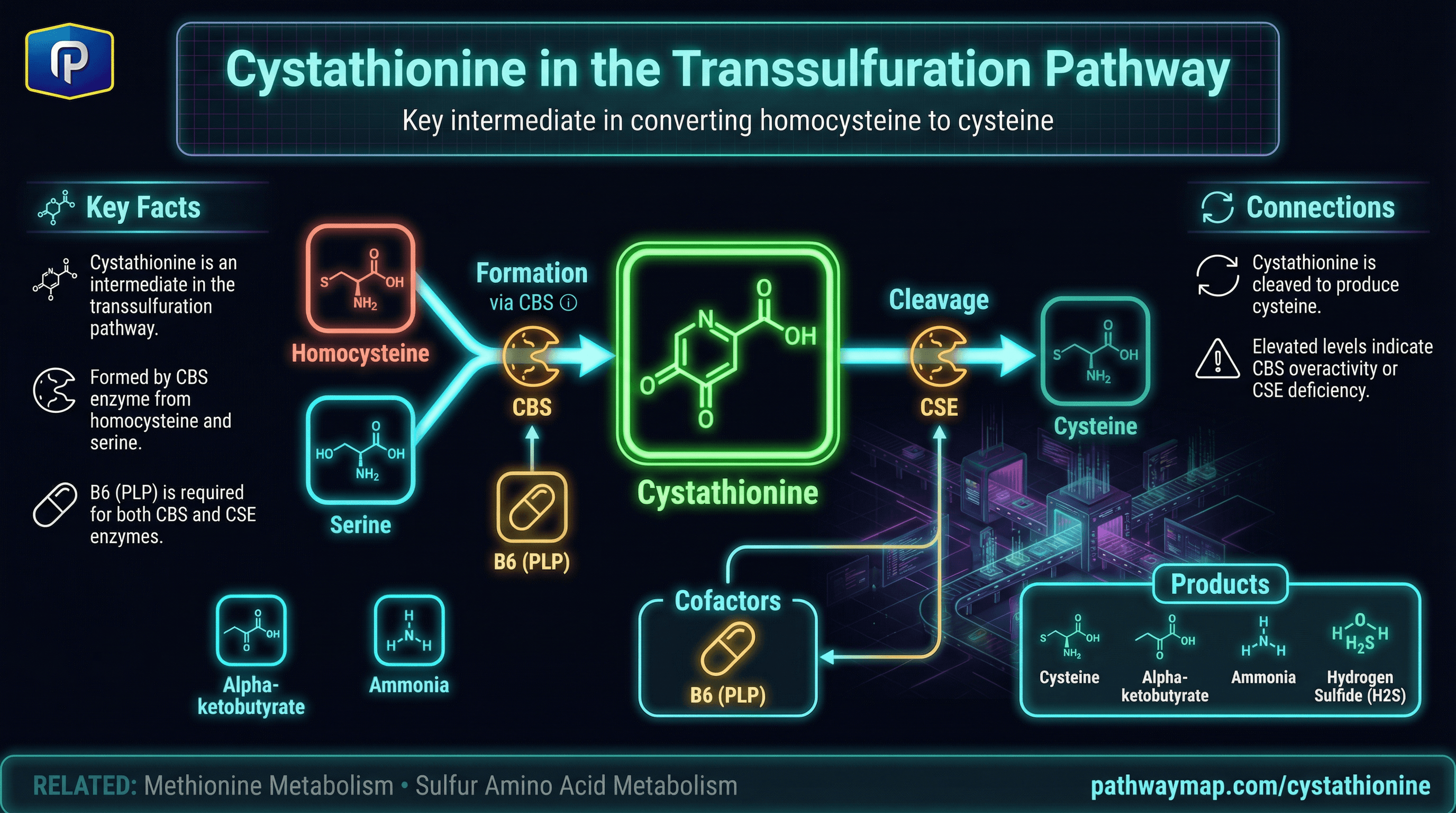
Cystathionine
Serine contributes to cystathionine formation
Intermediate in transsulfuration pathway; formed from homocysteine and serine by CBS enzyme.
Cystathionine
Serine is combined with homocysteine by CBS to form cystathionine
Intermediate in transsulfuration pathway; formed from homocysteine and serine by CBS enzyme.

Amino Acids

Glycine
Serine can be converted to glycine by SHMT
Simplest amino acid with diverse roles - glutathione component, collagen synthesis, neurotransmission, and methylation.
Glycine
Glycine and serine are interconverted by SHMT
Simplest amino acid with diverse roles - glutathione component, collagen synthesis, neurotransmission, and methylation.


Enzymes

SHMT (Serine Hydroxymethyltransferase)
SHMT interconverts serine and glycine while transferring one-carbon units
Enzyme interconverting serine and glycine; major source of one-carbon units for folate pool; B6 dependent.
SHMT (Serine Hydroxymethyltransferase)
SHMT converts serine to glycine
Enzyme interconverting serine and glycine; major source of one-carbon units for folate pool; B6 dependent.