Glucagon
Insulin's opposite. Glucagon is released by pancreatic alpha cells when blood sugar drops too low. It signals the liver to break down glycogen and release glucose into the bloodstream. This ancient survival mechanism prevents hypoglycemia during fasting and between meals.
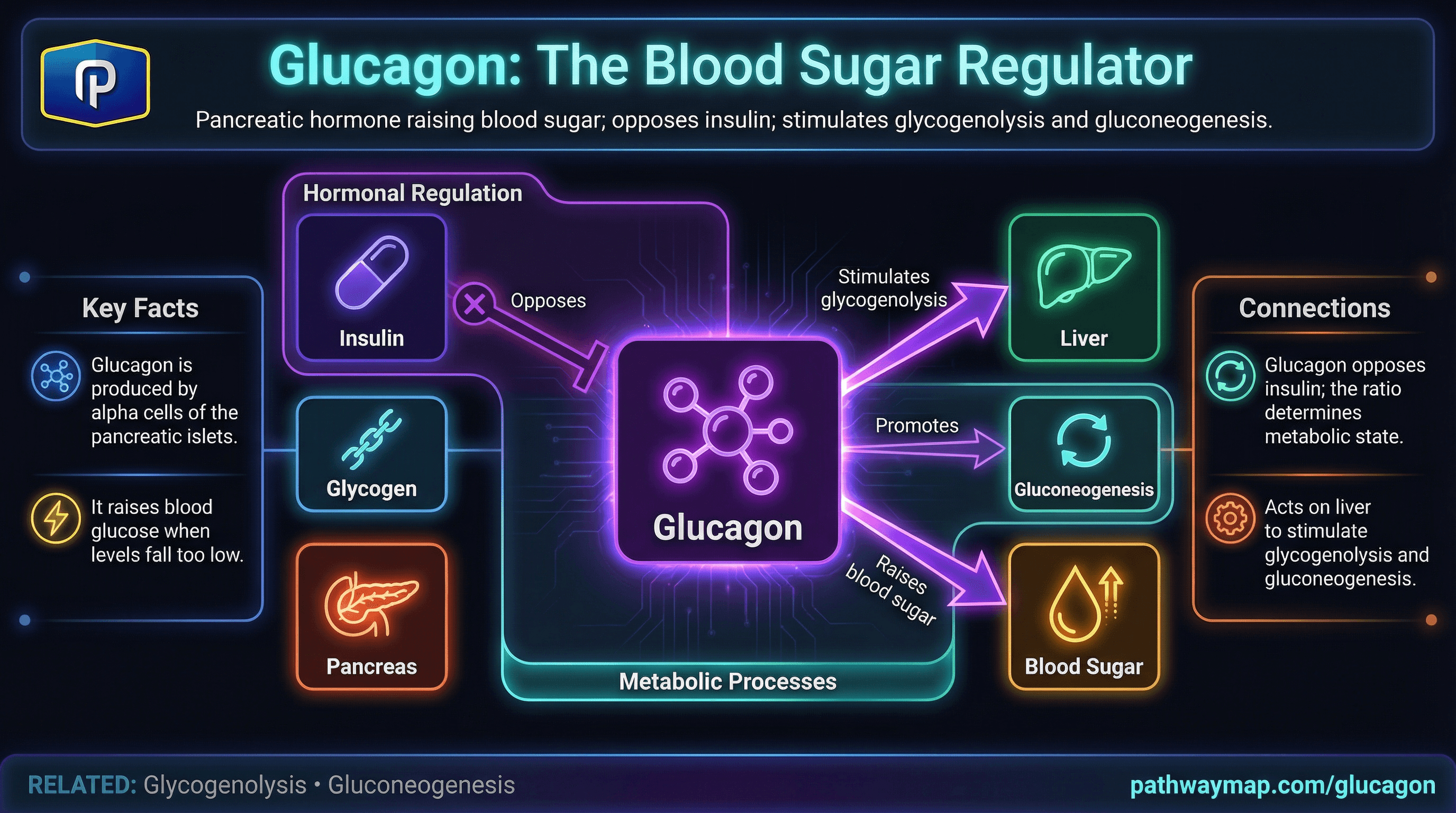
What Glucagon Does
Glycogenolysis
Breaks down liver glycogen to glucose. Rapid source of blood sugar. Stored energy release.
Gluconeogenesis
Makes new glucose from amino acids, lactate, glycerol. When glycogen depleted.
Ketogenesis
Promotes ketone production in liver. Alternative fuel when glucose low.
Lipolysis
Promotes fat breakdown. Releases fatty acids for energy and ketone production.
Protein Breakdown
Can increase muscle protein catabolism for gluconeogenesis substrates.
Heart Effects
Increases heart rate and contractility. Used in emergencies for beta-blocker overdose.
The Insulin-Glucagon Axis
These two hormones work as a seesaw, maintaining blood sugar in the optimal range:
The ratio matters more than absolute levels. A high insulin:glucagon ratio promotes storage. A low ratio promotes mobilization of energy stores.
What Triggers Glucagon Release
Low Blood Sugar
Primary trigger. Alpha cells sense dropping glucose and respond with glucagon.
Protein Intake
Amino acids stimulate both insulin AND glucagon. Prevents hypoglycemia from protein meal.
Exercise
Glucagon rises during exercise to maintain blood sugar as muscles consume glucose.
Stress Hormones
Epinephrine, cortisol, growth hormone all stimulate glucagon for stress response.