Gluconeogenesis
Making glucose from scratch. Gluconeogenesis is the process of creating new glucose from non-carbohydrate sources—amino acids, lactate, and glycerol. It occurs primarily in the liver and maintains blood sugar during fasting, exercise, and low-carb eating. Essential for brain and red blood cell function.
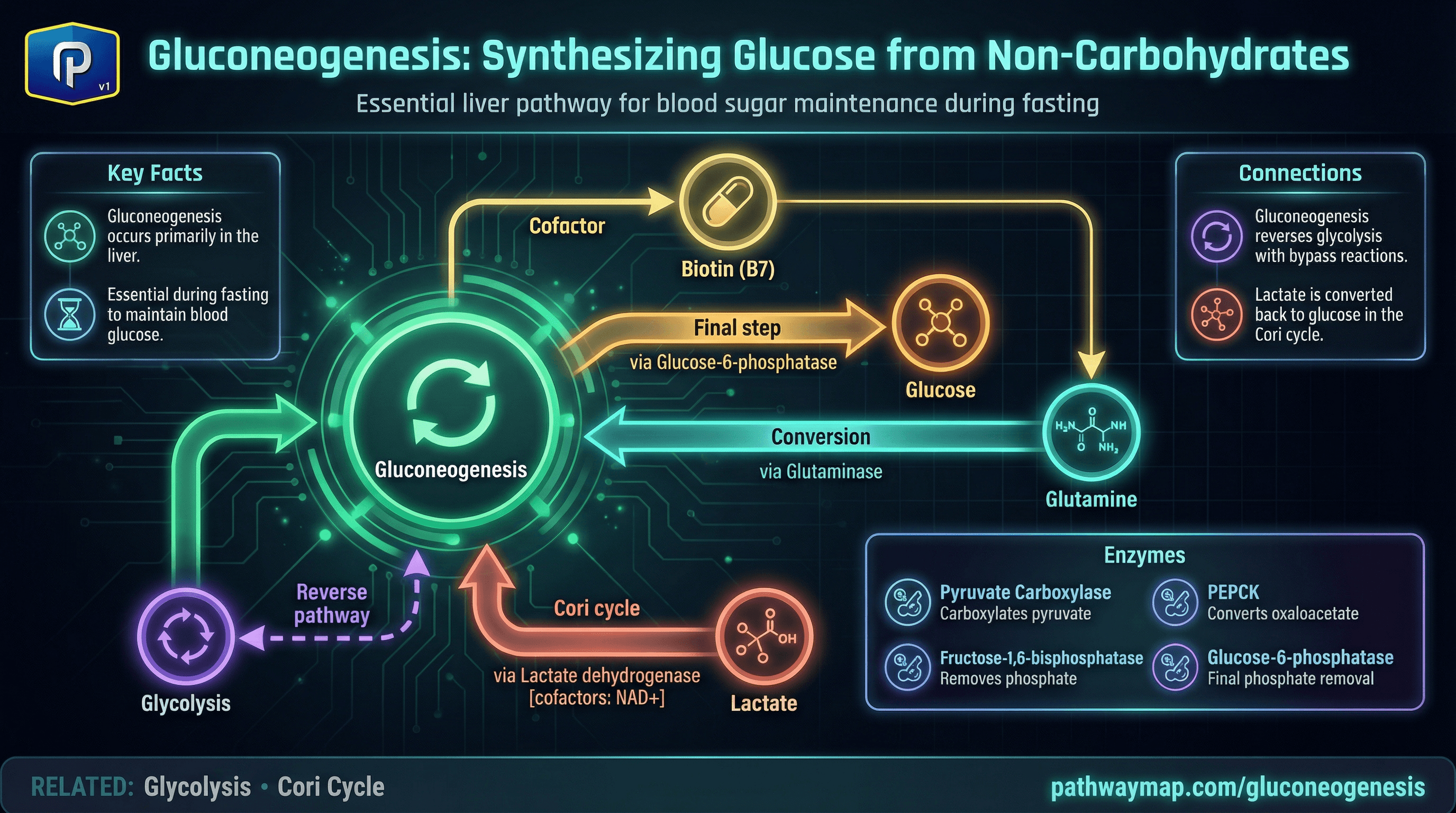
Where Does Glucose Come From?
Amino Acids
From protein breakdown. Alanine most common. Glucogenic amino acids converted to glucose.
Lactate
From muscle (Cori cycle). Lactate → pyruvate → glucose. Recycles anaerobic byproduct.
Glycerol
From fat breakdown. Triglycerides release glycerol. Minor but important source.
Note: Fatty acids CANNOT be converted to glucose in humans (except odd-chain). This is why low-carb diets still need some protein for glucose production.
Hormonal Control
Stimulate
- Glucagon: Primary activator (fasting)
- Cortisol: Induces GNG enzymes
- Epinephrine: Stress, exercise
- Growth hormone: Long-term regulation
Inhibit
- Insulin: Suppresses GNG strongly
- Fed state: Dietary glucose available
- High ATP: Energy status signal
- Metformin: Drug mechanism
Bypass Enzymes
Gluconeogenesis is NOT simply glycolysis in reverse. Three irreversible glycolysis steps require different enzymes:
Pyruvate Carboxylase
Pyruvate → OAA. In mitochondria. Requires biotin. First bypass step.
PEPCK
OAA → PEP. Rate-limiting. Cortisol induces expression. Key control point.
G6Pase
G6P → Glucose. Only in liver/kidney. Allows glucose export to blood.
Clinical Relevance
Diabetes
Excess GNG in T2D. Insulin doesn't suppress it. Metformin targets this.
Dawn Phenomenon
Morning blood sugar rise. Cortisol triggers GNG. Common in diabetics.
Low-Carb/Keto
GNG maintains blood sugar. Brain gets glucose. Why protein matters.
Fasting
Prevents hypoglycemia. Muscle protein can be used. Ketones spare glucose.
Liver Disease
Impaired GNG = hypoglycemia risk. Liver crucial for blood sugar.
Intense Exercise
Cori cycle: muscle lactate → liver glucose. Recycling mechanism.