Glucose
Primary energy source for cells, especially brain. Blood glucose is tightly regulated; dysregulation leads to diabetes.
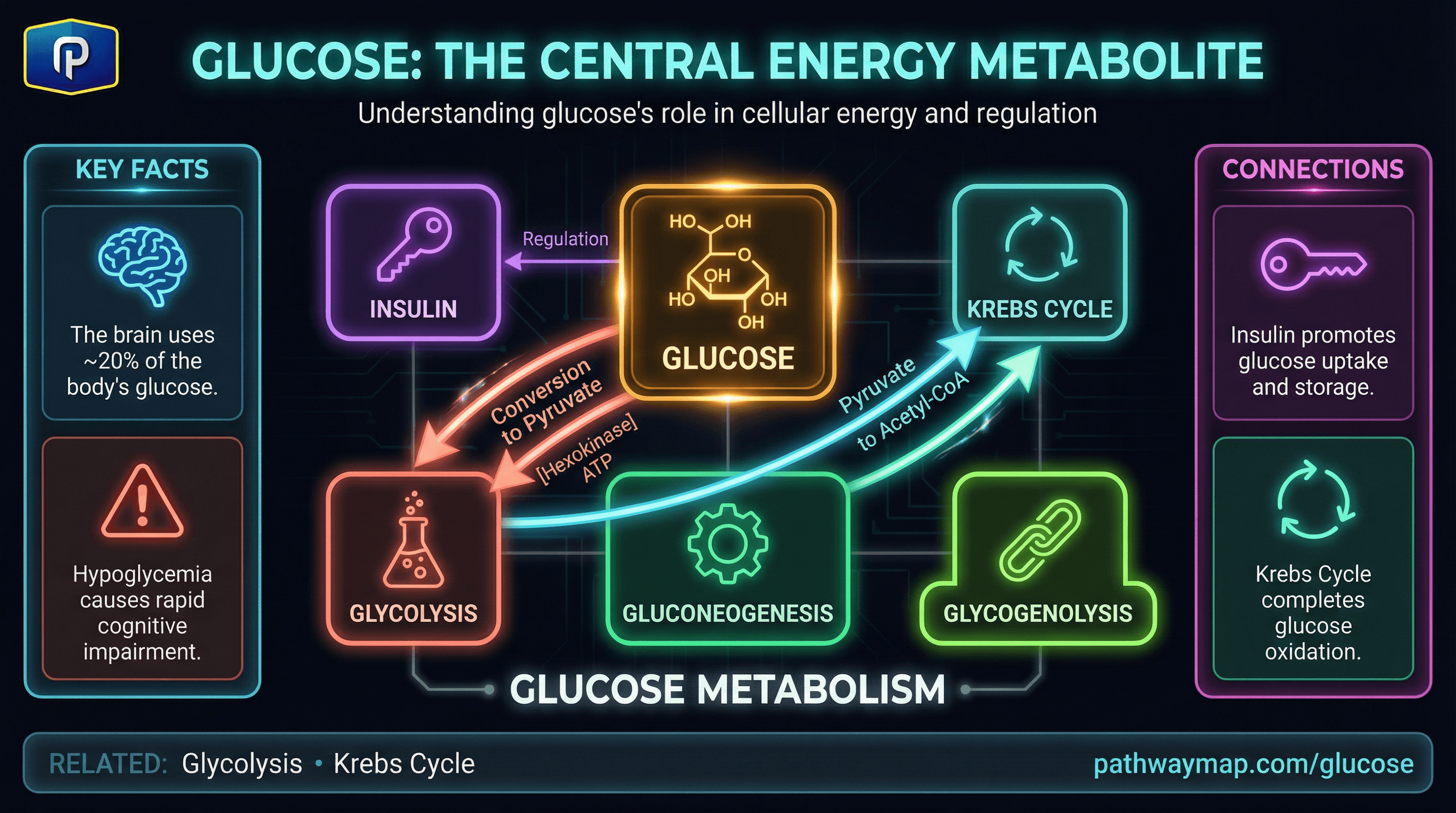
Glucose is a simple sugar (monosaccharide) that serves as the primary energy source for most cells. Blood glucose (blood sugar) is tightly regulated between 70-100 mg/dL fasting, as both high and low levels are dangerous. Glucose sources: Dietary carbohydrates (digested to glucose), Glycogenolysis (breakdown of stored glycogen), and Gluconeogenesis (synthesis from amino acids, lactate, glycerol - mainly in liver).
Glucose metabolism: Glycolysis - glucose → pyruvate (in cytoplasm, produces 2 ATP). Aerobic - pyruvate enters Krebs cycle and ETC (produces ~30-32 ATP total). Anaerobic - pyruvate → lactate (only 2 ATP, but fast). Pentose phosphate pathway - produces NADPH and ribose.
Blood glucose regulation: Fed state: Insulin promotes glucose uptake and storage. Fasted state: Glucagon promotes glycogen breakdown and gluconeogenesis. Counter-regulatory hormones (cortisol, epinephrine, growth hormone) raise glucose.
The brain and glucose: The brain uses ~20% of body's glucose despite being ~2% of body weight.
It has limited glycogen storage and was thought to be glucose-dependent, but can adapt to use ketones. Hypoglycemia causes rapid cognitive impairment. Dysglycemia: Hypoglycemia (<70 mg/dL) - shakiness, confusion, seizures, coma. Hyperglycemia (chronic >100 fasting) - leads to diabetes complications.
Glycation - glucose binds to proteins, forming advanced glycation end products (AGEs) that cause tissue damage. Glucose variability: Blood sugar spikes and crashes (glycemic variability) may be more harmful than modestly elevated but stable glucose. Continuous glucose monitors reveal patterns hidden by occasional testing.
Supporting healthy glucose: Fiber (slows absorption), Protein and fat with meals, Exercise (improves insulin sensitivity), Sleep (deprivation impairs glucose metabolism), Stress management, and Chromium, magnesium, berberine may help.
Metabolic Connections
Glucose connects to 7 other pathways.
Metabolic Cycles
Gluconeogenesis
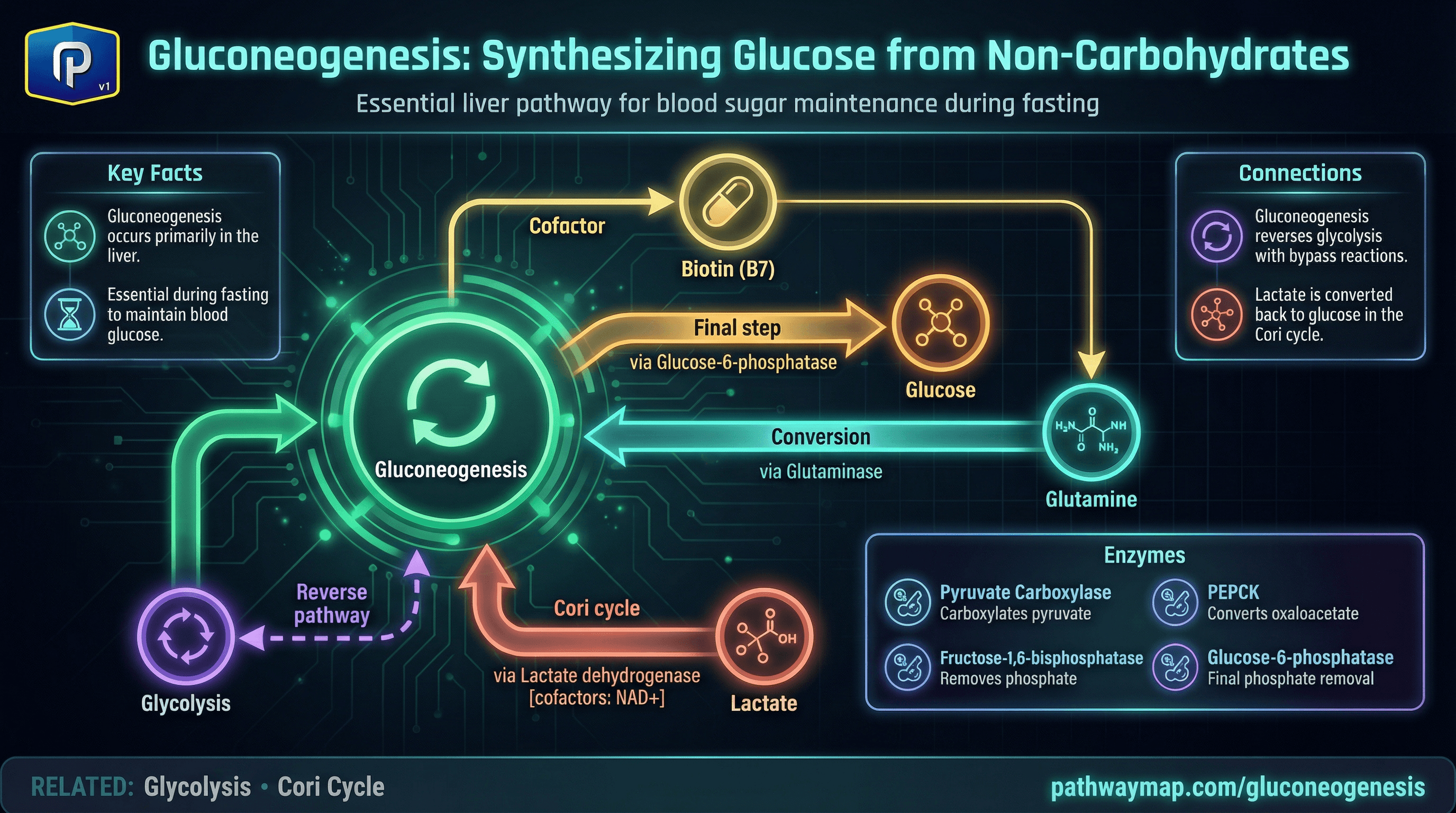
Gluconeogenesis produces glucose from non-carbohydrate precursors
Liver pathway synthesizing glucose from non-carbohydrate precursors. Essential for blood sugar maintenance during fasting.

Glycolysis
Glycolysis breaks down glucose to pyruvate, producing ATP and NADH
Ten-step pathway breaking down glucose to pyruvate, producing ATP and NADH. Occurs in cytoplasm without oxygen.
Glycolysis
Glycolysis breaks down glucose into pyruvate for energy production
Ten-step pathway breaking down glucose to pyruvate, producing ATP and NADH. Occurs in cytoplasm without oxygen.
Krebs Cycle
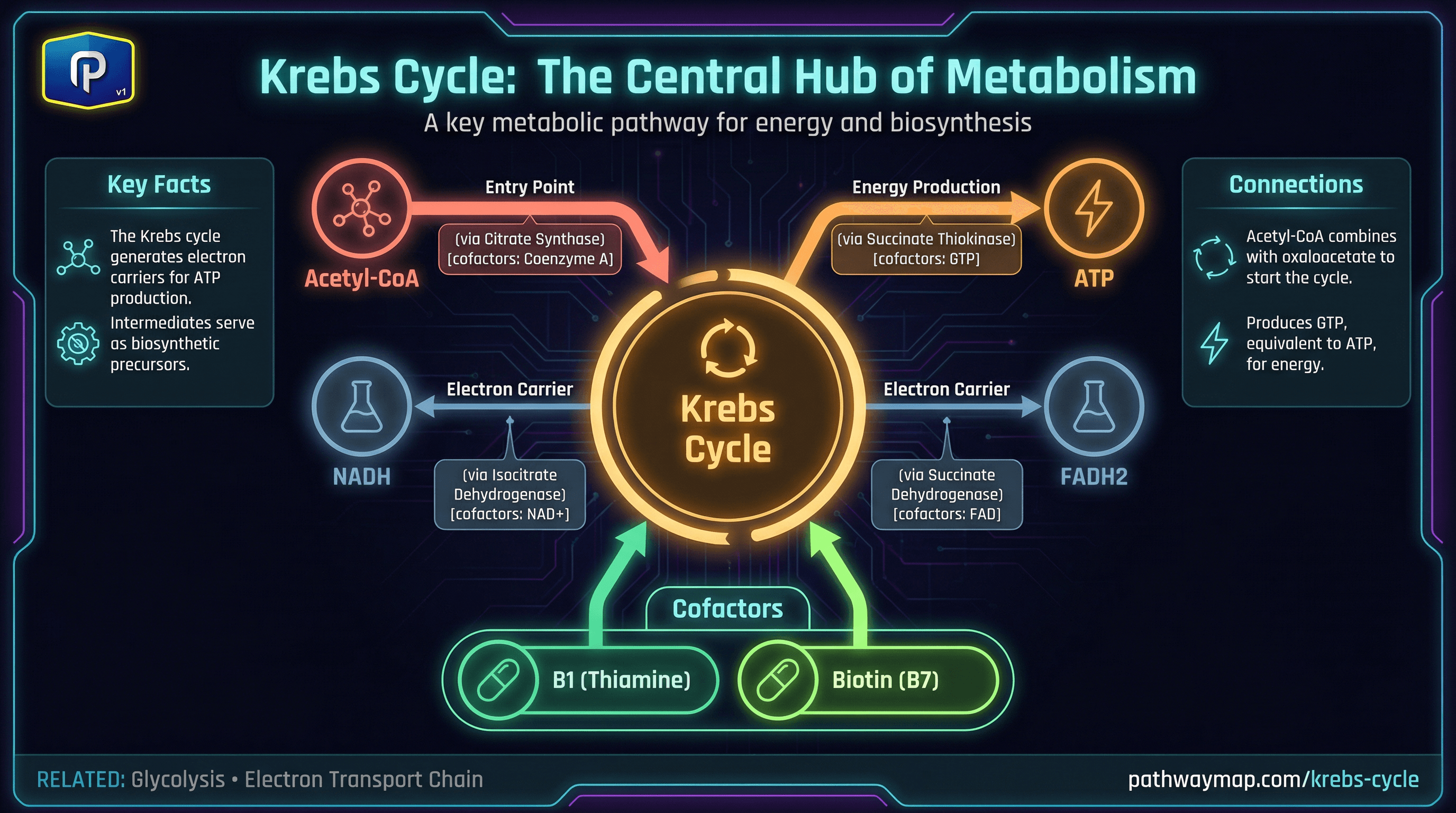
Glucose-derived pyruvate enters the Krebs cycle as acetyl-CoA for complete oxidation
Central metabolic pathway (citric acid cycle) that generates electron carriers for ATP production and biosynthetic precursors.
Hormones

Insulin
Insulin promotes cellular glucose uptake and storage, lowering blood glucose
Hormone regulating blood glucose by promoting cellular uptake. Also affects fat storage, protein synthesis, and growth.
Insulin
Insulin promotes glucose uptake from blood into cells, lowering blood glucose
Hormone regulating blood glucose by promoting cellular uptake. Also affects fat storage, protein synthesis, and growth.