HNMT
Histamine N-methyltransferase - intracellular enzyme that methylates histamine for degradation in brain and tissues.
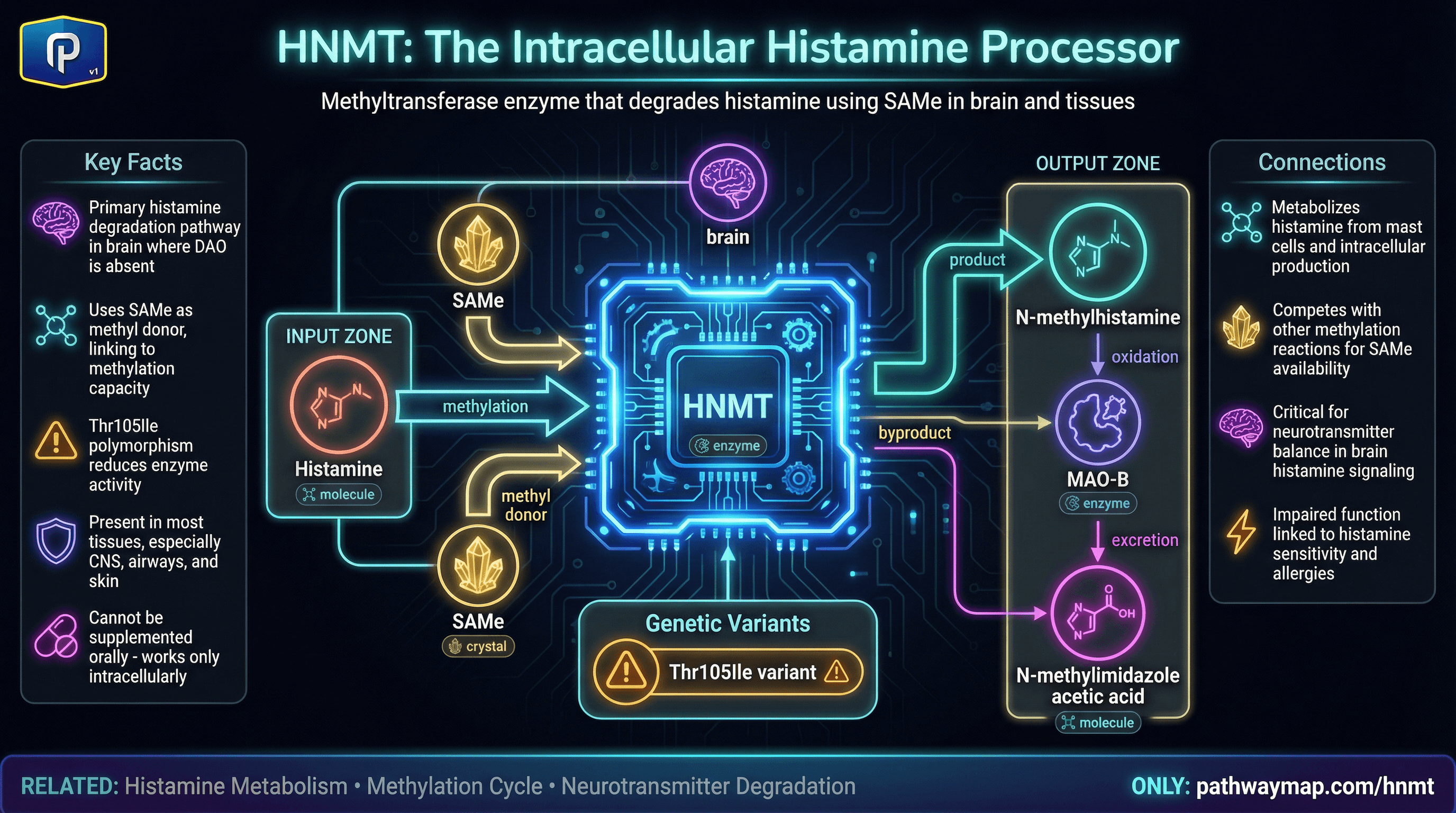
HNMT (histamine N-methyltransferase) is an intracellular enzyme that methylates histamine to N-methylhistamine using SAMe as the methyl donor. While DAO handles extracellular and dietary histamine, HNMT is the primary pathway for histamine degradation in the brain and intracellular spaces.
The reaction: Histamine + SAMe → N-methylhistamine + SAH. N-methylhistamine is then oxidized by MAO-B to N-methylimidazole acetic acid for excretion. HNMT distribution: Present in most tissues but particularly important in the CNS (where DAO is absent), airways, and skin.
It handles histamine produced intracellularly or released from mast cells. HNMT polymorphisms: The Thr105Ile variant (rs11558538) and others affect enzyme activity. Reduced HNMT function may contribute to: histamine sensitivity, allergic tendencies, asthma, and potentially psychiatric symptoms (brain histamine modulates neurotransmission).
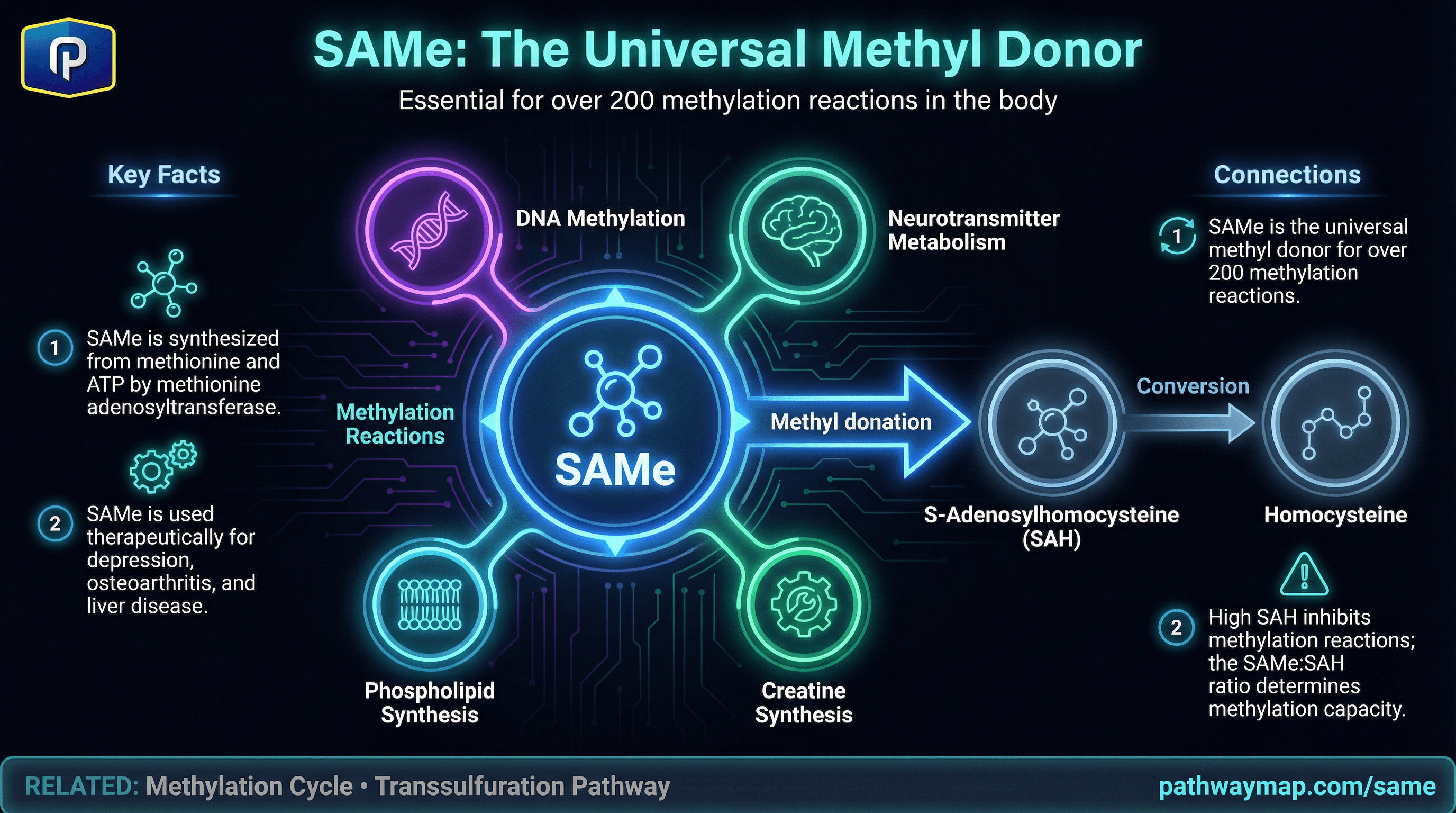
HNMT and methylation: Because HNMT uses SAMe, methylation capacity affects histamine clearance. Those with methylation issues may have impaired HNMT function. Conversely, high histamine loads can deplete SAMe, affecting other methylation reactions.
Supporting HNMT
adequate SAMe and methylation support (B12
folate
B6)
managing histamine load (diet
mast cells)
potentially avoiding HNMT inhibitors.
Unlike DAO supplements, HNMT cannot be taken orally because it works intracellularly.
Metabolic Connections
HNMT connects to 3 other pathways.
Neurotransmitters
Histamine
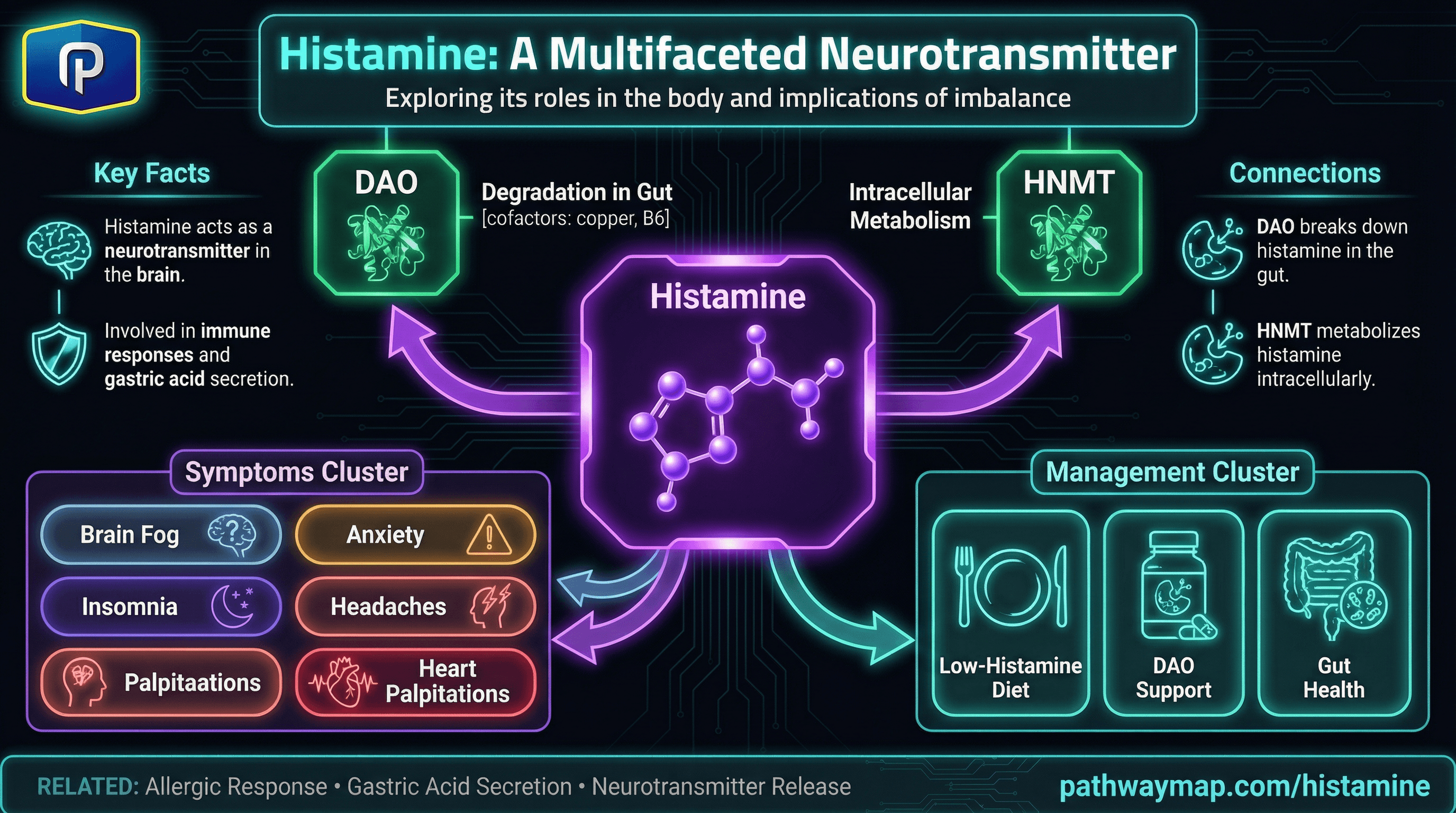
HNMT (histamine N-methyltransferase) metabolizes histamine intracellularly
Neurotransmitter and immune mediator. Involved in allergic response, gastric acid secretion, and wakefulness.
Histamine
HNMT (histamine N-methyltransferase) metabolizes histamine intracellularly
Neurotransmitter and immune mediator. Involved in allergic response, gastric acid secretion, and wakefulness.