SAMe
S-Adenosylmethionine - universal methyl donor essential for 200+ methylation reactions including neurotransmitter synthesis and DNA methylation.
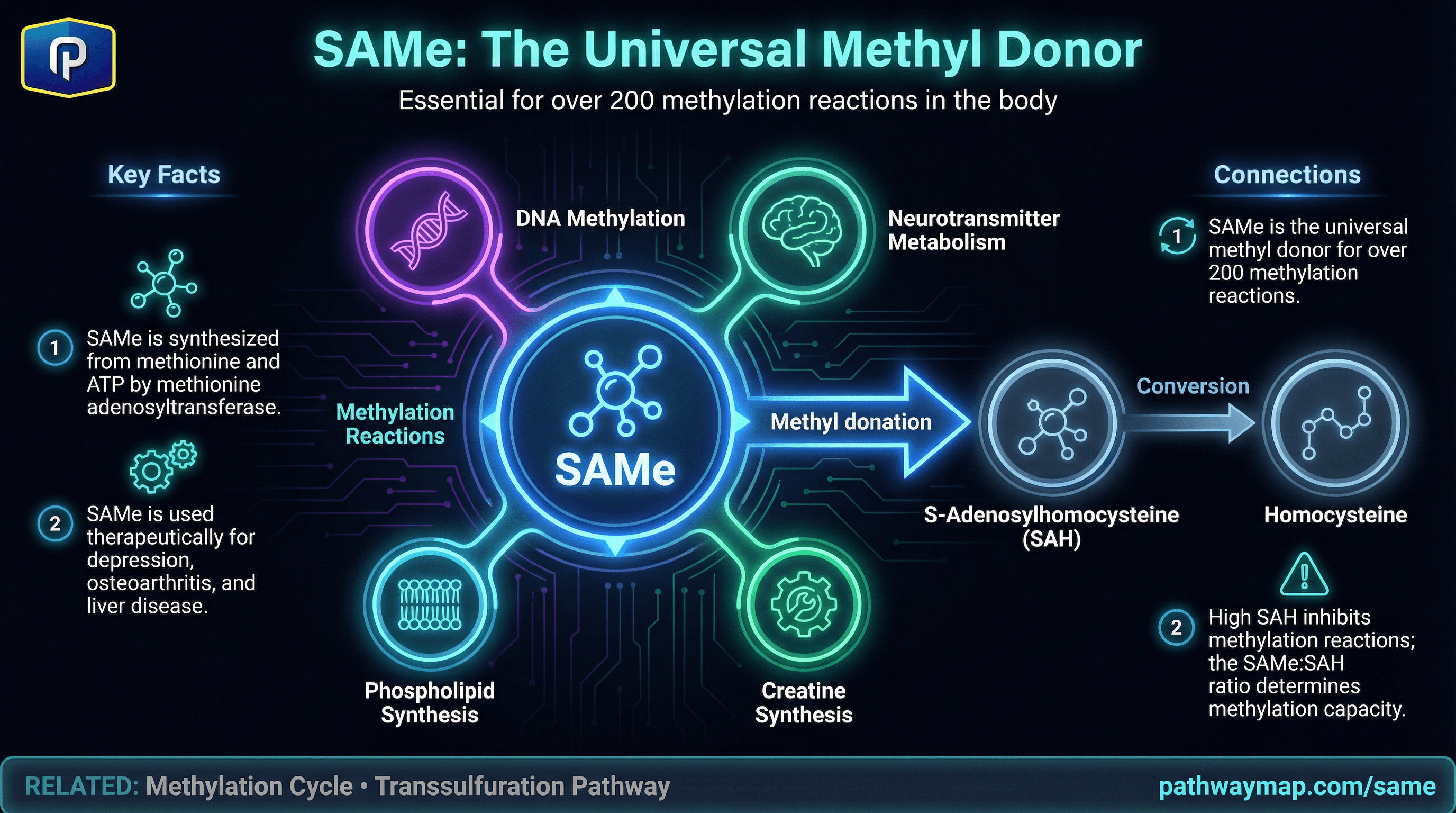
S-Adenosylmethionine (SAMe, also SAM or AdoMet) is the universal methyl donor in the body, participating in over 200 methylation reactions. It is synthesized from methionine and ATP by methionine adenosyltransferase (MAT), primarily in the liver. Methylation reactions using SAMe: DNA methylation (gene expression regulation), Histone methylation (epigenetics), Phospholipid synthesis (phosphatidylcholine from phosphatidylethanolamine), Neurotransmitter metabolism (catecholamine and serotonin degradation via COMT), Creatine synthesis (largest consumer of methyl groups), Protein methylation (signal transduction), and Detoxification (arsenic methylation, etc.).
After donating its methyl group, SAMe becomes S-adenosylhomocysteine (SAH), which is then converted to homocysteine. High SAH inhibits methylation reactions - the SAMe:SAH ratio determines methylation capacity.
SAMe synthesis
Methionine (dietary or from homocysteine remethylation)
ATP
Adequate B12 and folate (for homocysteine remethylation to methionine).
SAMe supplementation: Used therapeutically for depression (comparable to antidepressants in studies), osteoarthritis (supports cartilage), liver disease (the liver normally makes most SAMe; supplementation bypasses impaired synthesis), and fibromyalgia. Considerations: SAMe is unstable and requires enteric coating.
It can worsen bipolar disorder (may trigger mania). High doses may cause anxiety or insomnia. It provides methyl groups, so those who are already overmethylated may not tolerate it well. Typical therapeutic dose is 400-1600mg/day.
Metabolic Connections
SAMe connects to 20 other pathways.


Methylation

COMT
COMT uses SAMe to methylate and degrade catecholamines
Catechol-O-methyltransferase - enzyme that methylates and deactivates catecholamine neurotransmitters and estrogens.

Homocysteine
SAMe becomes homocysteine after donating its methyl group
Sulfur-containing amino acid at the crossroads of methylation. Elevated levels indicate impaired methylation or B-vitamin deficiency.

MTRR
SAMe is used by MTRR to regenerate oxidized MTR
Methionine synthase reductase - regenerates active methylcobalamin for the MTR enzyme.


Enzymes

GNMT (Glycine N-Methyltransferase)
GNMT uses SAMe to methylate glycine, acting as overflow for excess SAMe
Enzyme that methylates glycine to sarcosine using SAMe; major regulator of SAMe levels; folate-inhibited.
GNMT (Glycine N-Methyltransferase)
SAMe is consumed by GNMT as methyl donor; GNMT regulates SAMe levels
Enzyme that methylates glycine to sarcosine using SAMe; major regulator of SAMe levels; folate-inhibited.
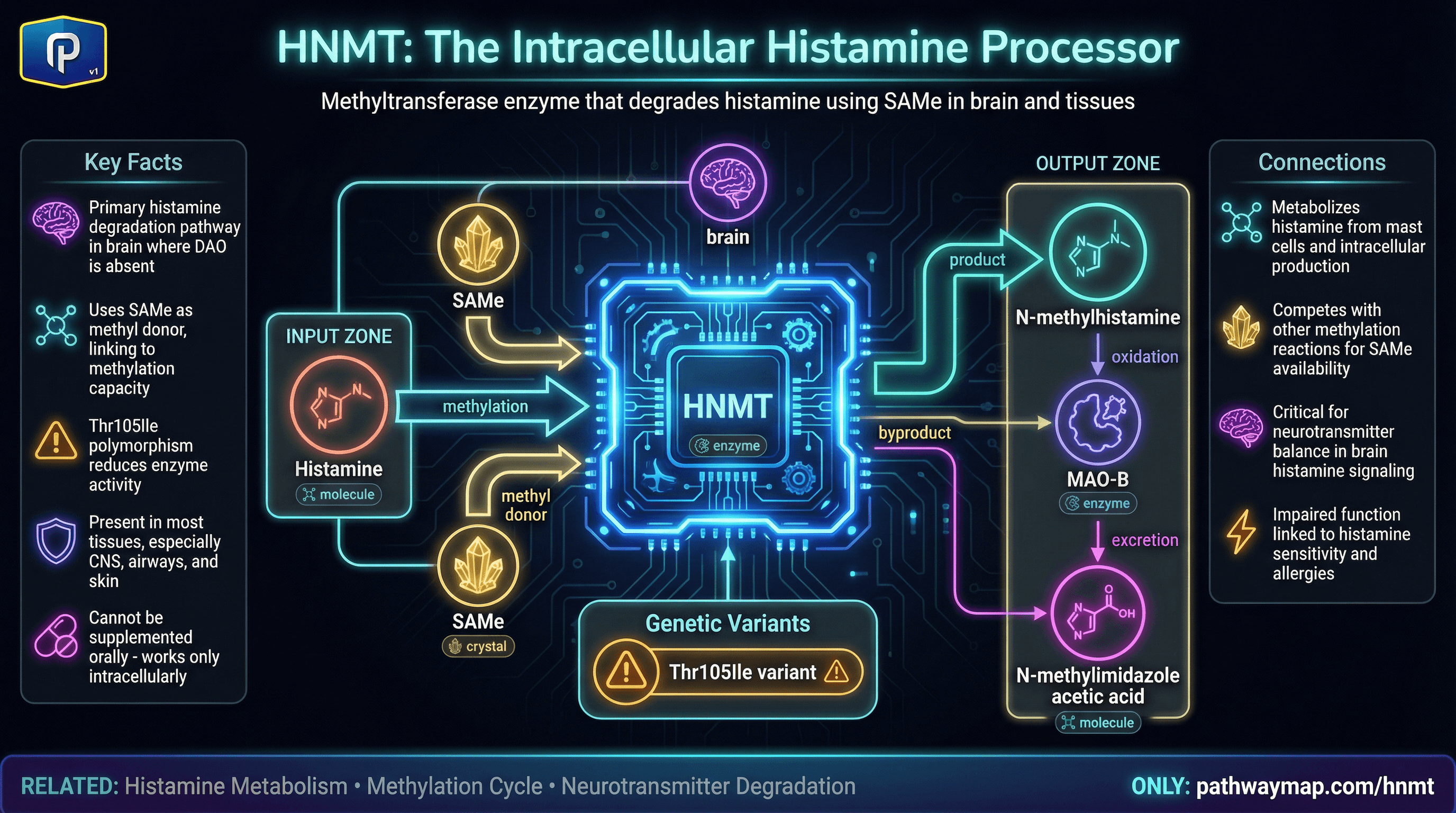
HNMT
Histamine N-methyltransferase - intracellular enzyme that methylates histamine for degradation in brain and tissues.

MAT (Methionine Adenosyltransferase)
SAMe is synthesized from methionine by MAT enzyme
Enzyme that converts methionine to SAMe using ATP; rate-limiting step in methyl group supply.
MAT (Methionine Adenosyltransferase)
SAMe is the product of MAT; SAMe also provides feedback inhibition of MAT
Enzyme that converts methionine to SAMe using ATP; rate-limiting step in methyl group supply.
Amino Acids
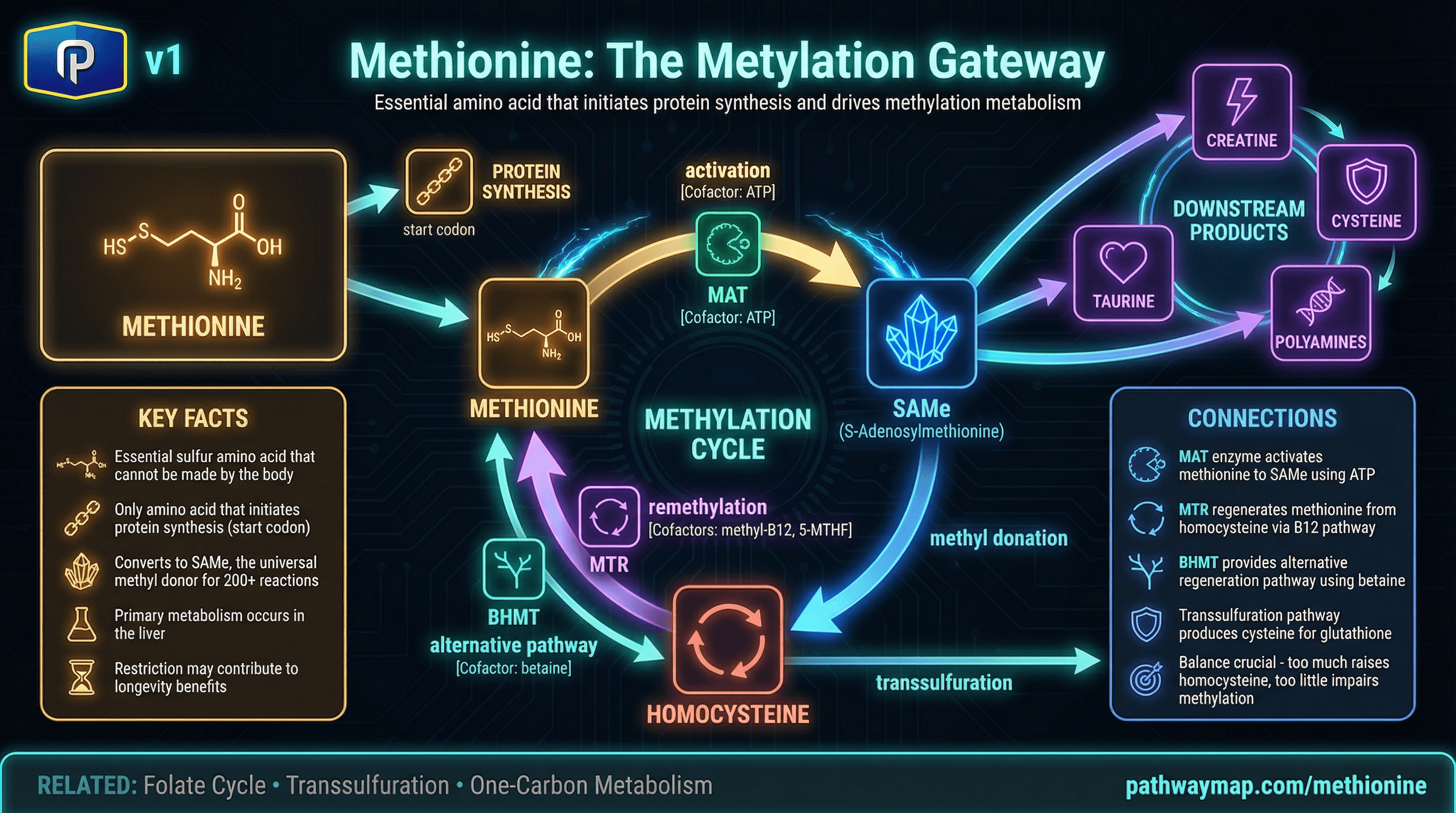
Methionine
SAMe is synthesized from methionine and ATP by methionine adenosyltransferase
Essential sulfur amino acid that initiates methylation cycle. Precursor to SAMe, cysteine, and taurine.
Methionine
Methionine is activated to SAMe (S-adenosylmethionine), the universal methyl donor
Essential sulfur amino acid that initiates methylation cycle. Precursor to SAMe, cysteine, and taurine.

Sarcosine (N-Methylglycine)
SAMe donates methyl to glycine via GNMT to form sarcosine; acts as methyl overflow
Intermediate between DMG and glycine; donates methyl group to folate; elevated in prostate cancer.
Processes
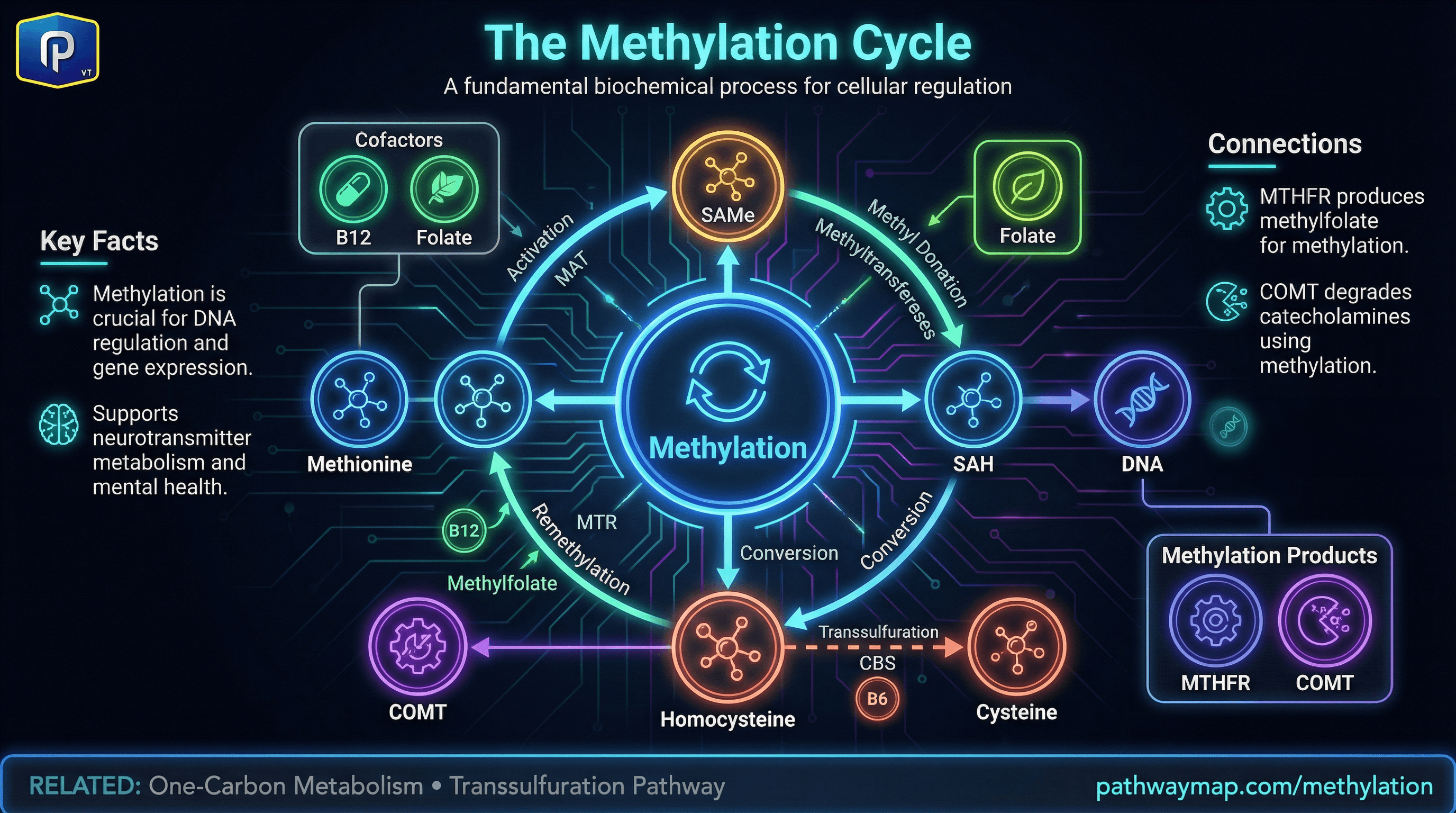
Methylation
SAMe is the universal methyl donor for over 200 methylation reactions
Essential biochemical process transferring methyl groups for DNA regulation, neurotransmitter metabolism, detoxification, and more.
Methylation
SAMe is the universal methyl donor that powers methylation reactions
Essential biochemical process transferring methyl groups for DNA regulation, neurotransmitter metabolism, detoxification, and more.

Transsulfuration Pathway
SAMe activates CBS, increasing transsulfuration when methylation is adequate
Metabolic pathway converting homocysteine to cysteine via cystathionine; requires B6; irreversible.
Metabolites

S-Adenosylhomocysteine (SAH)
SAH is produced when SAMe donates its methyl group
Product of SAMe after methyl group donation; must be rapidly converted to homocysteine to prevent methylation inhibition.
S-Adenosylhomocysteine (SAH)
SAH is formed when SAMe donates its methyl group; SAH accumulation inhibits SAMe-dependent methylation
Product of SAMe after methyl group donation; must be rapidly converted to homocysteine to prevent methylation inhibition.