Elevated Homocysteine
High blood homocysteine level; indicates impaired methylation, B12/folate/B6 deficiency, or genetic variants like MTHFR.

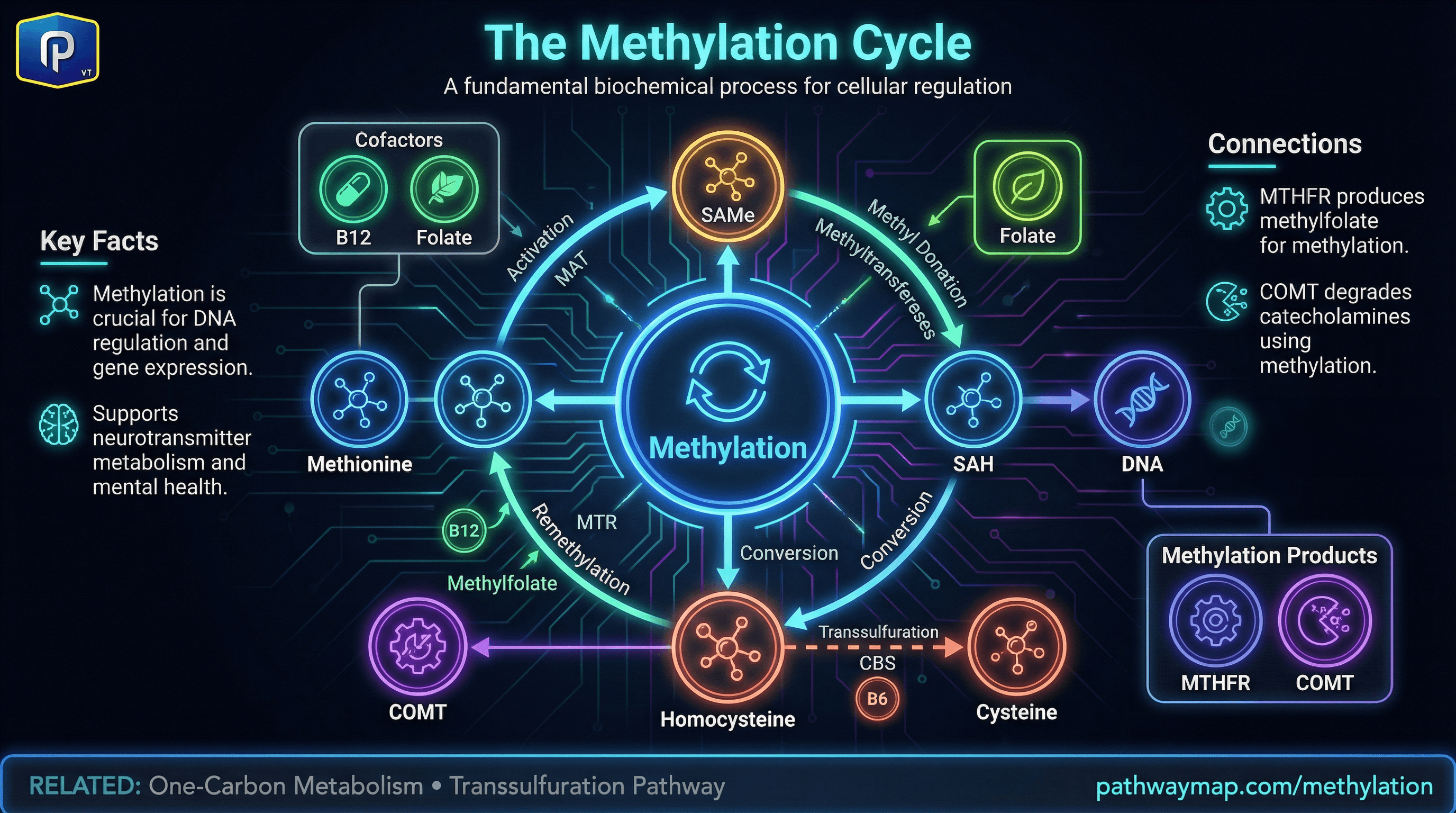
Elevated homocysteine (hyperhomocysteinemia) is a metabolic marker indicating problems with homocysteine clearance. Homocysteine is cleared by: remethylation to methionine (requires B12, folate via MTR) or transsulfuration to cysteine (requires B6 via CBS).
Common causes of elevation: B12 deficiency (impairs MTR), folate deficiency (reduces 5-MTHF for MTR), B6 deficiency (impairs CBS), MTHFR polymorphisms (reduce 5-MTHF production), B2 deficiency (MTHFR requires FAD), kidney disease (reduced clearance), hypothyroidism, and certain medications. Elevated homocysteine is associated with cardiovascular disease, stroke, cognitive decline, and pregnancy complications.
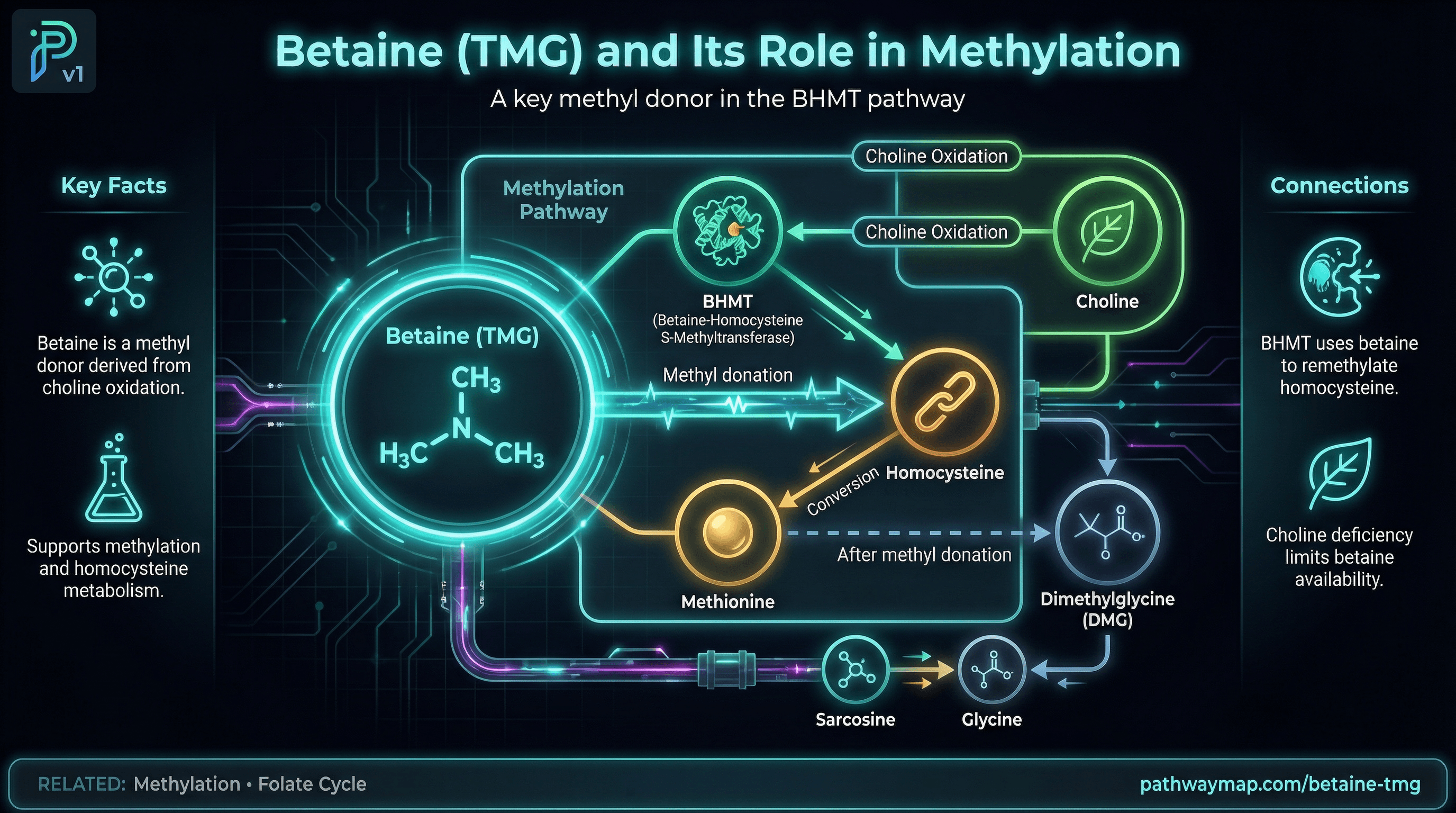
Treatment involves addressing underlying deficiencies - typically B12, methylfolate, B6, and B2. Betaine (TMG) provides an alternative remethylation pathway via BHMT. Optimal homocysteine is <8 μmol/L.
Metabolic Connections
Elevated Homocysteine connects to 13 other pathways.
B Vitamins
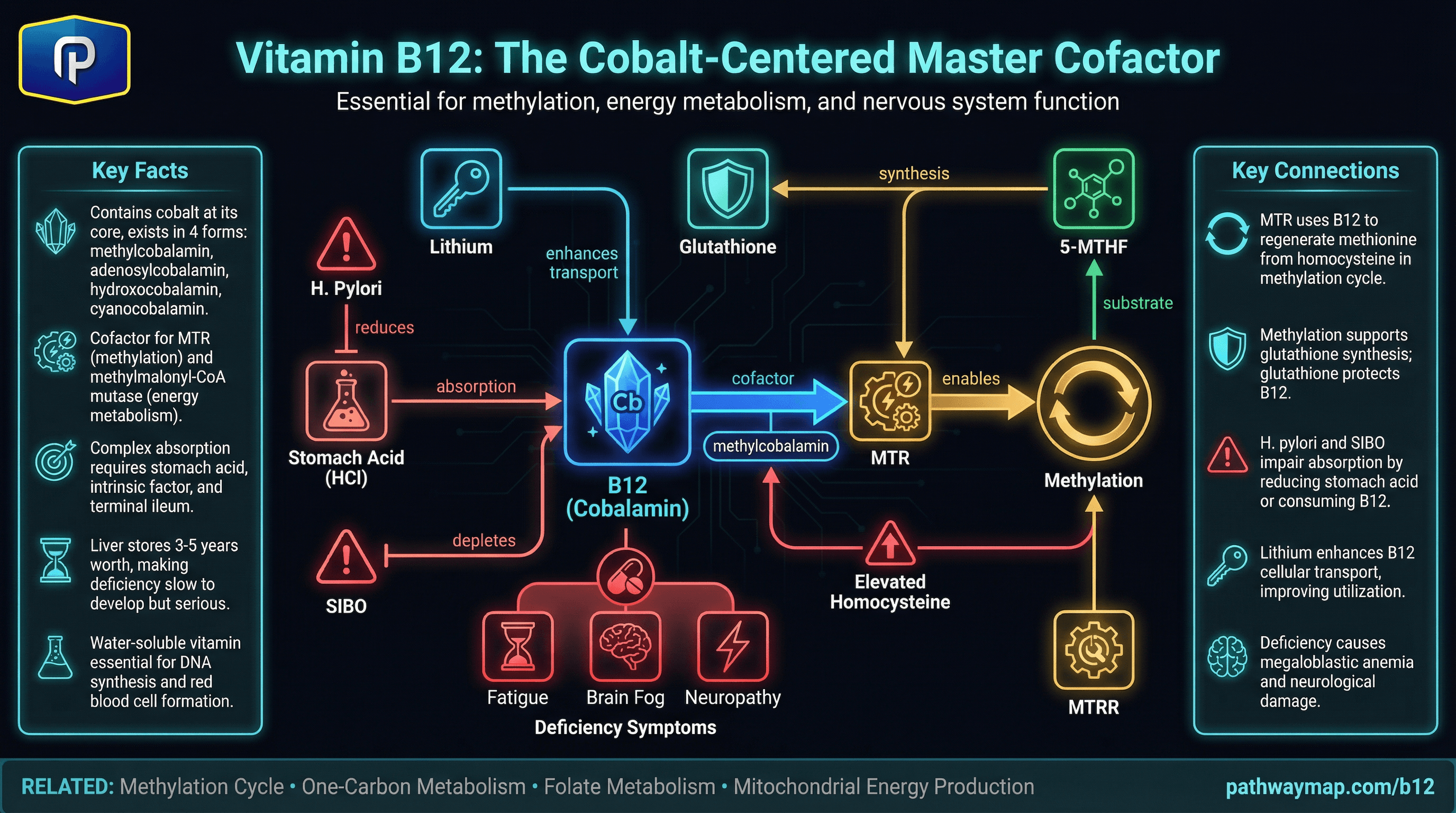
B12
B12 deficiency impairs MTR-mediated remethylation, elevating homocysteine
Cobalamin - essential for methylation, nerve function, DNA synthesis, and red blood cell formation.
B12
B12 deficiency impairs homocysteine remethylation, elevating levels
Cobalamin - essential for methylation, nerve function, DNA synthesis, and red blood cell formation.
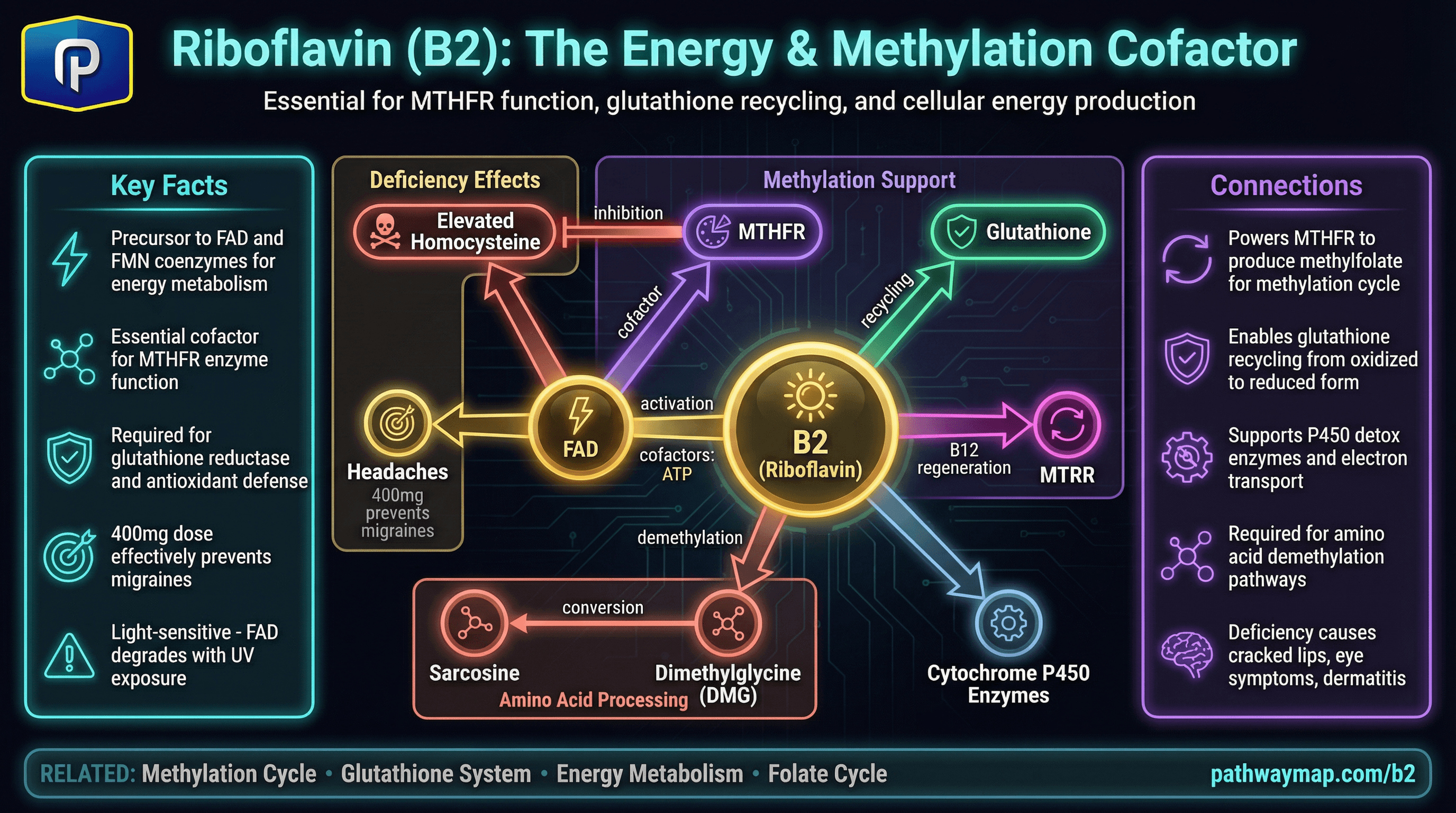
B2
B2 deficiency impairs MTHFR, reducing 5-MTHF and increasing homocysteine
Riboflavin - critical cofactor for MTHFR, glutathione recycling, and energy production.
B2
B2 deficiency impairs MTHFR, elevating homocysteine
Riboflavin - critical cofactor for MTHFR, glutathione recycling, and energy production.
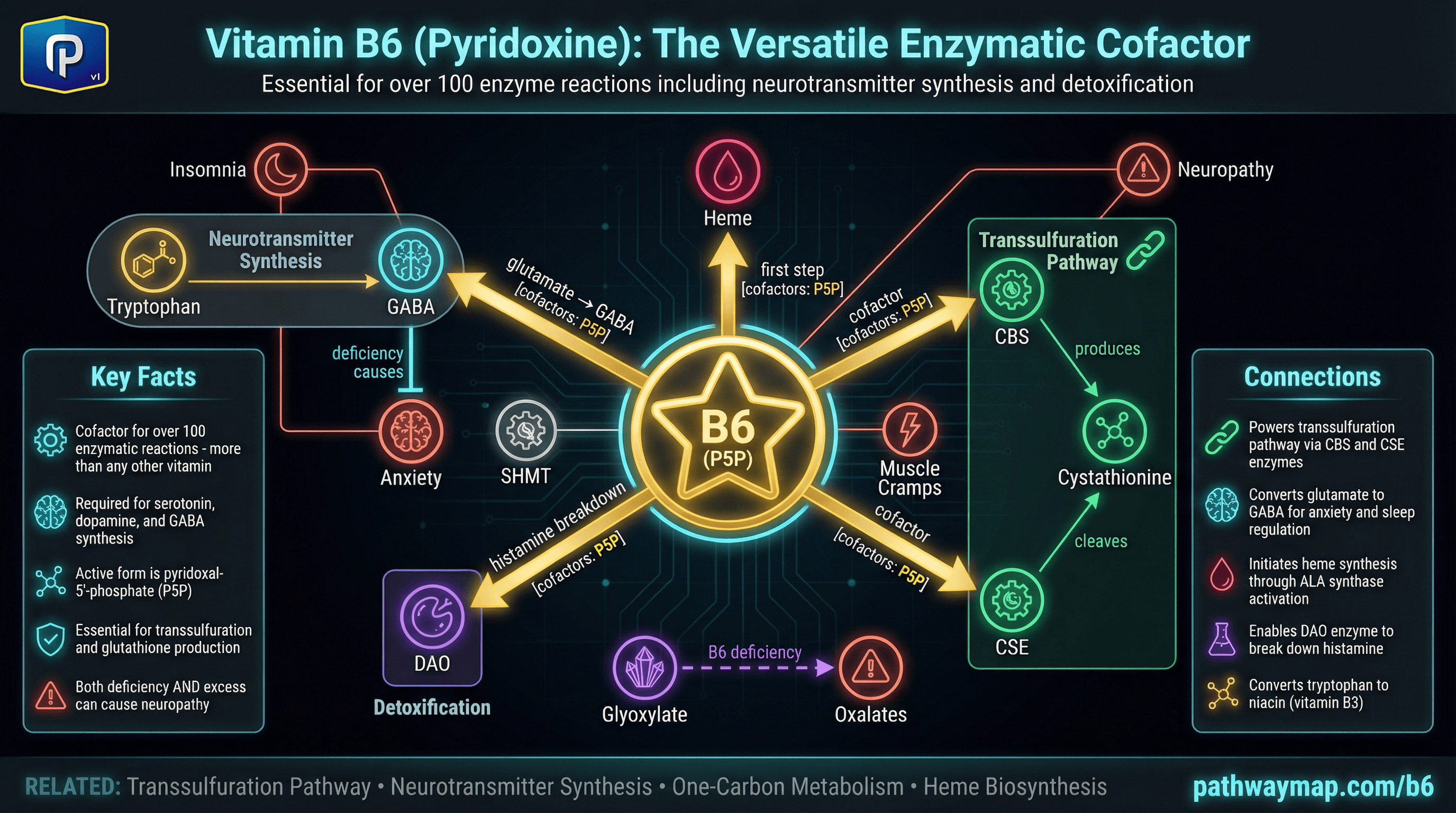
B6
B6 deficiency impairs transsulfuration pathway for homocysteine clearance
Pyridoxine - essential for over 100 enzyme reactions including neurotransmitter synthesis and transsulfuration.

Folate
Folate deficiency reduces 5-MTHF for homocysteine remethylation
Vitamin B9 - essential for DNA synthesis, methylation, and cell division. Critical during pregnancy for neural tube development.
Folate
Folate deficiency impairs homocysteine remethylation
Vitamin B9 - essential for DNA synthesis, methylation, and cell division. Critical during pregnancy for neural tube development.
Methylation

Homocysteine
Elevated homocysteine indicates impaired homocysteine metabolism
Sulfur-containing amino acid at the crossroads of methylation. Elevated levels indicate impaired methylation or B-vitamin deficiency.

MTHFR
MTHFR variants reduce 5-MTHF production, often elevating homocysteine
Methylenetetrahydrofolate reductase - converts folate to methylfolate for the methylation cycle. Common genetic variants reduce function.
SAMe
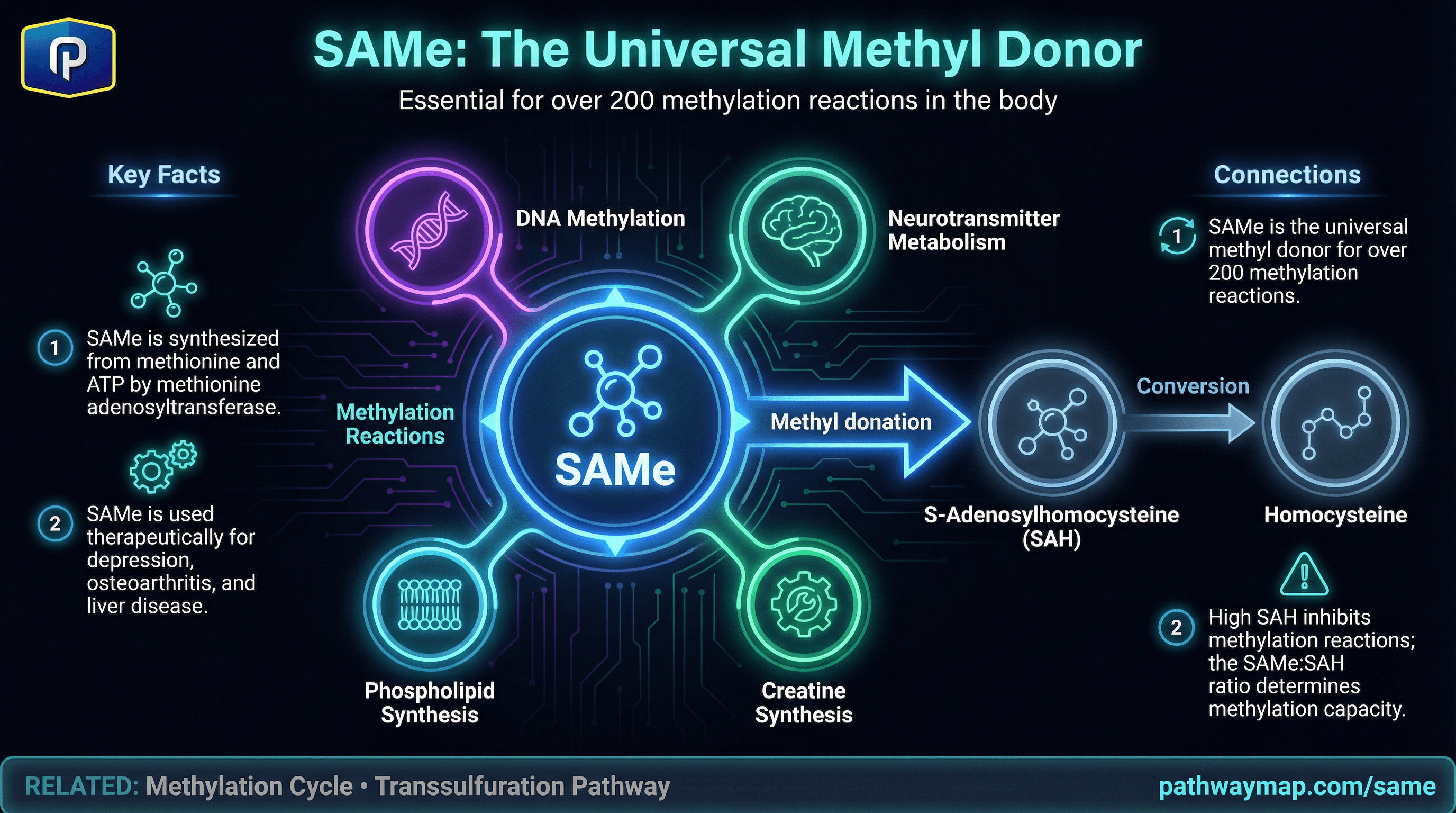
SAMe activates transsulfuration; low SAMe may reduce homocysteine clearance
S-Adenosylmethionine - universal methyl donor essential for 200+ methylation reactions including neurotransmitter synthesis and DNA methylation.