Methylation
One of the most fundamental biochemical processes—transferring methyl groups (-CH₃) to regulate gene expression, neurotransmitters, detoxification, and cellular function.
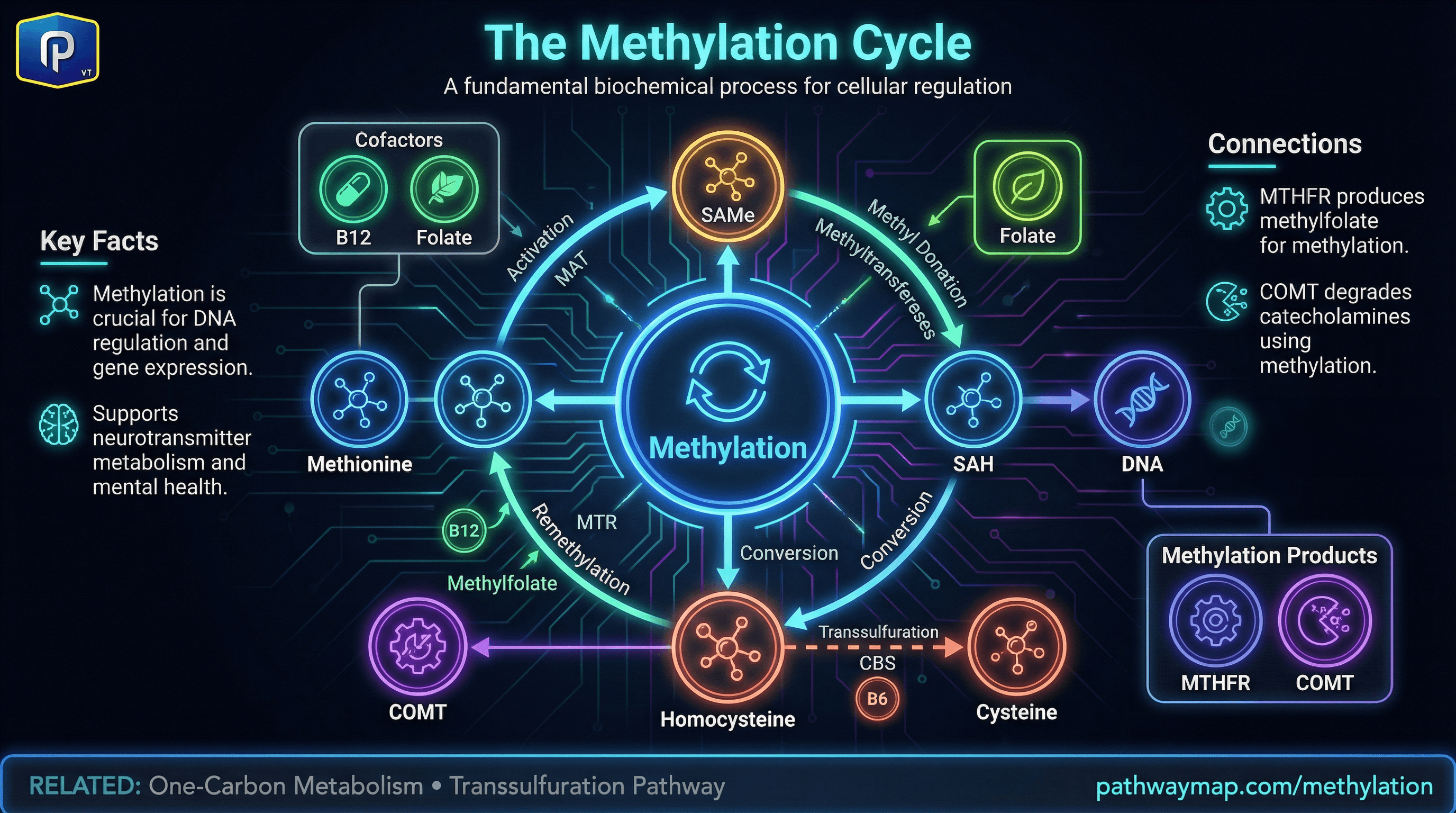
🔄 The Methylation Cycle
The methylation cycle is an elegant system that continuously regenerates methyl donors. Here's how it works:
Methionine
Essential amino acid. Activated by MAT enzyme to become SAM-e.
SAM-e
Universal methyl donor. Donates -CH₃ to DNA, neurotransmitters, etc.
SAH → Homocysteine
After donating methyl, becomes SAH, then homocysteine.
Remethylation
MTR (B12 + methylfolate) or BHMT (betaine) recycles to methionine.
🎯 What Methylation Actually Does
Gene Expression
DNA methylation silences genes. Epigenetic control without changing DNA sequence.
Neurotransmitters
COMT methylates dopamine/norepinephrine for degradation. Histamine clearance.
Detoxification
Phase II conjugation. Methylation of arsenic, estrogens, and other compounds.
Cell Membranes
Phosphatidylcholine synthesis. Critical for liver, brain, and cell function.
Creatine Synthesis
Largest consumer of SAM-e. Supports muscle and brain energy.
Myelin Production
Nerve insulation requires methylation. Deficiency = neurological symptoms.
🧬 Key Methylation Nutrients
Folate (B9)
As methylfolate (5-MTHF)—the primary methyl donor entering the cycle.
B12 (Cobalamin)
As methylcobalamin—required by MTR to accept methyl from folate.
B6 (Pyridoxine)
Required for CBS enzyme in transsulfuration (homocysteine → cysteine).
B2 (Riboflavin)
MTHFR enzyme requires FAD (from B2). Often overlooked but critical.
Methionine
Essential amino acid from protein. Becomes SAM-e when activated.
Betaine (TMG)
Alternative methyl donor via BHMT. Backup pathway in liver and kidneys.
⚖️ Two Fates of Homocysteine
Homocysteine sits at a crucial metabolic crossroads. It can be remethylated back to methionine, or it can be diverted to make cysteine and glutathione:
Remethylation → Methionine
- • MTR pathway: Uses methylfolate + B12
- • BHMT pathway: Uses betaine (liver/kidney only)
- • Regenerates methionine to continue the cycle
- • Dominant when methyl groups are needed
Transsulfuration → Cysteine
- • CBS enzyme: Requires B6
- • Irreversible—exits methylation cycle
- • Produces cysteine → glutathione
- • Activated when oxidative stress is high
The body dynamically shifts between these pathways based on need. SAM-e levels help regulate which pathway predominates.
🔻 Undermethylation
More common. Signs include:
- • Elevated homocysteine
- • Depression, low motivation
- • Perfectionism, high achievement drive
- • Seasonal allergies
- • Low serotonin symptoms
- • Good response to SAMe or methylfolate
Support: Folate, B12, SAMe, methionine, betaine
🔺 Overmethylation
Less common. Signs include:
- • Anxiety, panic attacks
- • Sleep problems
- • High pain tolerance
- • Adverse reaction to folate/B12
- • Food and chemical sensitivities
- • Elevated histamine symptoms
Support: Niacin (methyl buffer), reduce methyl donors, support COMT
🧪 Homocysteine: The Methylation Marker
Homocysteine is the most accessible marker of methylation function. When methylation is impaired, homocysteine accumulates.
Elevated homocysteine is associated with cardiovascular disease, cognitive decline, and pregnancy complications. Usually responds well to B12, folate, and B6 optimization.
Metabolic Connections

MTHFR
Produces methylfolate—the primary methyl donor to the cycle

Vitamin B12
Required by MTR to regenerate methionine from homocysteine

Folate
Methylfolate delivers methyl groups to the methylation cycle

SAM-e
The universal methyl donor produced by the cycle

Homocysteine
Recycled or diverted—its level indicates methylation status

Glutathione
Transsulfuration pathway diverts homocysteine to make glutathione