Transsulfuration Pathway
Metabolic pathway converting homocysteine to cysteine via cystathionine; requires B6; irreversible.

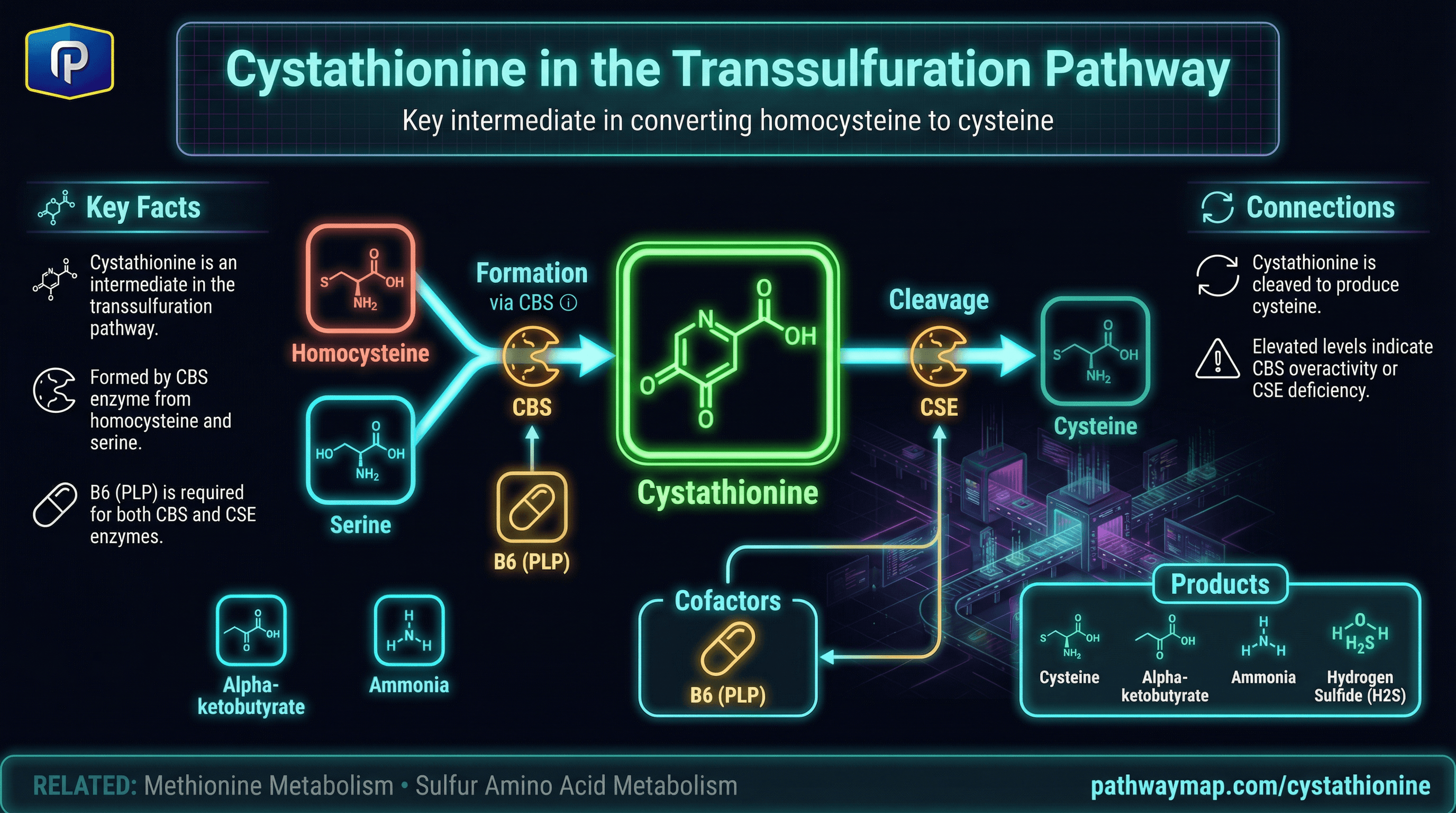
The transsulfuration pathway is an irreversible metabolic route that converts homocysteine to cysteine, diverting sulfur from the methionine cycle toward glutathione and taurine synthesis. The pathway consists of two B6-dependent reactions: CBS (cystathionine beta-synthase) combines homocysteine with serine to form cystathionine, then CSE (cystathionine gamma-lyase) cleaves cystathionine to produce cysteine plus alpha-ketobutyrate and ammonia.
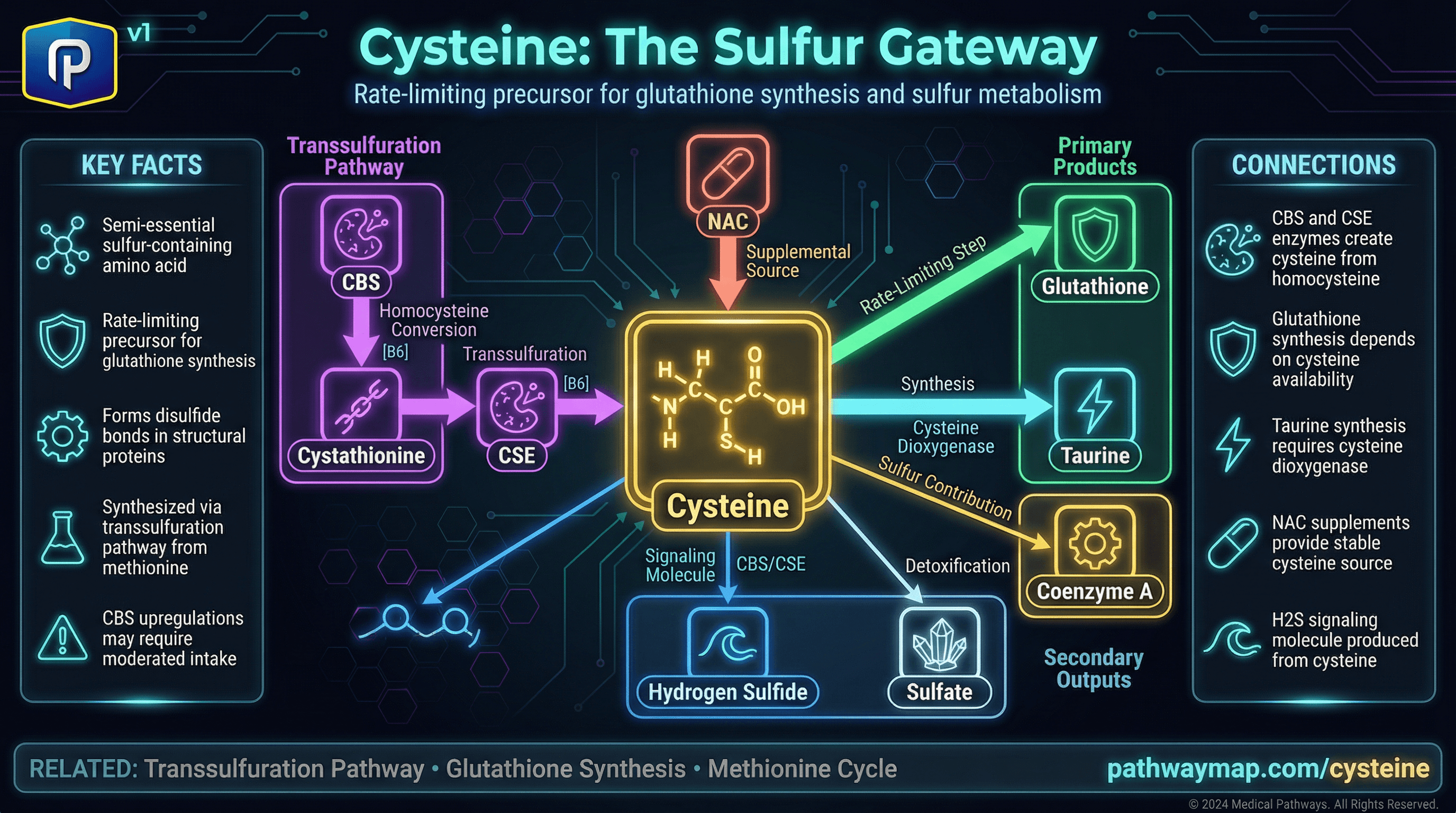
This pathway is the only way mammals can synthesize cysteine from methionine. Transsulfuration activity increases when methionine/SAMe levels are high (CBS is activated by SAMe), directing excess sulfur amino acids toward disposal while producing the antioxidant precursor cysteine.
B6 deficiency impairs both enzymes, trapping homocysteine.
Metabolic Connections
Transsulfuration Pathway connects to 9 other pathways.
B Vitamins
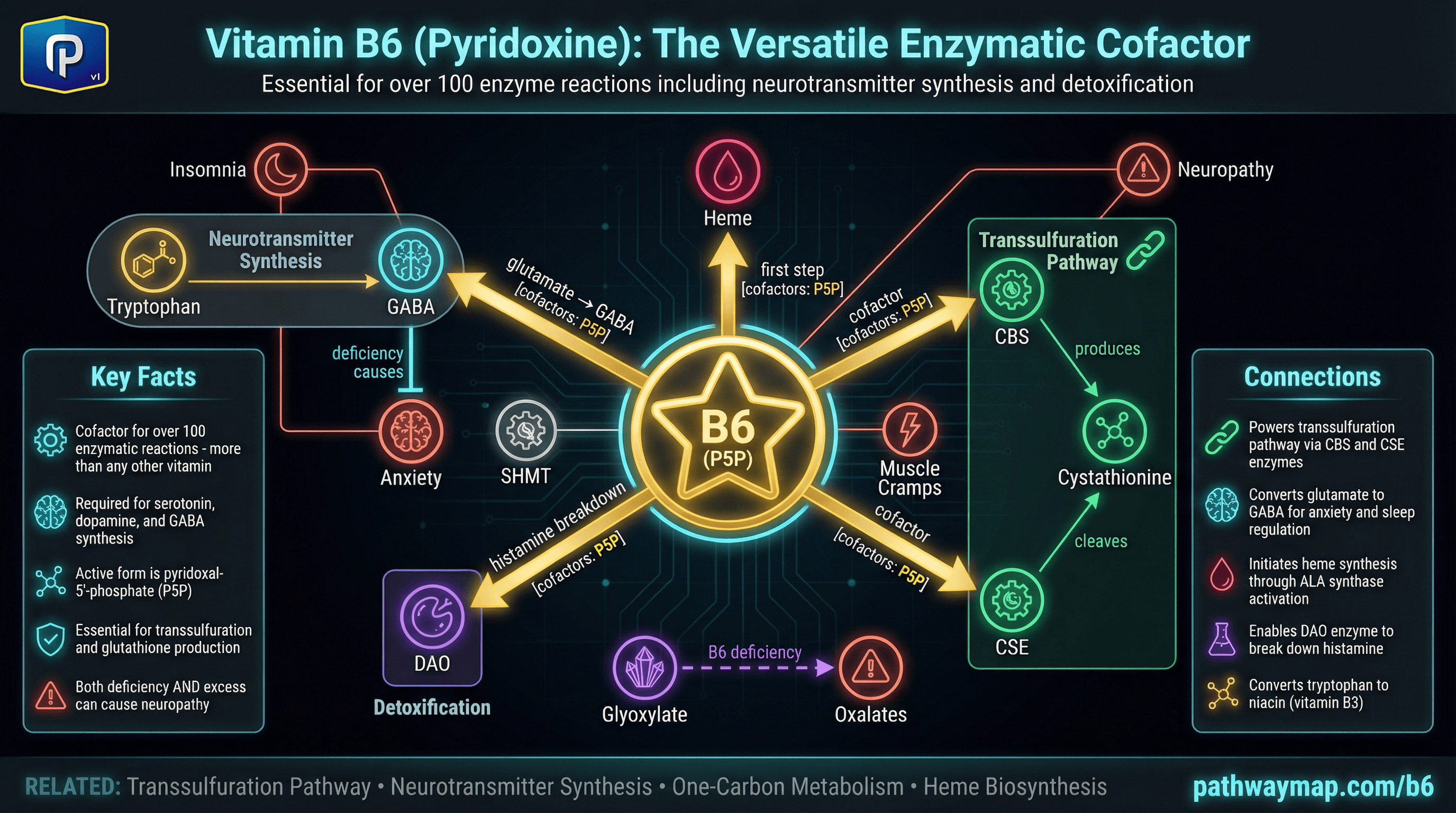
B6
Both enzymes of transsulfuration (CBS, CSE) require B6 as cofactor
Pyridoxine - essential for over 100 enzyme reactions including neurotransmitter synthesis and transsulfuration.
B6
B6 is essential for both enzymes of transsulfuration (CBS and CSE)
Pyridoxine - essential for over 100 enzyme reactions including neurotransmitter synthesis and transsulfuration.
Detoxification

CBS
CBS catalyzes the first step of transsulfuration
Cystathionine beta-synthase - enzyme directing homocysteine toward glutathione production via the transsulfuration pathway.
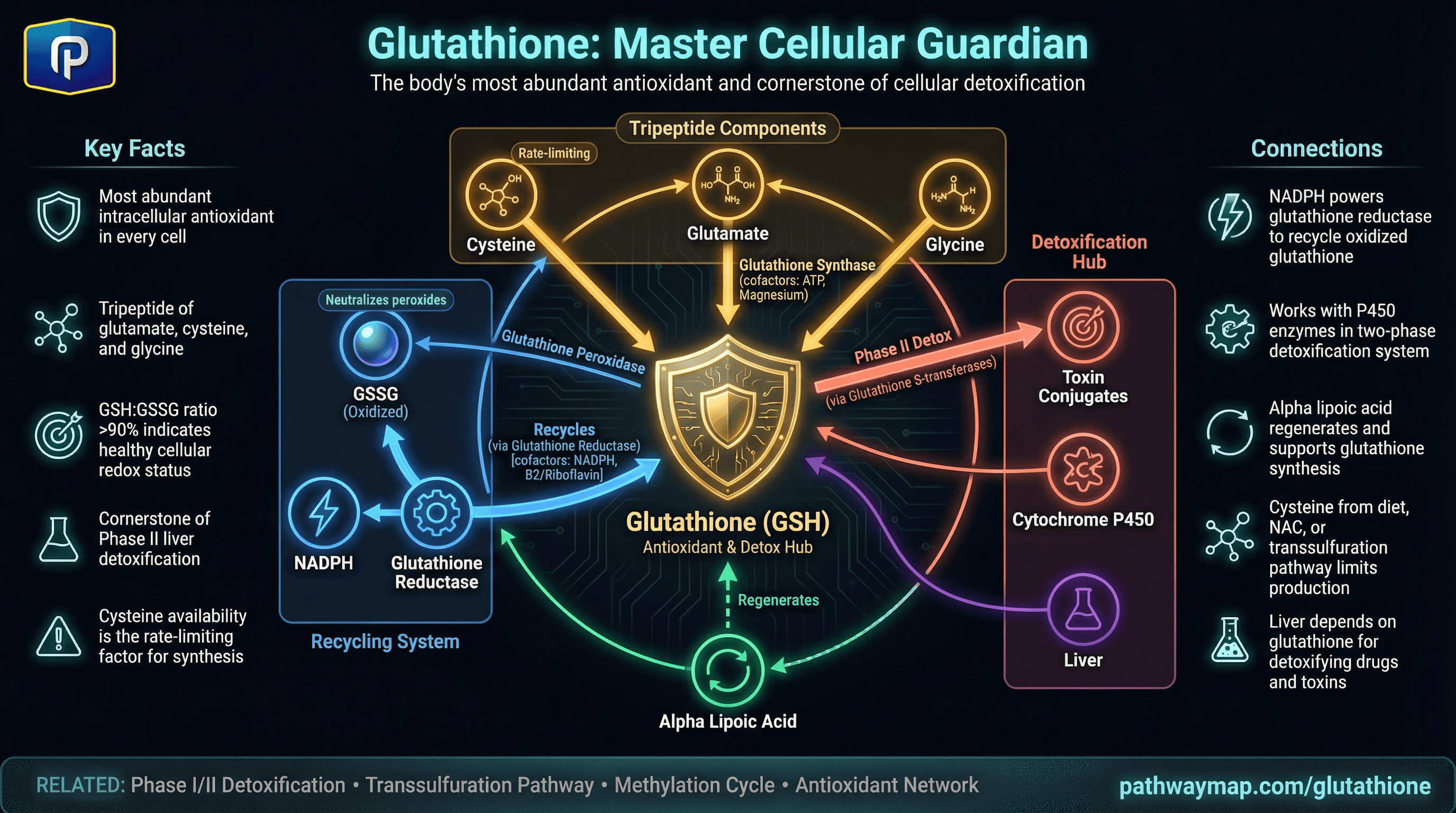
Glutathione
Transsulfuration provides cysteine for glutathione synthesis
Master antioxidant and detoxifier. Tripeptide of glutamate, cysteine, and glycine essential for cellular protection.

Methylation

Homocysteine
Transsulfuration consumes homocysteine, removing it from the methylation cycle
Sulfur-containing amino acid at the crossroads of methylation. Elevated levels indicate impaired methylation or B-vitamin deficiency.
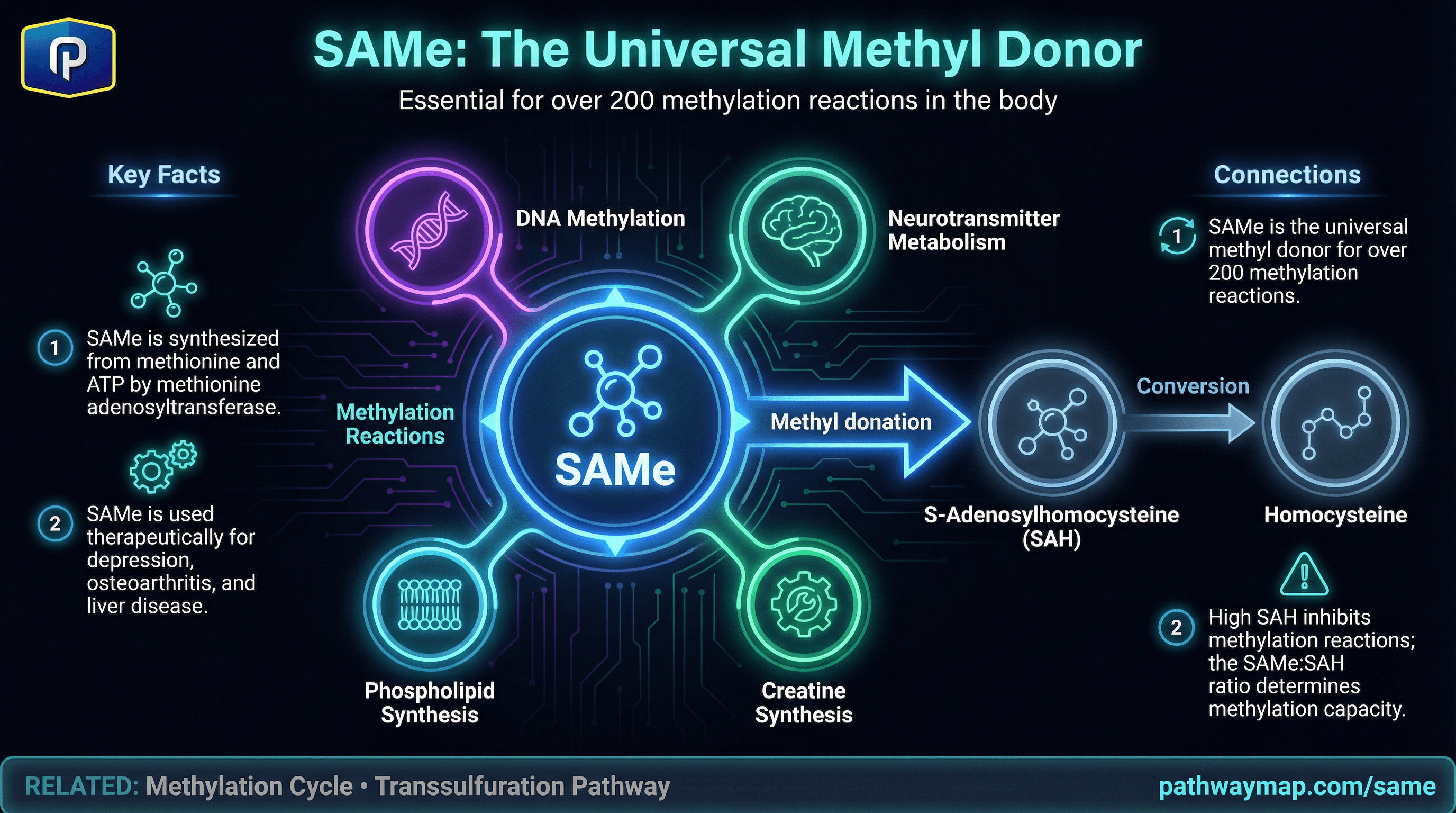
SAMe
SAMe activates CBS, increasing transsulfuration when methylation is adequate
S-Adenosylmethionine - universal methyl donor essential for 200+ methylation reactions including neurotransmitter synthesis and DNA methylation.