MAT (Methionine Adenosyltransferase)
Enzyme that converts methionine to SAMe using ATP; rate-limiting step in methyl group supply.

Methionine Adenosyltransferase (MAT) is the enzyme that catalyzes the formation of S-adenosylmethionine (SAMe) from methionine and ATP.
This is the only known biosynthetic pathway for SAMe and represents a critical control point in one-carbon metabolism.
There are three MAT isoforms: MAT1A (liver-specific, high capacity), MAT2A (widely expressed, lower capacity), and MAT2B (regulatory subunit). MAT1A expression decreases in liver disease, shifting to MAT2A which produces less SAMe and may contribute to disease progression.
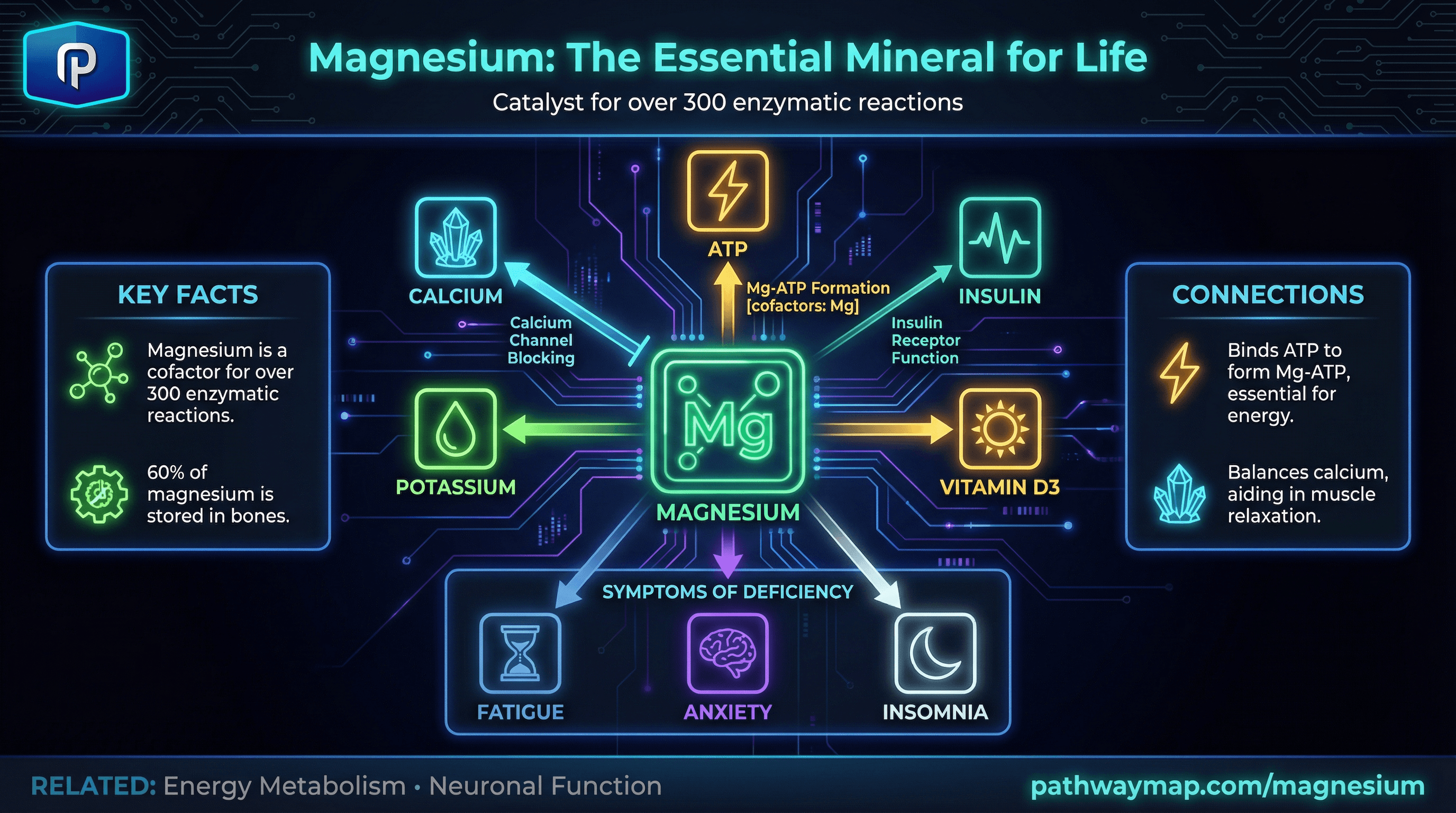
MAT requires magnesium as a cofactor and is inhibited by its product SAMe (feedback inhibition).
Adequate ATP supply is essential - anything impairing mitochondrial function can limit MAT activity.
Metabolic Connections
MAT (Methionine Adenosyltransferase) connects to 6 other pathways.

Amino Acids
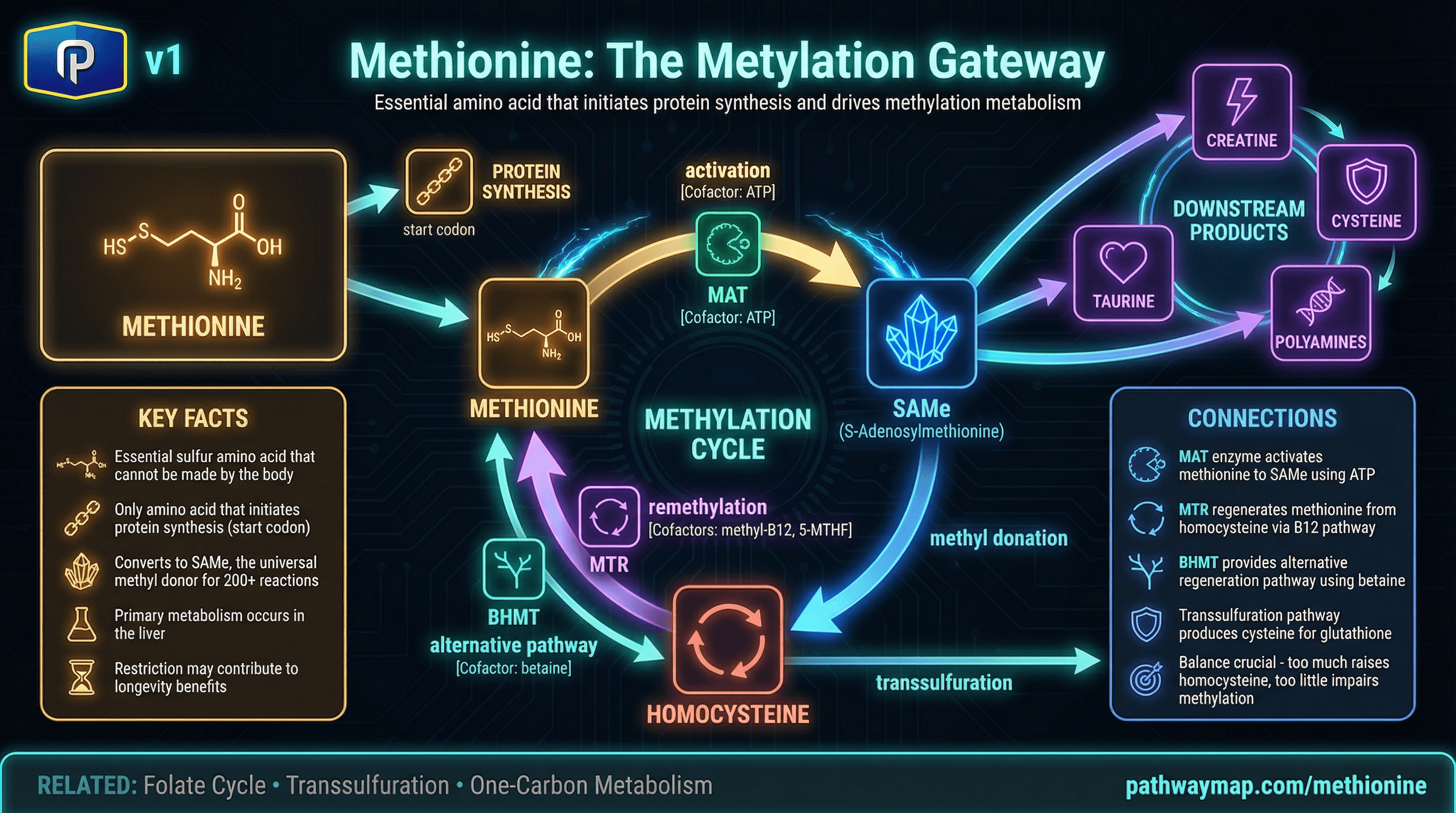
Methionine
MAT converts methionine into SAMe by adding an adenosyl group from ATP
Essential sulfur amino acid that initiates methylation cycle. Precursor to SAMe, cysteine, and taurine.
Methionine
MAT enzyme converts methionine to SAMe using ATP
Essential sulfur amino acid that initiates methylation cycle. Precursor to SAMe, cysteine, and taurine.
Methylation
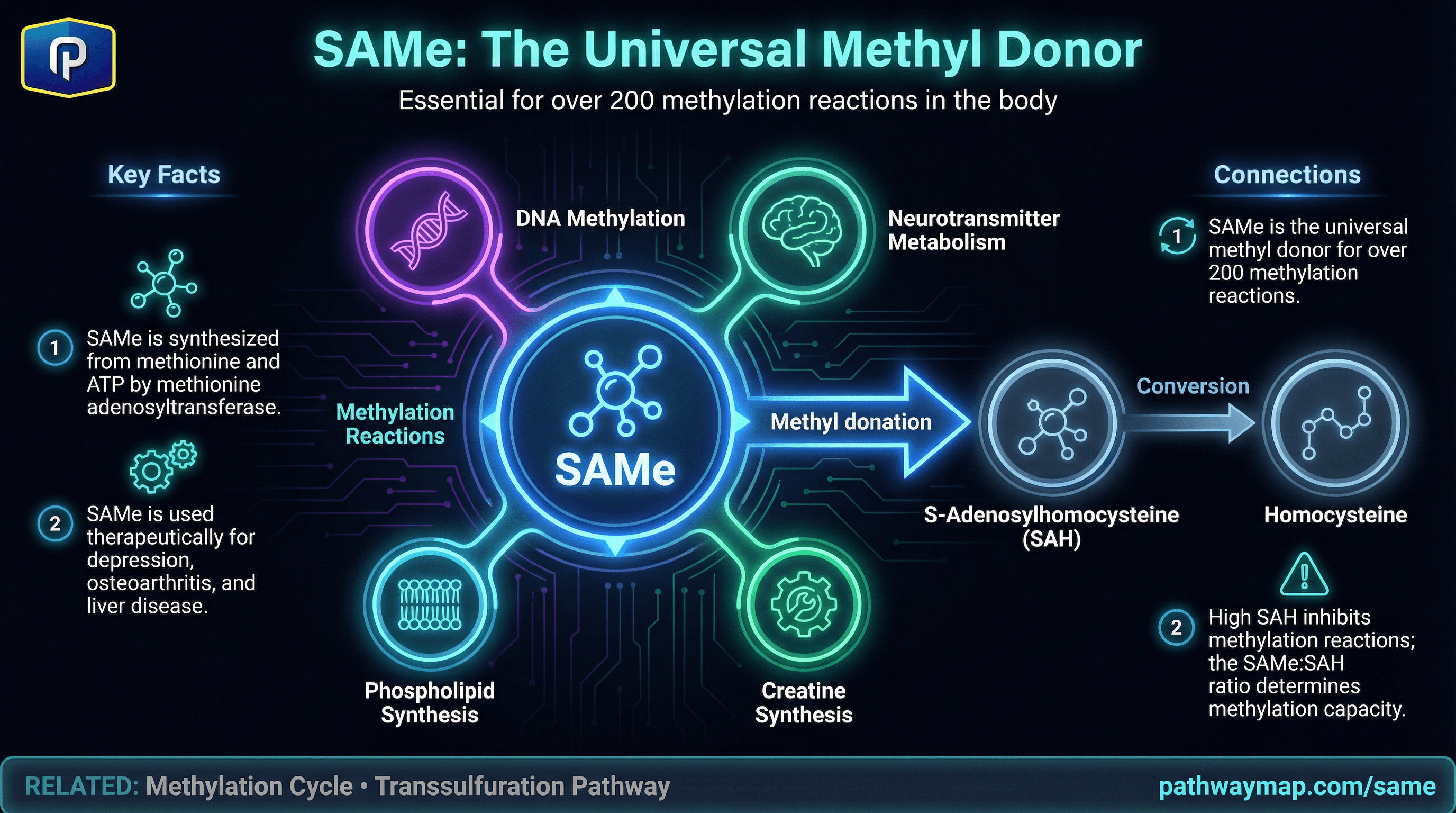
SAMe
SAMe is the product of MAT; SAMe also provides feedback inhibition of MAT
S-Adenosylmethionine - universal methyl donor essential for 200+ methylation reactions including neurotransmitter synthesis and DNA methylation.
SAMe
SAMe is synthesized from methionine by MAT enzyme
S-Adenosylmethionine - universal methyl donor essential for 200+ methylation reactions including neurotransmitter synthesis and DNA methylation.