Immune Function
The body's defense system against pathogens. Requires zinc, vitamins A/C/D, and proper balance to avoid autoimmunity.
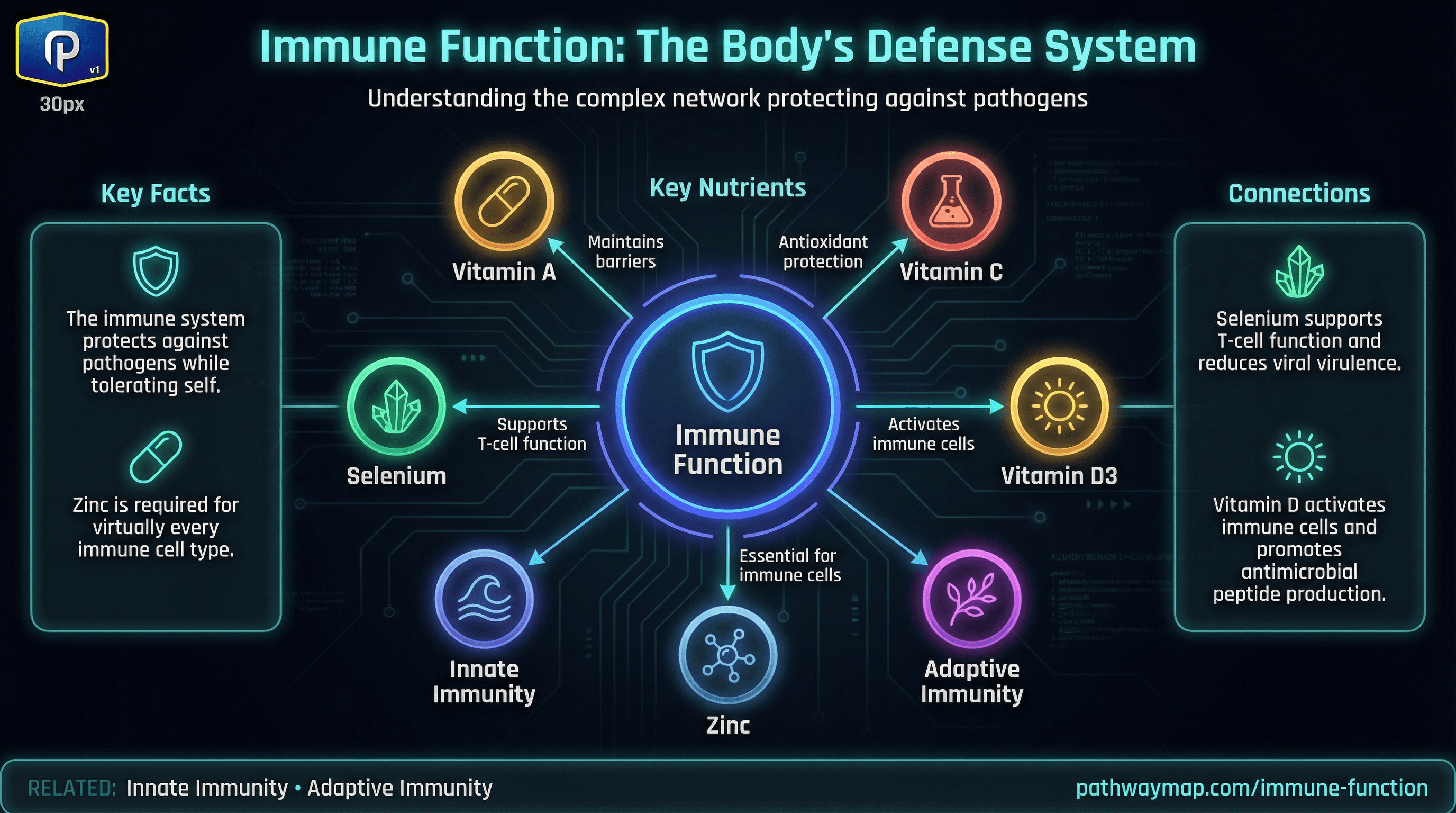
The immune system is a complex network of cells, tissues, and organs that protects against pathogens while tolerating self and beneficial microbes. It has two main branches: innate (immediate, non-specific) and adaptive (delayed, specific, memory). Innate immunity: Physical barriers (skin, mucus, stomach acid), Antimicrobial peptides (defensins, cathelicidin), Complement system, Phagocytes (neutrophils, macrophages), Natural killer (NK) cells, Dendritic cells (bridge to adaptive immunity), and Inflammation.
Adaptive immunity: T cells - CD4+ helper cells (coordinate immune response), CD8+ cytotoxic cells (kill infected cells), Regulatory T cells (prevent autoimmunity). B cells - produce antibodies (immunoglobulins). Memory cells - long-term protection. Key nutrients for immunity: Zinc - required for virtually every immune cell type.
Vitamin D - activates antimicrobial peptides, modulates inflammation. Vitamin A - maintains mucosal barriers, T-cell function. Vitamin C - supports neutrophils, antioxidant protection. Selenium - supports T-cells, reduces viral virulence. Iron - needed but excess feeds pathogens.
Protein - amino acids for immune cell production. Immune balance: Under-active - increased infections, cancer risk. Over-active - allergies, autoimmune diseases. The goal is appropriate, balanced response. Autoimmunity: Loss of self-tolerance leads to immune attack on own tissues.
Factors include genetics, gut permeability, molecular mimicry, infections, and environmental triggers. Vitamin D deficiency is associated with increased autoimmune risk.
Supporting immune function: Nutrient sufficiency (zinc, D, C, A, selenium), Sleep (critical for immune function), Stress management (chronic stress is immunosuppressive), Exercise (moderate boosts immunity; extreme training may suppress), Gut health (70% of immune tissue in gut), and Avoid excess sugar (impairs neutrophil function).
Metabolic Connections
Immune Function connects to 7 other pathways.

Trace Minerals

Selenium
Selenium supports T-cell function and reduces viral virulence
Essential trace mineral critical for thyroid function, glutathione recycling, and antioxidant defense via selenoproteins.

Zinc
Zinc is required for nearly every aspect of immune function, from T-cells to neutrophils
Essential trace mineral required for 300+ enzymes and nearly every aspect of immune function, protein synthesis, and wound healing.
Zinc
Zinc is essential for virtually every aspect of immune function
Essential trace mineral required for 300+ enzymes and nearly every aspect of immune function, protein synthesis, and wound healing.
Nutrients
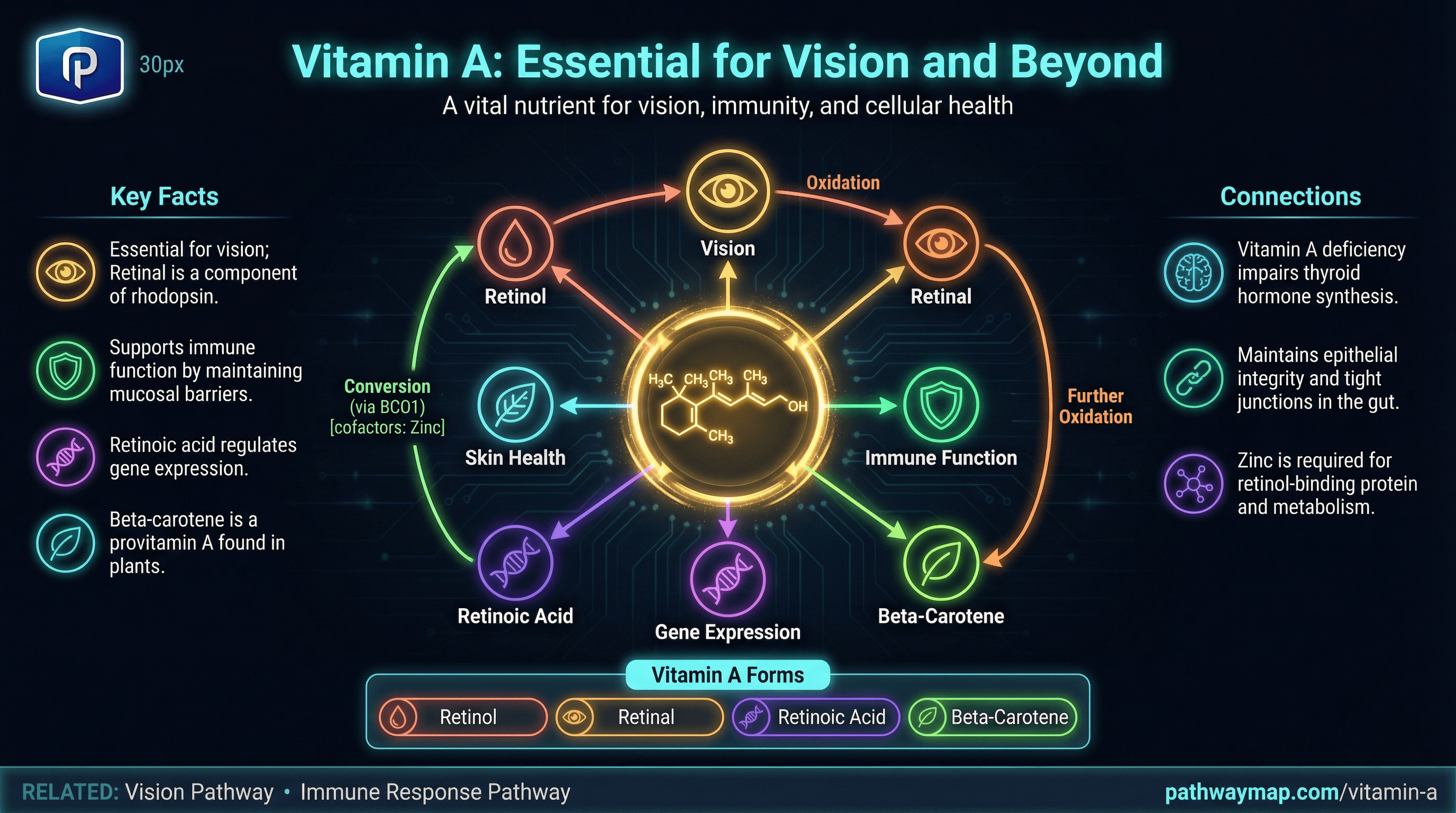
Vitamin A
Vitamin A maintains mucosal barriers and supports T and B cell function
Fat-soluble vitamin essential for vision, immunity, skin, and gene expression. Found as retinol in animal foods and carotenoids in plants.
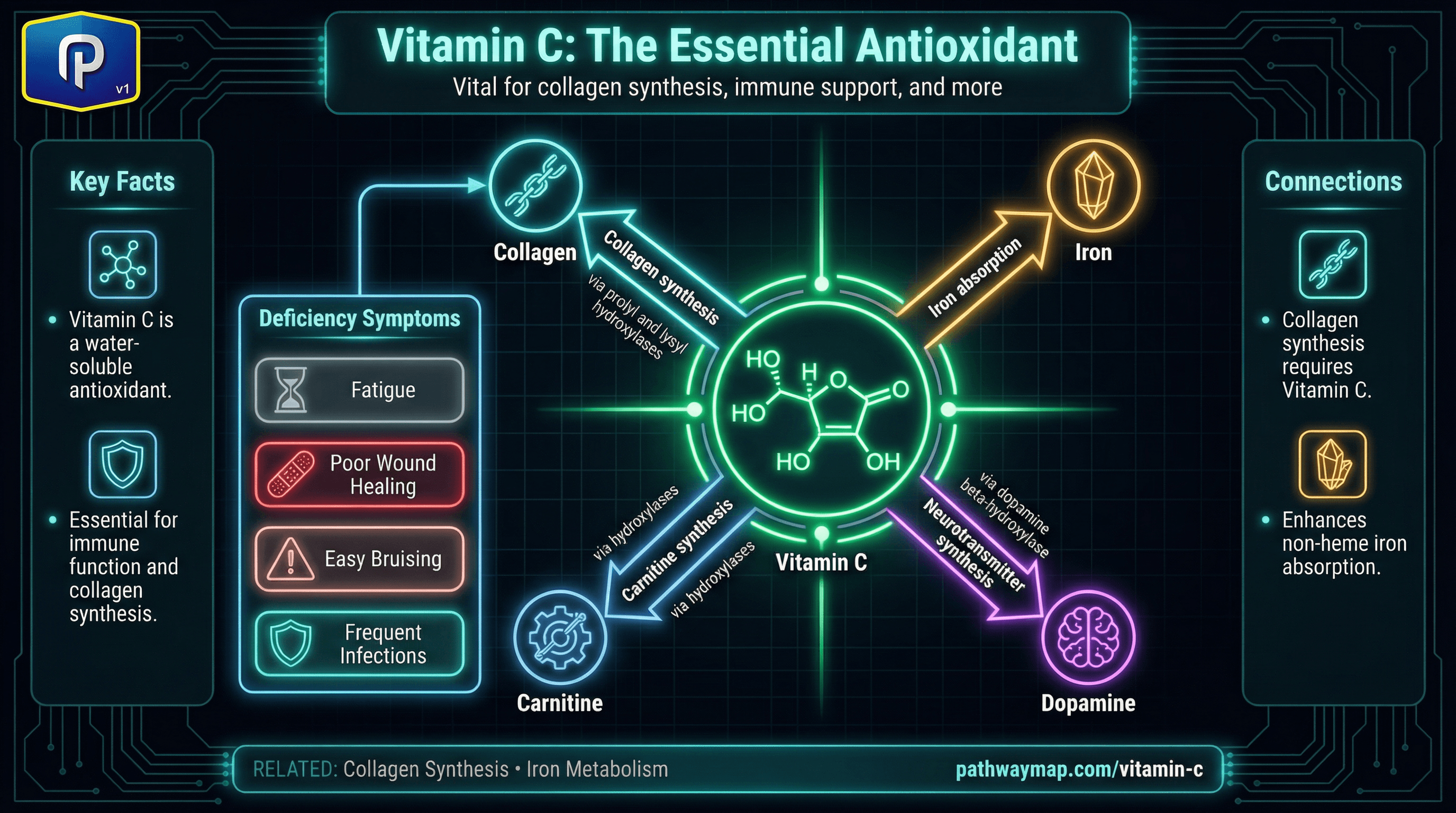
Vitamin C
Vitamin C concentrates in immune cells and supports their function
Water-soluble antioxidant essential for collagen synthesis, immune function, iron absorption, and neurotransmitter production.
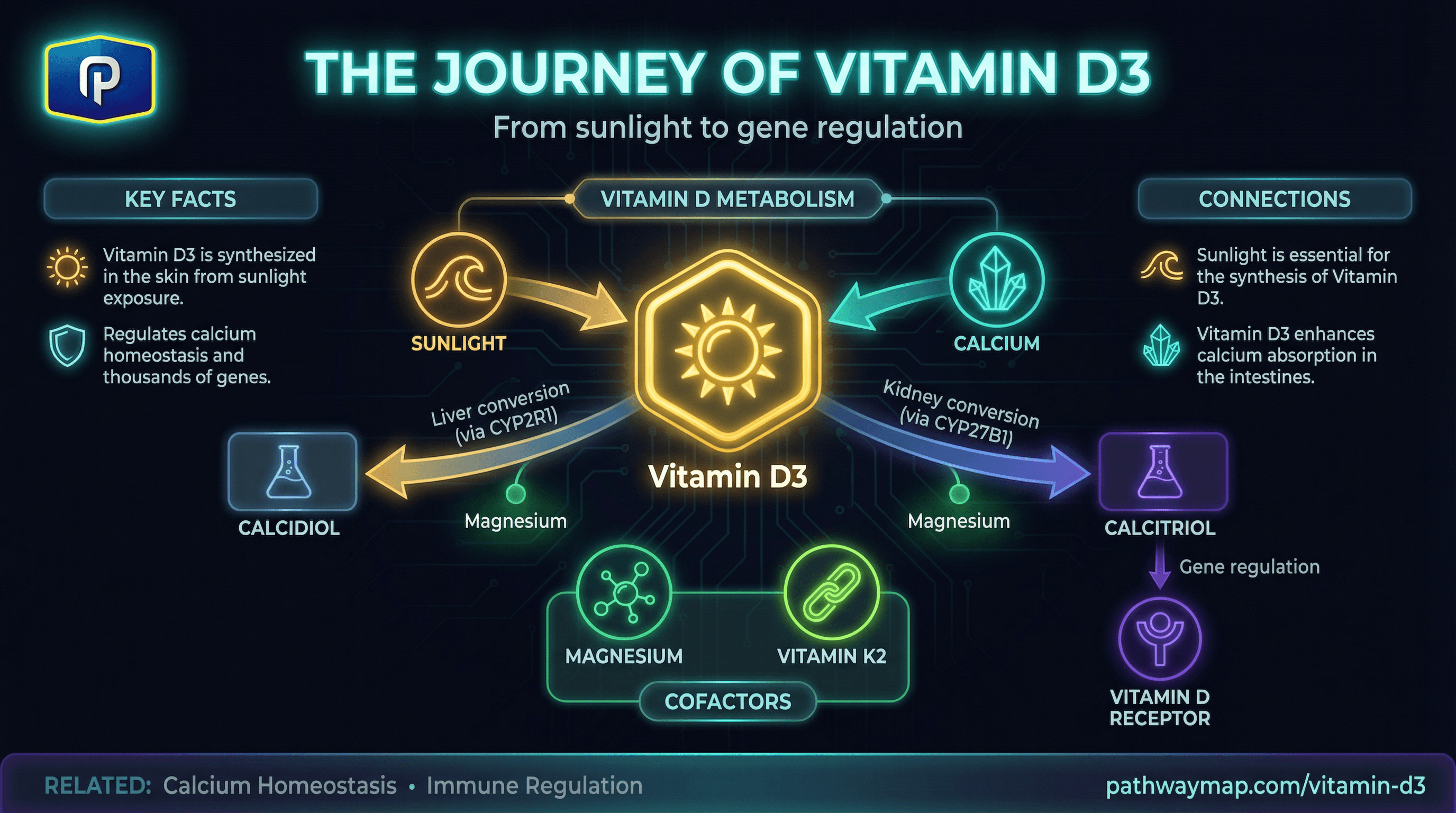
Vitamin D3
Vitamin D activates immune cells and promotes antimicrobial peptide production
Cholecalciferol - the form made from sunlight and found in animal sources. Converted to calcitriol, regulating calcium and thousands of genes.