Metallothionein
Family of metal-binding proteins that regulate zinc/copper and protect against heavy metal toxicity.
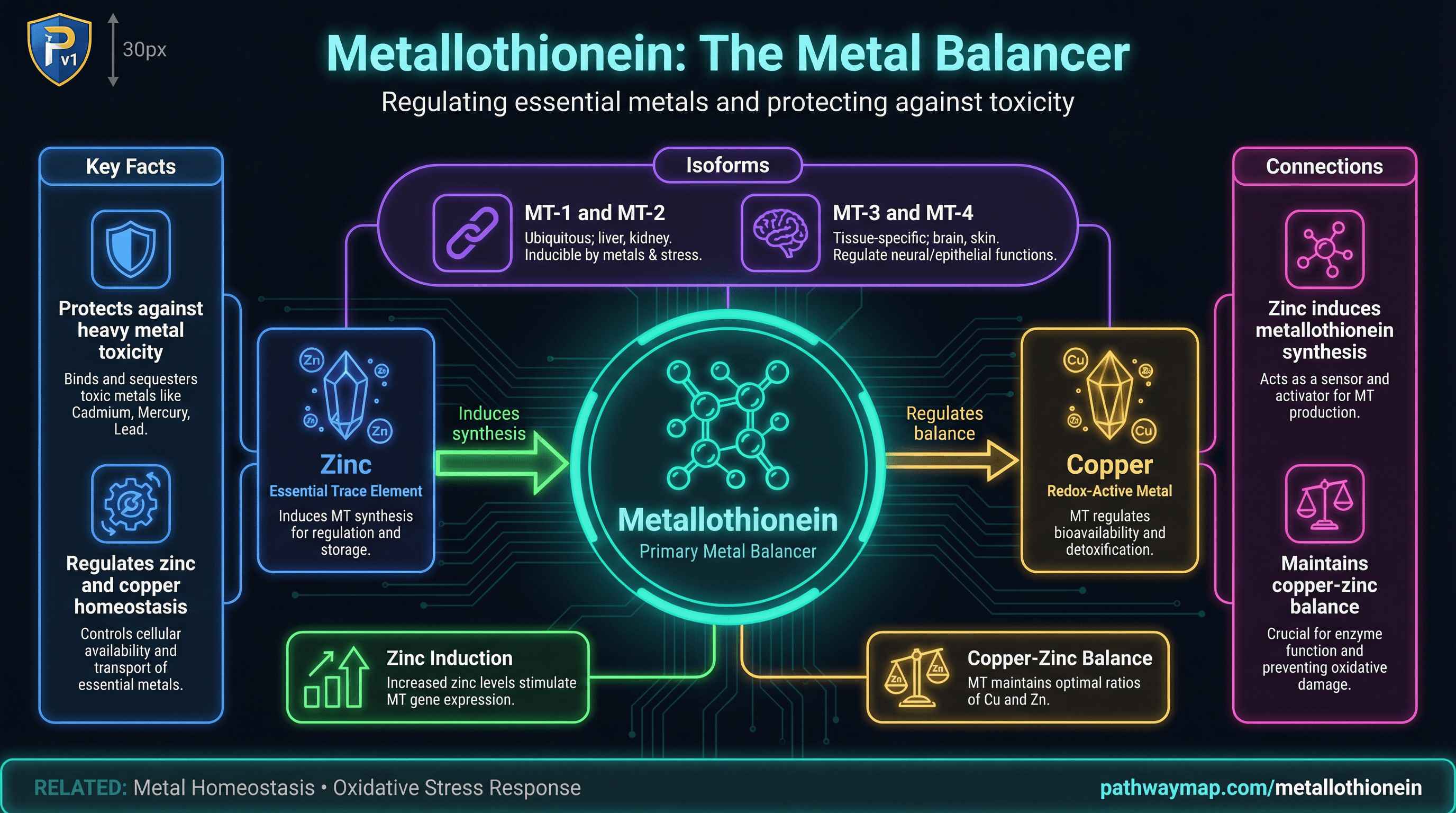
Metallothioneins (MT) are a family of small, cysteine-rich proteins that bind heavy metals including zinc, copper, cadmium, and mercury. They play crucial roles in metal homeostasis, detoxification, and protection against oxidative stress.
Functions: Zinc and copper homeostasis (buffer and donate these essential metals), Heavy metal detoxification (bind and sequester toxic metals), Antioxidant protection (cysteine thiols scavenge free radicals), and Immune function modulation.
Metallothionein isoforms: MT-1 and MT-2 are widely expressed and induced by metals, oxidative stress, and inflammation. MT-3 is brain-specific and may be relevant to neurodegeneration. MT-4 is found in stratified squamous epithelium. Metallothionein and autism: Some research suggests MT dysfunction in autism spectrum disorders, potentially explaining altered zinc/copper ratios and increased susceptibility to heavy metal toxicity seen in some cases.
Zinc induces metallothionein synthesis. This is one mechanism by which zinc protects against heavy metal toxicity - it upregulates the proteins that bind and sequester toxic metals. The copper-zinc balance is maintained partly through metallothionein.
MT binds both metals but can transfer them based on cellular needs. This is why excessive zinc supplementation without copper can cause copper deficiency - MT sequesters copper. Supporting metallothionein: Adequate zinc intake, Cysteine/NAC (provides cysteine for MT synthesis), and Selenium (may support MT function).
Conditions of oxidative stress, inflammation, or heavy metal exposure upregulate MT as a protective response.
Metabolic Connections
Metallothionein connects to 2 other pathways.