Oxalates
The hidden troublemaker in "healthy" foods. Oxalic acid is found in many plant foods and can bind calcium to form kidney stones, deposit in tissues, and cause pain in sensitive individuals. Most people handle them fine, but some need to limit intake.
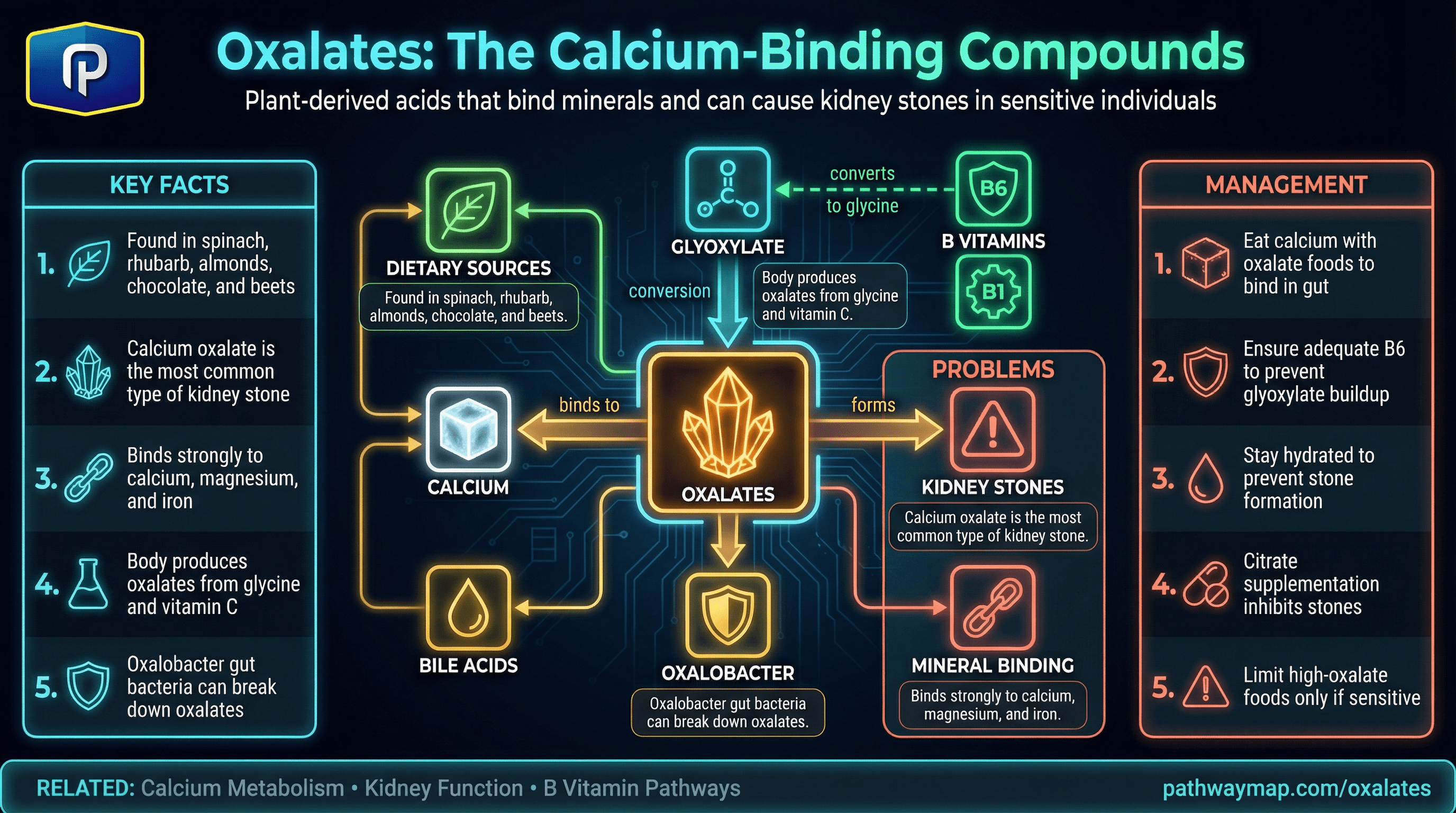
What Oxalates Do in the Body
Mineral Binding
Oxalates bind calcium, iron, magnesium, and zinc in the gut, reducing their absorption.
Kidney Stones
Calcium oxalate is the most common type of kidney stone. High urinary oxalate is a major risk factor.
Tissue Deposits
Oxalate crystals can deposit in kidneys, joints, blood vessels, and other tissues, causing inflammation.
Gut Absorption
Normally low absorption (2-15%), but gut issues like leaky gut can dramatically increase it.
Endogenous Production
Body makes oxalate from vitamin C, glycine, and other precursors. B6 helps divert to glycine instead.
Plant Defense
Plants use oxalates as defense against being eaten. Cooking reduces but doesn't eliminate them.
High-Oxalate Foods
Some "health foods" are very high in oxalates. Those sensitive may need to limit:
Very High (>100mg/serving)
- Spinach (raw or cooked)
- Rhubarb
- Beet greens
- Swiss chard
- Almonds
- Dark chocolate/cocoa
High (50-100mg/serving)
- Beets
- Sweet potatoes
- Peanuts
- Raspberries
- Wheat bran
- Tea (black)
Lower Alternatives
- Kale (low oxalate green)
- Arugula, lettuce
- Macadamia nuts
- Blueberries
- White rice, oats
- Meat, fish, eggs (zero)
Who Needs to Watch Oxalates
Kidney Stone Formers
Anyone with history of calcium oxalate stones should limit high-oxalate foods and increase fluids.
Leaky Gut / IBD
Intestinal permeability increases oxalate absorption dramatically. Fat malabsorption also increases risk.
After Gastric Bypass
Enteric hyperoxaluria is common after bariatric surgery due to fat malabsorption and altered gut.
Vulvodynia / IC
Some women with vulvar pain or interstitial cystitis find low-oxalate diets helpful.
Strategies to Reduce Oxalate Load
Eat Calcium with Oxalates
Calcium binds oxalate in the gut, preventing absorption. Dairy with high-oxalate meals helps.
Cook/Boil Foods
Boiling leaches oxalates into water (discard it). Reduces oxalate content by 30-90%.
Support Gut Health
Heal leaky gut to reduce absorption. Oxalobacter formigenes bacteria degrade oxalates if present.
Adequate B6
B6 is cofactor for AGT enzyme that converts glyoxylate to glycine instead of oxalate.
Stay Hydrated
Dilute urine reduces stone formation risk. Aim for 2.5L+ fluid daily if stone-prone.
Moderate Vitamin C
Very high vitamin C doses (>2g) can increase oxalate production in some people.
"Oxalate Dumping"
When people suddenly reduce high-oxalate intake, stored oxalates may be released:
Symptoms
Joint pain, skin issues, cloudy urine, fatigue, irritability. Usually temporary but can be uncomfortable.
Approach
Reduce oxalates gradually over weeks/months rather than suddenly. Support minerals and hydration.
Key Connections
Kidney Stones
Calcium oxalate is most common stone type
Calcium
Oxalates bind calcium, reducing absorption
Gut Health
Leaky gut increases oxalate absorption
Vitamin B6
Required for endogenous oxalate metabolism
Glycine
Glyoxylate can become glycine instead of oxalate
Vitamin C
High doses can convert to oxalate