Phenylalanine
The catecholamine starter. Phenylalanine is an essential amino acid that converts to tyrosine, which then becomes dopamine, norepinephrine, and epinephrine (adrenaline). It's also needed for thyroid hormone synthesis. This single amino acid impacts mood, focus, motivation, stress response, and metabolism.
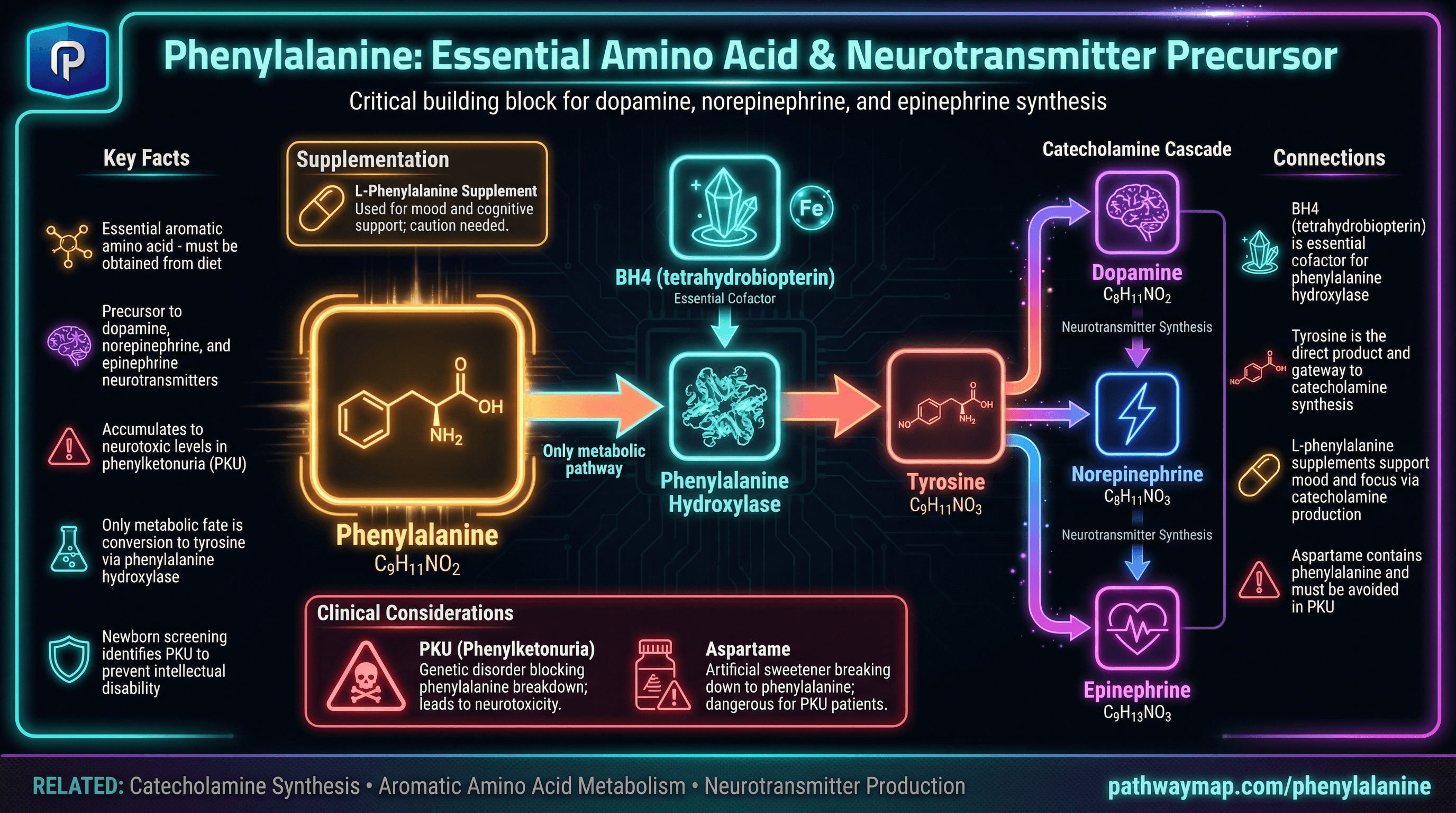
The Catecholamine Pathway
Key Functions
Neurotransmitter Production
- Dopamine: Motivation, pleasure, reward
- Norepinephrine: Focus, alertness, energy
- Epinephrine: Fight-or-flight response
- Mood support: Low = depression-like symptoms
Other Roles
- Thyroid hormones: Tyrosine + iodine = T4/T3
- Melanin: Skin/hair pigment via tyrosine
- Pain modulation: D-phenylalanine may help
- Protein synthesis: Building block
Phenylketonuria (PKU)
Important Genetic Consideration
People with PKU cannot convert phenylalanine to tyrosine due to defective PAH enzyme. Phenylalanine accumulates and causes brain damage. PKU patients must avoid phenylalanine and get tyrosine from diet directly. "Contains phenylalanine" warnings on products (like aspartame) are for PKU individuals.
Food Sources
High Phenylalanine Foods
Meat, fish, eggs, dairy, soy, nuts, seeds. All protein-rich foods contain phenylalanine.
Supplementation
Available as L-phenylalanine or DL-phenylalanine (DLPA). Sometimes used for mood support or pain.