Norepinephrine
The alertness and attention neurotransmitter. Norepinephrine keeps you focused, vigilant, and ready to respond—both in your brain and as a stress hormone throughout your body.
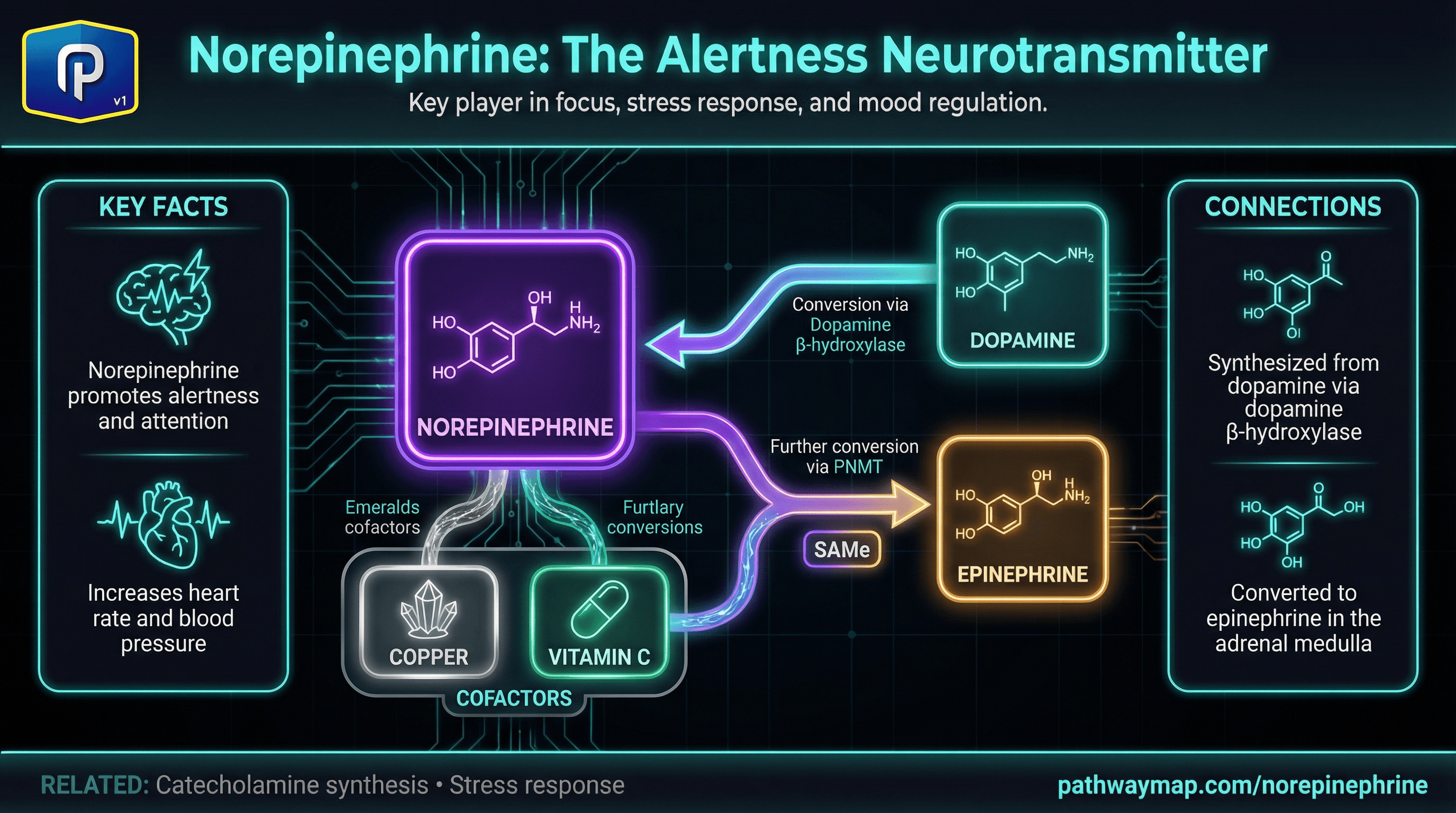
🧪 Norepinephrine Synthesis
Dopamine β-hydroxylase (DBH) requires copper and vitamin C.
🧠 Brain Functions
The locus coeruleus projects throughout the brain:
- • Alertness and arousal - wakefulness
- • Attention and focus - concentration
- • Mood regulation - low NE linked to depression
- • Memory formation - emotional memories
- • Stress response - vigilance
💪 Body Functions
Released from sympathetic nerves and adrenals:
- • Vasoconstriction - raises blood pressure
- • Heart rate - increases contractility
- • Bronchodilation - opens airways
- • Metabolism - mobilizes energy
- • Pupil dilation - alertness
⚖️ Norepinephrine Imbalances
Low Norepinephrine
- • Depression, low motivation
- • Poor concentration, brain fog
- • Fatigue, low energy
- • Low blood pressure
SNRIs (like Cymbalta) increase NE
High/Dysregulated NE
- • Anxiety, panic attacks
- • Insomnia, hypervigilance
- • High blood pressure
- • PTSD symptoms
Beta-blockers reduce NE effects
🔄 Inactivation Pathways
COMT (Methylation)
Adds methyl group. Slow COMT = longer NE activity, more anxiety-prone.
MAO (Oxidation)
Monoamine oxidase breaks down NE. MAOIs block this.
NET (Reuptake)
Norepinephrine transporter recycles NE. SNRIs block NET.
Metabolic Connections

Dopamine
Direct precursor—dopamine β-hydroxylase converts it

Tyrosine
Upstream precursor in the catecholamine pathway

Epinephrine
Norepinephrine → Epinephrine (in adrenals, needs SAMe)

COMT
Methylates and inactivates norepinephrine

Cortisol
Both are stress hormones—work together in fight-or-flight

Copper
Dopamine β-hydroxylase requires copper